Indonesian Journal of Applied Science and Engineering
Vol. 1, No. 1, 2023, pp. 22-33
ISSN 3030-9174
https://e-journal.ptti.info/index.php/ijase
22

Performance of 3000 Watt PLTS at the Dompet Dhuafa Palembang Free Health Service Clinic Against Load Variations

Aji Kurniaa,1, Yosi Apriania,2,*, Zulkiffli Saleha,3
a Electrical Engineering, Muhammadiyah University of Palembang, Indonesia
1 kurnia@gmail.com; 2 yosi_apriani@um-palembang.ac.id; 3 zulkiffli.saleh@gmail.com
* Corresponding Author

ABSTRACT

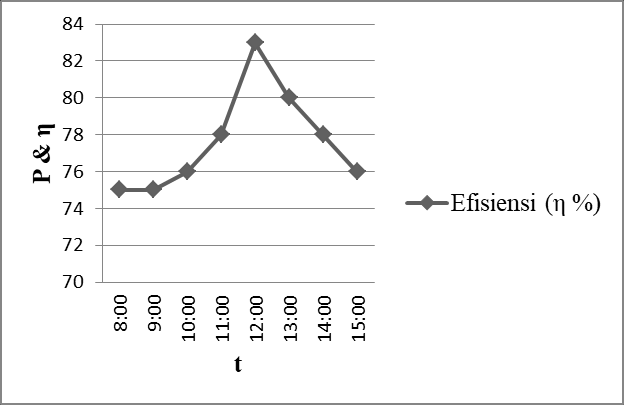
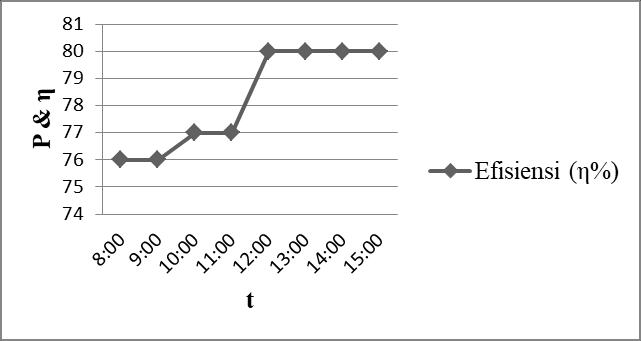
Since the system has been operational until now, the PLTS at the LKC wallet dhuafa Palembang clinic has never been analyzed on the system's performance, so it is not yet known whether this system is working well or not. The aim of this research is to analyze the performance of PLTS at the LKC Dompet Dhuafa Palembang clinic against variations in inductive and resistive loads. This research has 4 research stages, namely: 1). Literature study. 2). tool testing is carried out. 3). Data collection measurements. 4). Data analysis. From this research, the results obtained from testing tools and measuring data on PLTS performance at the LKC wallet dhuafa Palembang clinic with variations in inductive and resistive loads, when measuring the highest inductive input power was 449.8 W, the resulting efficiency was 83% at 12 :00, while the resistive input power is 546 W, the resulting efficiency is 80% from 12:00 to 15:00. From the research that has been carried out, the inductive load efficiency calculation results are 83% at 12:00 and the resistive load efficiency calculation results are 80% from 12:00 to 15:00. So it can be concluded that the performance of PLTS at the LKC Dhompet Dhuafa Palembang clinic is optimal in terms of load calculations.

©2023 The Author. This is an open-access article under the CC–BY license.

1.Introduction

Humans are almost inseparable from electrical energy in everyday life. This is due to the increase in population which causes an increase in demand for electrical energy. However, the increase in demand for electrical energy is inversely proportional to the energy needed to be converted into electrical energy, where the use of electrical energy still comes from non-renewable energy sources, namely fossil energy and can run out over time, and it takes a very long time for the energy to These fossils are available and can be reused. Utilization of new and renewable energy is a very important issue in efforts to reduce the use of fossil energy which is currently increasingly depleting. New renewable energy has long been studied by researchers. An inventive problem-solving capacity analysis for renewable energy storage investments was researched by Meng [1]. Impact of tourist arrivals, tourism receipts and renewable energy consumption on quality of life: A panel study of the South African region researched by [2]. Renewable energy in Bangladesh: Status and prospects researched by Uddin [3]. The distribution of fish in tidal channels shows the behavioral impacts of marine renewable energy installations studied by Fraser [4]. The framing of opportunities for customer engagement and renewable energy integration by electric utility representatives was researched by Stephens [5].

Renewable Energy Consumption, CO2 Emissions, and the Economic Growth Nexus: Spatial Simultaneous Modeling Analysis of European Union Countries researched by Radmehr [6]. Exploring the gaps in the integration of renewable energy into the grid was researched by Ayamolowo [7]. The costs and carbon emissions of shared autonomous electric vehicles in Virtual Power Plants and Microgrids with renewable energy were researched by [8]. Efficient generation of unstructured meshes for marine renewable energy applications was researched by Avdis [9]. Failure & General recommendations towards sustainable management of renewable energy projects in Sub-Saharan Africa (Part 2 of 2) researched by Ikejemba [10]. Adaptive renewable energy generation (AREP) - To power local buildings and vehicles with 100% renewable energy researched by Boulaire [11]. Building integrated photovoltaics as a renewable energy tool at the GREENSHIP location was researched by Susan [12]. An assessment of on-site stable electricity generation from renewable energy sources in Chile was researched by Camargo [13]. Comparison of modern heuristic algorithms for loss reduction in power distribution networks equipped with renewable energy resources was researched by Ibrahim [14]. Promoting Community Renewable Energy as a tool for Sustainable Development in Rural Areas of Thailand was researched by Chaichana [15].

The renewable energy consumption quota ratio allocation strategy based on game theory was researched by Tang [16]. The impact of renewable energy use on company profits was studied by [17]. Advancing climate services for the European renewable energy sector through capacity building and user involvement was researched by Goodess [18]. Integration of Renewable Energy with Mini/Microgrids was researched by Yan [19]. Conceptualizing civil society attitudes towards the promotion of renewable energy: A case study from Tunisia researched by [20]. Sizing, optimization, control and energy management of hybrid renewable energy systems—A review researched by Ammari [21]. How institutional interactions can strengthen effectiveness: The case of multi-stakeholder partnerships for renewable energy researched by Sanderink [22]. The conceptualization of Renewable Energy Powered Industrial Cluster Development in Indonesia was researched by Hidayatno [23]. The development of the Innovation Diffusion Model for the Application of Renewable Energy was researched by Zhang [24]. Role of Renewable Energy in Indian Power Sector was researched by S, G P [25].

Solar thermal energy in Indonesia is very abundant throughout the year, this is an alternative energy source for producing electrical energy. The deployment of alternative energy vehicles providing additional climate, air quality, and health benefits when combined with decarbonized power generation in China was researched by Peng [26]. Exploring public perceptions of renewable energy: Evidence from word network models in social networking services researched by [27]. Environmental and economic implications of energy efficiency in new residential buildings: A multi-criteria selection approach was researched by D'Agostino [28]. Is the 1.5°C target possible Exploring three areas of transformation was investigated by [29]. The Performance and Efficiency of the Organic Electrolyte Redox Flow Battery Prototype was investigated by Likit-anurak [30]. The development of heat transfer performance in a tubular heat exchanger with an improved NACA0024 vortex generator was investigated by Gururatana [31]. Changes in ostial dimensions after pulmonary vein isolation: pulsed field ablation vs radiofrequency ablation were studied by [32]. The life cycle environmental impacts of barley straw valorization were investigated by Garcia-Garcia [33]. Epitaxial Growth Modulation of Hollow Topology for High-Performance Electrocatalysts was researched by Feng [34]. A study of the energy performance of a ground source heat pump used in the refurbishment of a historic building: a comparison of different design options researched by Pacchiega [35].

Long-term joint socio-economic and GHG mitigation pathways towards 2050 in the Thai cement industry were researched by Chunark [36]. Highly operative heterogeneous catalysts in biodiesel production from used cooking oil were studied by [37]. Data on the environmental impacts of the Hellisheiði geothermal plant and the carbon intensity of geothermal energy and other energy technologies were researched by Paulillo [38]. Natural gas utilization in China: Development trends and prospects researched by Wang [39]. Pharmacological ascorbate induces neuroblastoma cell death by hydrogen peroxide-mediated DNA damage and reduction of cancer cell glycolysis was investigated by Ma [40]. Moving Towards a Framework of Electricity and Heat Equivalence in Energy System Analysis was researched by Kassem [41]. Performance analysis of direct steam reforming of methane in SOFC with SDC-based electrolyte was investigated by Saebea [42]. The evolution of effective thermal conductivity during hydrate formation and decomposition in natural sediments was investigated by Wei [43]. Optimizing biodegradable municipal waste management systems to increase biogas output and nutrient recovery: a case study in Lithuania researched by Stunzenas [44]. Photurgen: Open source software for the analysis and design of hybrid wind solar energy systems in the Caribbean region: A brief introduction to its development policy researched by Watson [45].

Can the combination of efficiency initiatives give us a good rebound effect was researched by Sarasa [46]. An assessment of the techno-economic feasibility of a diesel exhaust heat recovery system for heating mine inlet air in remote cold climate areas was investigated by [47]. Composite Materials with Combined Electronic and Ionic Properties were researched by Ralbag [48]. Diversity-oriented catalyst-free synthesis of pseudopeptides containing rhodanine scaffolds via sequential one-pot isocyanide-based six-component reactions in water using ultrasound irradiation was investigated by Shaabani [49]. Techno-economic feasibility analysis of a 1 MW photovoltaic grid-connected system in Oman was researched by Kazem [50]. One of the power plants that uses new, renewable energy derived from solar energy is photovoltaic (PV). Energy that comes from solar energy does not cause carbon emissions because it is environmentally friendly energy that is free from pollution and can be obtained for free. Solar Power Plant (PLTS) is a generating technology that converts photons from the sun into electrical energy. PLTS can be designed according to needs from household scale to large scale with technology that is easily adopted by the community. This PLTS works by directly converting solar radiation into electricity.

Increasing use of fly ash in concrete: Ex-ante LCA on emerging electro-mass separation technologies was researched by Maes [51]. Opportunities and challenges of electrochemical water treatment integrated with renewable energy at the water-energy nexus were studied by Kumar [52]. Comparative study of grid-connected photovoltaic solar systems: Performance evaluation and economic analysis researched by ELAMIM [53]. Photonic materials for high temperature applications: Synthesis and characterization by X-ray tomography pticography researched by Furlan [54]. PVMAPS: Software and data for the estimation of solar radiation and performance of photovoltaic modules over large geographic areas researched by Huld [55]. Knowledge, participation and the future: Epistemic qualities in energy scenario construction researched by Baard [56]. Factorial design and response surface optimization for modeling photovoltaic module parameters was researched by Kessaissia [57]. Using life cycle assessments to inform urban climate mitigation planning was researched by Thorne [58]. Determining the amount of energy storage for the development of a new microgrid energy flow optimization system with photovoltaic energy generation was researched by Rubenis [59]. Energy Return on Energy Invested (ERoEI) for solar photovoltaic systems in areas with moderate insolation: Comprehensive response researched by Raugei [60].

Knowledge, participation and the future: Epistemic qualities in energy scenario construction researched by [61]. Parametric Study of Artificial Intelligence Techniques for Battery SOC Management and Renewable Power Optimization was researched by [62]. Aggregation of demand for photovoltaic self-consumption was investigated by [63]. The charge carrier transport mechanism of passive contacts was studied by temperature-dependent J-V measurements investigated by [64]. The new paradigm of photovoltaics: From powering satellites to powering humanity was researched by Lincot [65]. Ambient temperature and solar radiation estimation, prediction, horizon sensitivity analysis were researched by Ramirez-Vergara [66]. Analysis of multi-source energy systems for small-scale domestic applications The integration of biodiesel, solar and wind energy was researched by Algieri [67]. Exploring the impact of government subsidies and R&D investment on the financial competitiveness of China's listed new energy companies: An empirical study researched by Zhu [68]. An artificial intelligence solution for managing photovoltaic energy production units was researched by Gligor [69]. The performance of buildings integrated with photovoltaic-thermal collectors and phase change materials was investigated by Zhou [70].

Reconfiguring global value chains in the post-Brexit world: A technological interpretation researched by Bilbao-Ubillos [71]. Environmental analysis data on the production of natural antioxidants from walnut shells using a solar photovoltaic-driven system as a substitute for potentially carcinogenic synthetic antioxidants was studied by Khounani [72]. FCpowered RBS: Data Analysis And System Optimization researched by Bartolucci [73]. Revisiting water use efficiency performance for microelectronics manufacturing facilities: Using Taiwan Science Park as a case study researched by Den [74]. Reliability study of systems dedicated to renewable energy using stochastic petri nets: application to photovoltaic (PV) systems researched by Mahdi [75].

The Palembang Dhuafa Free Health Service Clinic (LKC) has utilized PLTS to help reduce the cost of electricity bills caused by health equipment that uses very large amounts of electricity and power, including ultrasound (Ultrasonography) machines, dental machines, laser circumcision machines and several other health equipment, power saving devices in the form of inverters as solar power generators. Since the system has been operational until now, the PLTS at the LKC wallet dhuafa Palembang clinic has never been analyzed on the system's performance, so it is not yet known whether this system is working well or not. Therefore, a fishbone diagram is needed to identify, analyze, and visualize the root cause of a problem.

2.Method

2.1.Fishbone Diagram

Fishbone Diagram

Source: Research document

Fig. 1. Fishbone Diagram

2.2.Data collection method

This research began with collecting literature from books, journals and sources needed for research according to the discussion. Retrieval of current, voltage and power calculation data is carried out by measuring directly at the load source using a multimeter, ampere pliers.

3.Results and Discussion

3.1.Solar panel data

A solar panel is a device consisting of solar cells that can convert sunlight into electrical energy. The PLTS at LKC Palembang's dhuafa wallet has a power of 600 watts peak (wp).

Table 1. Solar Panel Data
Solar Panel DataCapacity
Module typeSP-100.36
Maximum power value (Pmax)100 W
Working circuit voltage (Voc)22.3 V
Short circuit current (Isc)5.82 A
Maximum current (Imp)5.49
Maximum voltage (Vmp)18.2 V
Dimensions1020×670×35
Number of cells36
Maximum system voltage700 V
Temperature25-80°C

3.2.Inverter data

An inverter is a tool for changing DC electrical energy sources to AC. The inverter used is 3000 W.

Table 2. Inverter Data
Inverter DataCapacity
Incoming voltage12Vdc
Voltage out220Vac
Sinusoidal wave3000W

3.3.Data from PLTS measurements of load variations

3.3.1.PLTS measurement data on inductive load variations

Table 3. Data from Measurements of Inductive Load Variations (500 W Inductive load table)
TimeVinIinVoutIoutcos φ
8:001334.62270.1860.8
9:001334.62270.1860.8
10:001333.12270.1820.8
11:0013322270.1800.8
12:001327.72270.1650.8
13:0013302270.1740.8
14:0013322270.1800.8
15:001333.12270.1820.8

3.3.2.PLTS measurement data on resistive load variations

Table 4. Data from Measurements of Resistive Load Variations (Resistive load data 550 W)
TimeVinIinVoutIout
8:0013422260.186
9:0013422260.186
10:0013392270.176
11:0013392270.176
12:0013372270.170
13:0013372270.170
14:0013372270.170
15:0013372270.170

3.3.3.Calculation

− Calculation of 500 W inductive load input power

Inductive load input power calculation hours 8:00

$P = V_{in} \times I_{in}$
$P = 13 \times 34.6$
$P = 449$ W

For conditions from 9:00 to 15:00, see Table 5 and Fig. 2

− Calculation of 500 W inductive load output power

Calculation of inductive load output power hours 8:00

$P = V_{out} \times I_{out} \times \cos\varphi$
$P = 227 \times 0.186 \times 0.8$
$P = 337$ W

For conditions from 9:00 to 15:00, see Table 5 and Fig. 2

− Calculation of 550 W resistive load input power

Resistive load input power calculation Hours 8:00

$P = V_{in} \times I_{in}$
$P = 13 \times 42$
$P = 546$ W

For conditions from 9:00 to 15:00, see Table 6 and Fig. 3

− Calculation of 550 W resistive load output power

Resistive load output power calculation Hours 8:00

$P = V_{out} \times I_{out}$
$P = 226 \times 0.186$
$P = 420$ W

For conditions from 9:00 to 15:00, see Table 6 and Fig. 3

− Calculation of the efficiency of inductive load variations

Calculation of efficiency of inductive load variations Hours 8:00

$\eta = \dfrac{P_{out}}{P_{in}} \times 100\%$
$\eta = \dfrac{337}{449.8} \times 100\%$
$\eta = 75\%$

For conditions from 9:00 to 15:00, see Table 5 and Fig. 2

− Calculation of the efficiency of resistive load variations

Calculation of resistive load variation efficiency Hours 8:00

$\eta = \dfrac{P_{out}}{P_{in}} \times 100\%$
$\eta = \dfrac{420}{546} \times 100\%$
$\eta = 76\%$

For conditions from 9:00 to 15:00, see Table 6 and Fig. 3

Table 5. Inductive Load Calculation Results
TimePinPoutη %
8:00449.833775
9:00449.833775
10:0043033076
11:0041632678
12:00360.129983
13:0039031580
14:0041632678
15:0043033076
Time vs Power and Efficiency Graphs on Inductive Loads
Fig. 2. Time vs Power and Efficiency Graphs on Inductive Loads
Table 6. Resistive Load Calculation Results
TimePinPoutη %
8:0054642076
9:0054642076
10:0051839977
11:0051839977
12:0048138580
13:0048138580
14:0048138580
15:0048138580
Time vs Power and Efficiency Graphs on Resistive Loads
Fig. 3. Time vs Power and Efficiency Graphs on Resistive Loads

4.Conclusion

From the research that has been done, the calculation results of the inductive load efficiency are 83% at 12:00 and the calculation results of the resistive load efficiency are 80% at 12:00 to 15:00. It can be concluded that the performance of the PLTS at the LKC Dhompet Dhuafa Palembang clinic is optimal in terms of load calculations. For further research, the author suggests conducting research on capacitive load variations. From the research that has been carried out, the inductive load efficiency calculation results were 83% at 12:00 and the resistive load efficiency calculation results were 80% from 12:00 to 15:00. So it can be concluded that the performance of PLTS at the LKC Dhompet Dhuafa Palembang clinic is optimal in terms of load calculations. For further research, the author suggests conducting research on capacitive load variations.

Author Contribution: All authors contributed equally to the main contributor to this paper. All authors have read and agreed to the published version of the manuscript.

Funding: This research received no external funding.

Conflicts of Interest: The authors declare no conflict of interest.

References

[1]
Y. Meng, R. Zhou, H. Dinçer, S. Yüksel, and C. Wang, "Analysis of inventive problem-solving capacities for renewable energy storage investments," Energy Reports, vol. 7, pp. 4779–4791, Nov. 2021, https://doi.org/10.1016/j.egyr.2021.06.086.
[2]
S. Y. Sarpong, M. A. Bein, B. A. Gyamfi, and S. A. Sarkodie, "The impact of tourism arrivals, tourism receipts and renewable energy consumption on quality of life: A panel study of Southern African region," Heliyon, vol. 6, no. 11, p. e05351, Nov. 2020, https://doi.org/10.1016/j.heliyon.2020.e05351.
[3]
M. N. Uddin, M. A. Rahman, M. Mofijur, J. Taweekun, K. Techato, and M. G. Rasul, "Renewable energy in Bangladesh: Status and prospects," Energy Procedia, vol. 160, pp. 655–661, Feb. 2019, https://doi.org/10.1016/j.egypro.2019.02.218.
[4]
S. Fraser, B. J. Williamson, V. Nikora, and B. E. Scott, "Fish distributions in a tidal channel indicate the behavioural impact of a marine renewable energy installation," Energy Reports, vol. 4, pp. 65–69, Nov. 2018, https://doi.org/10.1016/j.egyr.2018.01.008.
[5]
J. C. Stephens, D. J. Kopin, E. J. Wilson, and T. R. Peterson, "Framing of customer engagement opportunities and renewable energy integration by electric utility representatives," Util. Policy, vol. 47, pp. 69–74, Aug. 2017, https://doi.org/10.1016/j.jup.2017.05.005.
[6]
R. Radmehr, S. R. Henneberry, and S. Shayanmehr, "Renewable Energy Consumption, CO2 Emissions, and Economic Growth Nexus: A Simultaneity Spatial Modeling Analysis of EU Countries," Struct. Chang. Econ. Dyn., vol. 57, pp. 13–27, Jun. 2021, https://doi.org/10.1016/j.strueco.2021.01.006.
[7]
O. J. Ayamolowo, P. T. Manditereza, and K. Kusakana, "Exploring the gaps in renewable energy integration to grid," Energy Reports, vol. 6, pp. 992–999, Dec. 2020, https://doi.org/10.1016/j.egyr.2020.11.086.
[8]
R. Iacobucci, B. McLellan, and T. Tezuka, "Costs and carbon emissions of shared autonomous electric vehicles in a Virtual Power Plant and Microgrid with renewable energy," Energy Procedia, vol. 156, pp. 401–405, Jan. 2019, https://doi.org/10.1016/j.egypro.2018.11.104.
[9]
A. Avdis, A. S. Candy, J. Hill, S. C. Kramer, and M. D. Piggott, "Efficient unstructured mesh generation for marine renewable energy applications," Renew. Energy, vol. 116, pp. 842–856, Feb. 2018, https://doi.org/10.1016/j.renene.2017.09.058.
[10]
E. C. X. Ikejemba, P. C. Schuur, J. Van Hillegersberg, and P. B. Mpuan, "Failures & generic recommendations towards the sustainable management of renewable energy projects in Sub-Saharan Africa (Part 2 of 2)," Renew. Energy, vol. 113, pp. 639–647, Dec. 2017, https://doi.org/10.1016/j.renene.2017.06.002.
[11]
F. Boulaire, J. Love, and I. Mackinnon, "An adaptive renewable energy plant (AREP) - To power local premises and vehicles with 100% renewables," Energy Strateg. Rev., vol. 38, p. 100703, Nov. 2021, https://doi.org/10.1016/j.esr.2021.100703.
[12]
S. Susan and D. Wardhani, "Building integrated photovoltaic as GREENSHIP'S on site renewable energy tool," Results Eng., vol. 7, p. 100153, Sep. 2020, https://doi.org/10.1016/j.rineng.2020.100153.
[13]
L. R. Camargo, J. Valdes, Y. M. Macia, and W. Dorner, "Assessment of on-site steady electricity generation from renewable energy sources in Chile," Energy Procedia, vol. 158, pp. 1099–1104, Feb. 2019, https://doi.org/10.1016/j.egypro.2019.01.266.
[14]
A. M. Ibrahim and R. A. Swief, "Comparison of modern heuristic algorithms for loss reduction in power distribution network equipped with renewable energy resources," Ain Shams Eng. J., vol. 9, no. 4, pp. 3347–3358, Dec. 2018, https://doi.org/10.1016/j.asej.2017.11.003.
[15]
C. Chaichana, W. Wongsapai, D. Damrongsak, K. N. Ishihara, and N. Luangchosiri, "Promoting Community Renewable Energy as a tool for Sustainable Development in Rural Areas of Thailand," Energy Procedia, vol. 141, pp. 114–118, Dec. 2017, https://doi.org/10.1016/j.egypro.2017.11.022.
[16]
D. Tang et al., "Allocation strategy of regulated consumption quota ratio of renewable energy based on game theory," Energy Reports, vol. 7, pp. 67-74, 2021, https://doi.org/10.1016/j.egyr.2021.05.074.
[17]
D. Hulshof and M. Mulder, "The impact of renewable energy use on firm profit," Energy Econ., vol. 92, p. 104957, Oct. 2020, https://doi.org/10.1016/j.eneco.2020.104957.
[18]
C. M. Goodess et al., "Advancing climate services for the European renewable energy sector through capacity building and user engagement," Clim. Serv., vol. 16, p. 100139, Dec. 2019, https://doi.org/10.1016/j.cliser.2019.100139.
[19]
J. Yan et al., "Renewable Energy Integration with Mini/Microgrid," Energy Procedia, vol. 145, pp. 1–2, Jul. 2018, https://doi.org/10.1016/j.egypro.2018.04.001.
[20]
R. Akermi, S. T. Hachana, and A. Triki, "Conceptualizing civil society attitudes towards the promotion of renewable energy: A case study from Tunisia," Energy Procedia, vol. 141, pp. 131–137, Dec. 2017, https://doi.org/10.1016/j.egypro.2017.11.025.
[21]
C. Ammari, D. Belatrache, B. Touhami, and S. Makhloufi, "Sizing, optimization, control and energy management of hybrid renewable energy system—A review," Energy Built Environ., vol. 3, no. 4, pp. 399-411, 2021, https://doi.org/10.1016/j.enbenv.2021.04.002.
[22]
L. Sanderink and N. Nasiritousi, "How institutional interactions can strengthen effectiveness: The case of multi-stakeholder partnerships for renewable energy," Energy Policy, vol. 141, p. 111447, Jun. 2020, https://doi.org/10.1016/j.enpol.2020.111447.
[23]
A. Hidayatno, A. R. Destyanto, and B. A. Handoyo, "A Conceptualization of Renewable Energy-Powered Industrial Cluster Development in Indonesia," Energy Procedia, vol. 156, pp. 7–12, Jan. 2019, https://doi.org/10.1016/j.egypro.2018.11.074.
[24]
N. Zhang, Y. Lu, and J. Chen, "Development of An Innovation Diffusion Model for Renewable Energy Deployment," Energy Procedia, vol. 152, pp. 959–964, Oct. 2018, https://doi.org/10.1016/j.egypro.2018.09.100.
[25]
V. S, G. G P, and K. Singhania, "Role of Renewable Energy in Indian Power Sector," Energy Procedia, vol. 138, pp. 1073–1078, Oct. 2017, https://doi.org/10.1016/j.egypro.2017.10.117.
[26]
L. Peng, F. Liu, M. Zhou, M. Li, Q. Zhang, and D. L. Mauzerall, "Alternative-energy-vehicles deployment delivers climate, air quality, and health co-benefits when coupled with decarbonizing power generation in China," One Earth, vol. 4, no. 8, pp. 1127–1140, Aug. 2021, https://doi.org/10.1016/j.oneear.2021.07.007.
[27]
J. Kim, D. Jeong, D. Choi, and E. Park, "Exploring public perceptions of renewable energy: Evidence from a word network model in social network services," Energy Strateg. Rev., vol. 32, p. 100552, Nov. 2020, https://doi.org/10.1016/j.esr.2020.100552.
[28]
D. D'Agostino, D. Parker, and P. Melià, "Environmental and economic implications of energy efficiency in new residential buildings: A multi-criteria selection approach," Energy Strateg. Rev., vol. 26, p. 100412, Nov. 2019, https://doi.org/10.1016/j.esr.2019.100412.
[29]
K. O'Brien, "Is the 1.5°C target possible? Exploring the three spheres of transformation," Curr. Opin. Environ. Sustain., vol. 31, pp. 153–160, Apr. 2018, https://doi.org/10.1016/j.cosust.2018.04.010.
[30]
K. Likit-anurak, K. Uthaichana, K. Punyawudho, and Y. Khunatorn, "The Performance and Efficiency of Organic Electrolyte Redox Flow Battery Prototype," Energy Procedia, vol. 118, pp. 54–62, Aug. 2017, https://doi.org/10.1016/j.egypro.2017.07.012.
[31]
S. Gururatana, R. Prapainop, S. Chuepeng, and S. Skullong, "Development of heat transfer performance in tubular heat exchanger with improved NACA0024 vortex generator," Case Stud. Therm. Eng., vol. 26, p. 101166, Aug. 2021, https://doi.org/10.1016/j.csite.2021.101166.
[32]
K. Kuroki et al., "Ostial dimensional changes after pulmonary vein isolation: Pulsed field ablation vs radiofrequency ablation," Hear. Rhythm, vol. 17, no. 9, pp. 1528–1535, Sep. 2020, https://doi.org/10.1016/j.hrthm.2020.04.040.
[33]
G. Garcia-Garcia and S. Rahimifard, "Life-cycle environmental impacts of barley straw valorisation," Resour. Conserv. Recycl., vol. 149, pp. 1–11, Oct. 2019, https://doi.org/10.1016/j.resconrec.2019.05.026.
[34]
J.-X. Feng, Y.-X. Tong, and G.-R. Li, "Epitaxial Growth Modulation of Hollow Topologies for High-Performance Electrocatalysts," Chem., vol. 4, no. 9, pp. 2015–2017, Sep. 2018, https://doi.org/10.1016/j.chempr.2018.08.021.
[35]
C. Pacchiega and P. Fausti, "A study on the energy performance of a ground source heat pump utilized in the refurbishment of an historical building: comparison of different design options," Energy Procedia, vol. 133, pp. 349–357, Oct. 2017, https://doi.org/10.1016/j.egypro.2017.09.360.
[36]
P. Chunark, T. Hanaoka, and B. Limmeechokchai, "Shared socioeconomic pathways and long-term GHG mitigation towards 2050 in Thailand cement industry," Clean. Responsible Consum., vol. 2, p. 100006, Jun. 2021, https://doi.org/10.1016/j.clrc.2020.100006.
[37]
R. M. Mohamed, G. A. Kadry, H. A. Abdel-Samad, and M. E. Awad, "High operative heterogeneous catalyst in biodiesel production from waste cooking oil," Egypt. J. Pet., vol. 29, no. 1, pp. 59–65, Mar. 2020, https://doi.org/10.1016/j.ejpe.2019.11.002.
[38]
A. Paulillo, A. Striolo, and P. Lettieri, "Data on the environmental impacts of the Hellisheiði geothermal plant and on the carbon intensity of geothermal energy and other energy technologies," Data Br., vol. 27, p. 104771, Dec. 2019, https://doi.org/10.1016/j.dib.2019.104771.
[39]
Z. Wang, D. Luo, and L. Liu, "Natural gas utilization in China: Development trends and prospects," Energy Reports, vol. 4, pp. 351–356, Nov. 2018, https://doi.org/10.1016/j.egyr.2018.05.005.
[40]
E. Ma, P. Chen, H. M. Wilkins, T. Wang, R. H. Swerdlow, and Q. Chen, "Pharmacologic ascorbate induces neuroblastoma cell death by hydrogen peroxide mediated DNA damage and reduction in cancer cell glycolysis," Free Radic. Biol. Med., vol. 113, pp. 36–47, Dec. 2017, https://doi.org/10.1016/j.freeradbiomed.2017.09.008.
[41]
N. Kassem, C. R. Galatino, J. W. Tester, C. L. Anderson, and M. C. Moore, "Moving Toward a Framework for Electricity and Heat Equivalence in Energy Systems Analysis," iScience, p. 103123, Sep. 2021, https://doi.org/10.1016/j.isci.2021.103123.
[42]
D. Saebea, S. Authayanun, and Y. Patcharavorachot, "Performance analysis of direct steam reforming of methane in SOFC with SDC-based electrolyte," Energy Reports, vol. 6, pp. 391–396, Feb. 2020, https://doi.org/10.1016/j.egyr.2019.08.078.
[43]
R. Wei et al., "Evolution of effective thermal conductivity during hydrate formation and decomposition in natural sediments," Energy Procedia, vol. 158, pp. 5825–5831, Feb. 2019, https://doi.org/10.1016/j.egypro.2019.01.545.
[44]
E. Stunzenas and I. Kliopova, "Optimizing municipal biodegradable waste management system to increase biogas output and nutrient recovery: a case study in Lithuania," Energy Procedia, vol. 147, pp. 641–648, Aug. 2018, https://doi.org/10.1016/j.egypro.2018.07.083.
[45]
D. Watson, Y. Binnie, K. Duncan, and J.-F. Dorville, "Photurgen: The open source software for the analysis and design of hybrid solar wind energy systems in the Caribbean region: A brief introduction to its development policy," Energy Reports, vol. 3, pp. 61–69, Nov. 2017, https://doi.org/10.1016/j.egyr.2017.03.001.
[46]
C. Sarasa and K. Turner, "Can a combination of efficiency initiatives give us 'good' rebound effects?," Energy, vol. 235, p. 121335, Nov. 2021, https://doi.org/10.1016/j.energy.2021.121335.
[47]
M. A. Rodrigues de Brito, D. Baidya, and S. A. Ghoreishi-Madiseh, "Techno-economic feasibility assessment of a diesel exhaust heat recovery system to preheat mine intake air in remote cold climate regions," Int. J. Min. Sci. Technol., vol. 30, no. 4, pp. 517–523, Jul. 2020, https://doi.org/10.1016/j.ijmst.2020.05.014.
[48]
N. Ralbag et al., "Composite Materials with Combined Electronic and Ionic Properties," Matter, vol. 1, no. 4, pp. 959–975, Oct. 2019, https://doi.org/10.1016/j.matt.2019.04.007.
[49]
A. Shaabani and S. E. Hooshmand, "Diversity-oriented catalyst-free synthesis of pseudopeptides containing rhodanine scaffolds via a one-pot sequential isocyanide-based six-component reactions in water using ultrasound irradiation," Ultrason. Sonochem., vol. 40, pp. 84–90, Jan. 2018, https://doi.org/10.1016/j.ultsonch.2017.06.030.
[50]
H. A. Kazem, M. H. Albadi, A. H. A. Al-Waeli, A. H. Al-Busaidi, and M. T. Chaichan, "Techno-economic feasibility analysis of 1 MW photovoltaic grid connected system in Oman," Case Stud. Therm. Eng., vol. 10, pp. 131–141, Sep. 2017, https://doi.org/10.1016/j.csite.2017.05.008.
[51]
B. Maes, M. Buyle, A. Audenaert, and B. Craeye, "Enhanced fly ash use in concrete: Ex-ante LCA on an emerging electro-mass separation technology," Clean. Eng. Technol., vol. 2, p. 100076, Jun. 2021, https://doi.org/10.1016/j.clet.2021.100076.
[52]
A. Kumar and S.-Y. Pan, "Opportunities and challenges of electrochemical water treatment integrated with renewable energy at the water-energy nexus," Water-Energy Nexus, vol. 3, pp. 110–116, 2020, https://doi.org/10.1016/j.wen.2020.03.006.
[53]
A. Elamim, B. Hartiti, A. Haibaoui, A. Lfakir, and P. Thevenin, "Comparative study of photovoltaic solar systems connected to the grid: Performance evaluation and economic analysis," Energy Procedia, vol. 159, pp. 333–339, Feb. 2019, https://doi.org/10.1016/j.egypro.2019.01.006.
[54]
K. P. Furlan et al., "Photonic materials for high-temperature applications: Synthesis and characterization by X-ray ptychographic tomography," Appl. Mater. Today, vol. 13, pp. 359–369, Dec. 2018, https://doi.org/10.1016/j.apmt.2018.10.002.
[55]
T. Huld, "PVMAPS: Software tools and data for the estimation of solar radiation and photovoltaic module performance over large geographical areas," Sol. Energy, vol. 142, pp. 171–181, Jan. 2017, https://doi.org/10.1016/j.solener.2016.12.014.
[56]
P. Baard, "Knowledge, participation, and the future: Epistemic quality in energy scenario construction," Energy Res. Soc. Sci., vol. 75, p. 102019, May 2021, https://doi.org/10.1016/j.erss.2021.102019.
[57]
F. Z. Kessaissia, A. Zegaoui, M. Aillerie, M. Arab, M. Boutoubat, and C. Fares, "Factorial design and response surface optimization for modeling photovoltaic module parameters," Energy Reports, vol. 6, pp. 299–309, Feb. 2020, https://doi.org/10.1016/j.egyr.2019.11.016.
[58]
R. J. Thorne, E. A. Bouman, C. B. B. Guerreiro, A. Majchrzak, and S. Calus, "Using life cycle assessment to inform municipal climate mitigation planning," Energy Policy, vol. 129, pp. 173–181, Jun. 2019, https://doi.org/10.1016/j.enpol.2019.02.002.
[59]
A. Rubenis and L. R. Adrian, "Determining energy storage amount for development of novel microgrid energy flow optimization system with photovoltaic energy generation," Energy Procedia, vol. 147, pp. 428–437, Aug. 2018, https://doi.org/10.1016/j.egypro.2018.07.113.
[60]
M. Raugei et al., "Energy Return on Energy Invested (ERoEI) for photovoltaic solar systems in regions of moderate insolation: A comprehensive response," Energy Policy, vol. 102, pp. 377–384, Mar. 2017, https://doi.org/10.1016/j.enpol.2016.12.042.
[61]
F. Roussafi, "Regional development trajectories of renewable energy: Evidence from French regions," Energy Strateg. Rev., vol. 35, p. 100639, May 2021, https://doi.org/10.1016/j.esr.2021.100639.
[62]
T. Som, M. Dwivedi, C. Dubey, and A. Sharma, "Parametric Studies on Artificial Intelligence Techniques for Battery SOC Management and Optimization of Renewable Power," Procedia Comput. Sci., vol. 167, no. 2019, pp. 353–362, 2020, https://doi.org/10.1016/j.procs.2020.03.235.
[63]
V. Reis, R. H. Almeida, J. A. Silva, and M. C. Brito, "Demand aggregation for photovoltaic self-consumption," Energy Reports, vol. 5, pp. 54–61, Nov. 2019, https://doi.org/10.1016/j.egyr.2018.11.002.
[64]
F. Feldmann et al., "Charge carrier transport mechanisms of passivating contacts studied by temperature-dependent J-V measurements," Sol. Energy Mater. Sol. Cells, vol. 178, pp. 15–19, May 2018, https://doi.org/10.1016/j.solmat.2018.01.008.
[65]
D. Lincot, "The new paradigm of photovoltaics: From powering satellites to powering humanity," Comptes Rendus Phys., vol. 18, no. 7–8, pp. 381–390, Sep. 2017, https://doi.org/10.1016/j.crhy.2017.09.003.
[66]
J. Ramirez-Vergara, L. B. Bosman, W. D. Leon-Salas, and E. Wollega, "Ambient temperature and solar irradiance forecasting prediction horizon sensitivity analysis," Mach. Learn. with Appl., vol. 6, p. 100128, Dec. 2021, https://doi.org/10.1016/j.mlwa.2021.100128.
[67]
A. Algieri, P. Morrone, D. Perrone, S. Bova, and T. Castiglione, "Analysis of multi-source energy system for small-scale domestic applications. Integration of biodiesel, solar and wind energy," Energy Reports, vol. 6, pp. 652–659, Feb. 2020, https://doi.org/10.1016/j.egyr.2019.09.045.
[68]
Z. Zhu, Z. Zhu, P. Xu, and D. Xue, "Exploring the impact of government subsidy and R&D investment on financial competitiveness of China's new energy listed companies: An empirical study," Energy Reports, vol. 5, pp. 919–925, Nov. 2019, https://doi.org/10.1016/j.egyr.2019.07.013.
[69]
A. Gligor, C.-D. Dumitru, and H.-S. Grif, "Artificial intelligence solution for managing a photovoltaic energy production unit," Procedia Manuf., vol. 22, pp. 626–633, 2018, https://doi.org/10.1016/j.promfg.2018.03.091.
[70]
Y. Zhou, X. Liu, and G. Zhang, "Performance of buildings integrated with a photovoltaic–thermal collector and phase change materials," Procedia Eng., vol. 205, pp. 1337–1343, 2017, https://doi.org/10.1016/j.proeng.2017.10.109.
[71]
J. Bilbao-Ubillos and V. Camino-Beldarrain, "Reconfiguring global value chains in a post-Brexit world: A technological interpretation," Technol. Soc., vol. 67, p. 101716, Nov. 2021, https://doi.org/10.1016/j.techsoc.2021.101716.
[72]
Z. Khounani et al., "Data on environmental analysis of natural antioxidant production from walnut husk by a solar photovoltaic-driven system as a replacement for potentially carcinogenic synthetic antioxidants," Data Br., vol. 28, p. 104933, Feb. 2020, https://doi.org/10.1016/j.dib.2019.104933.
[73]
L. Bartolucci, S. Cordiner, and V. Mulone, "FCpowered RBS: Data Analysis And System Optimization," Energy Procedia, vol. 159, pp. 42–47, Feb. 2019, https://doi.org/10.1016/j.egypro.2018.12.015.
[74]
W. Den, C.-H. Chen, and Y.-C. Luo, "Revisiting the water-use efficiency performance for microelectronics manufacturing facilities: Using Taiwan's Science Parks as a case study," Water-Energy Nexus, vol. 1, no. 2, pp. 116–133, Dec. 2018, https://doi.org/10.1016/j.wen.2018.12.002.
[75]
I. Mahdi, S. Chalah, and B. Nadji, "Reliability study of a system dedicated to renewable energies by using stochastic petri nets: application to photovoltaic (PV) system," Energy Procedia, vol. 136, pp. 513–520, Oct. 2017, https://doi.org/10.1016/j.egypro.2017.10.276.