
Vol. 5, No. 1, 2027, pp. 16-27
ISSN 3030-9174
https://e-journal.ptti.info/index.php/ijase
Quality of Inquiry-Based Teaching Modules Integrating Deep Learning Developed by Pre-Service Elementary Teachers
b Physical Education with Honors, Faculty of Education, Universiti Putra Malaysia, Selangor, 43400, Malaysia
c Non Formal Education, Faculty of Education, Universitas Negeri Yogyakarta, Yogyakarta, 55281, Indonesia
1 annisarifah.2024@student.uny.ac.id; 2 ikhlasul@uny.ac.id; 3 rahayu_cm@uny.ac.id; 4 216490@student.upm.edu.my;
5 sujarwo@uny.ac.id
* Corresponding Author
Article history Received August 08, 2026
Revised September 10, 2026
Accepted October 28, 2026
Inquiry;
Learning;
Modules;
Teachers

The integration of inquiry-based learning and pedagogical deep learning in teaching modules is important for supporting meaningful and student-centered science learning in elementary schools. However, evidence remains limited regarding how consistently these approaches are represented together in teaching modules developed by pre-service elementary teachers. This study examined the quality of inquiry-based teaching modules integrating pedagogical deep learning developed by pre-service elementary teachers at Yogyakarta State University, Indonesia. A qualitative document analysis approach was employed to examine 15 teaching modules selected purposively from a population of 39 modules developed in a science education course. The analysis was guided by six stages of inquiry-based learning and three dimensions of pedagogical deep learning: meaningful, mindful, and joyful learning. The findings showed that five modules (33.3%) were classified as high quality, seven (46.7%) as medium quality, and three (20%) as needing improvement. Orientation, data collection, and conclusion-drawing activities were generally well represented, whereas problem formulation and hypothesis formulation were less consistently incorporated. Meaningful learning was the most frequently represented dimension, while mindful learning was absent from 10 of the 15 modules. These findings provide evidence of variation in how inquiry-based learning and pedagogical deep learning are incorporated into teaching modules. The study contributes an integrated analytical perspective for identifying strengths and areas for improvement in pre-service teachers’ module design. The findings may inform teacher education activities aimed at strengthening the design of inquiry-based and pedagogically deep learning-oriented materials. However, because the study examined written modules from a purposively selected sample, it does not directly establish pre-service teachers’ readiness to implement STEM learning in classrooms.
1.Introduction
The rapid development of science and technology has increased the need for education to prepare students for changing social, technological, and professional demands [1][2][3]. Digital technologies have also transformed access to information and educational practices [4][5], making information literacy and the effective use of technology increasingly important [6][7]. In this context, 21st-century education emphasizes critical thinking, creativity, communication, and collaboration, commonly known as the 4C [8][9]. These competencies are relevant to Science, Technology, Engineering, and Mathematics (STEM) education, which connects concepts across disciplines with real-world problems [10][13]. Studies have associated STEM-based learning with the development of critical thinking, creativity, and problem-solving skills [11][12], while other work has explored learning designs that encourage creativity and problem-solving through engaging activities [14]. Elementary education provides an important foundation for developing these competencies and scientific literacy [15]. However, the educational value of these approaches depends partly on teachers’ ability to translate them into appropriate learning activities [16].
Developing students’ 21st-century competencies remains challenging across educational contexts. Previous studies have discussed issues related to digital literacy, critical thinking, and the development of relevant competencies in school learning [17][18][19][20]. Research has also examined the relationship between the 4Cs and students’ social skills [21], as well as the broader need to strengthen 21st-century learning skills rather than focus exclusively on content mastery [22]. Within this context, teachers need to design learning experiences that connect disciplinary knowledge with meaningful activities and real-world situations [23]. Classroom strategies, including group discussion, have also been examined as ways to support critical thinking [24]. Nevertheless, teachers’ preparedness to integrate 21st-century competencies into curriculum and instruction remains an important concern [25], particularly given reported challenges in teaching critical thinking at the elementary level [26]. Other studies have identified concerns regarding digital literacy among elementary school teachers [27], the integration of critical thinking into classroom practice [28], and the development of 4C competencies in elementary education [29]. Challenges in using educational technology and adapting teaching practices to contemporary pedagogical demands have also been reported [30][31], despite the competencies expected of teachers in the digital era [32]. Research on teacher education and primary teaching further highlights the importance of preparing teachers to design learning that reflects 21st-century educational goals [33][34]. Together, these studies establish the importance of instructional design, although they do not by themselves indicate how consistently specific pedagogical approaches are represented in prospective teachers’ written teaching modules.
Inquiry-based learning is relevant to this challenge because it organizes learning around questioning, investigation, evidence, and the development of conclusions. In the context of the Merdeka Curriculum, inquiry can support scientific thinking by encouraging students to ask questions, conduct investigations, and seek answers [35]. However, these processes need to be translated into explicit and coherent learning activities in teaching modules. The quality of a module can therefore be examined through the extent to which its planned activities represent the stages of inquiry, rather than assuming that the inclusion of an inquiry label necessarily means that inquiry is adequately implemented in the instructional design.
In addition to inquiry-based learning, this study examines deep learning as a pedagogical approach, not as a computational method in artificial intelligence. In the analytical framework used in this study, pedagogical deep learning is represented through three dimensions: meaningful, mindful, and joyful learning. Meaningful learning concerns connections between learning content and learners’ understanding or experiences; mindful learning emphasizes learners’ awareness and active engagement in the learning process; and joyful learning concerns positive and engaging learning experiences. These dimensions are considered alongside inquiry stages to examine how the planned activities in teaching modules represent the intended learning approach. This distinction is important because the presence of inquiry stages alone does not establish that meaningful, mindful, and joyful learning experiences have also been incorporated. Deep learning has received attention in recent work on elementary education [37], while the development of teaching modules by prospective teachers has also been examined in previous research [36]. Nevertheless, the extent to which inquiry stages and the three dimensions of pedagogical deep learning are represented together in prospective elementary teachers’ teaching modules requires further examination.
The research gap addressed in this study is therefore specific: there is limited evidence in the literature considered here on the quality of prospective elementary school teachers’ teaching modules when inquiry-based learning stages and the dimensions of pedagogical deep learning are examined within a single analytical framework. Although previous work has considered teaching-module development [36] and deep learning in elementary education [37], these sources do not, on the basis of the information available for this study, establish how consistently the two elements are integrated in the same set of modules. The present study addresses this gap by analyzing both the representation of inquiry stages and the inclusion of meaningful, mindful, and joyful learning in teaching modules developed by prospective elementary school teachers at Yogyakarta State University, Indonesia.
The contribution of this study is its integrated, document-based analysis of these two elements. By examining their representation in 15 teaching modules, the study identifies which aspects of inquiry-based learning and pedagogical deep learning are more consistently included and which require further development. The findings can inform teacher education by identifying specific areas for improving prospective teachers’ instructional design. However, because the data consist of written teaching modules selected for analysis, the study does not directly measure prospective teachers’ classroom performance, their overall readiness to implement STEM, or the effectiveness of the modules when used with elementary school students. Accordingly, this study aims to analyze the quality of inquiry-based teaching modules integrating pedagogical deep learning, with particular attention to the representation of inquiry stages and the three dimensions of meaningful, mindful, and joyful learning.
2.Method
This study employed a qualitative document analysis approach to examine the representation of inquiry-based learning and pedagogical deep learning in teaching modules developed by pre-service elementary teachers. Data analysis was guided by a predefined analytical framework comprising six stages of inquiry-based learning and three dimensions of pedagogical deep learning: meaningful, mindful, and joyful learning. Qualitative data analysis involves organizing data, grouping meaningful units into categories, and interpreting findings to develop an understanding of the phenomenon under investigation [38]. In this study, the established analytical framework guided the examination of learning activities and instructions in the modules. Therefore, the analysis focused on the extent to which the selected modules represented the components of inquiry-based learning and pedagogical deep learning, rather than directly assessing students' readiness to implement STEM learning in actual classroom settings.
The data consisted of textual information contained in teaching modules developed by pre-service elementary teachers as part of a science education course at Yogyakarta State University, Indonesia. The population comprised all 39 teaching modules developed by students in Class 3H of the Elementary School Teacher Education (PGSD) program. The sample was determined through purposive sampling, with the inclusion criterion that the modules contained elements of both inquiry-based learning and pedagogical deep learning. Based on this criterion, 15 modules were selected, while the remaining 24 modules were excluded because they did not meet the selection criteria. Consequently, the findings describe the representation of the two learning approaches within the selected modules and should not be interpreted as an assessment of all 39 modules.
The research was conducted from September to October 2025. Data were collected through documentation of the selected teaching modules. Document analysis involves the systematic examination and interpretation of documents to extract relevant information, develop understanding, and generate empirical insights [39][40]. In this study, the documents were examined to identify learning activities and instructions that provided evidence of inquiry-based learning and pedagogical deep learning. The analysis considered the substantive content of the modules rather than relying solely on the presence of particular terms or headings. The research procedure, from sample selection to the interpretation of findings, is illustrated in Fig. 1.
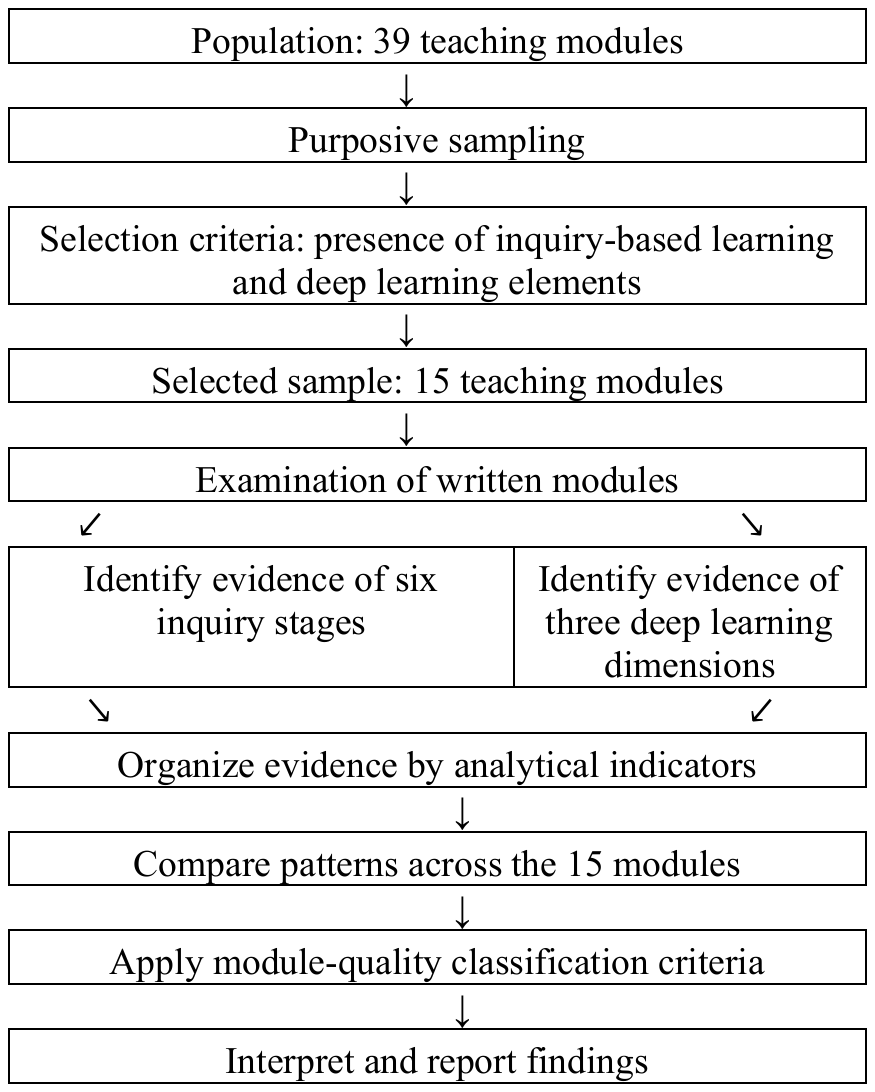
Fig. 1 presents the sequence of the research procedures. After the 15 modules were selected, each document was examined using the analytical framework for inquiry-based learning and pedagogical deep learning. The identified evidence was organized according to the relevant indicators and compared across the selected modules. The resulting patterns were then interpreted using the study's quality classification criteria.
The analytical framework for inquiry-based learning consisted of six stages: orientation, problem formulation, hypothesis formulation, data collection, hypothesis testing, and conclusion drawing. Each stage was examined using an operational indicator to identify evidence of the corresponding learning activities in the modules. The indicators are presented in Table 1.
| Indikator | Criteria |
|---|---|
| Orientation | Presence of activites to observe phenomena |
| Problem formulation | Students formulate investigative questions |
| Hypothesis formulation | Students make predictions/hypotheses |
| Data collection | Syestematic data gathering activities |
| Hypothesis testing | |
| Drawing conclusions | Evidence-based conclusion making |
As shown in Table 1, each inquiry stage was associated with a specific indicator used to examine the learning activities documented in the modules. The analysis focused on whether the activities provided substantive evidence of the relevant stage. This approach enabled the researcher to distinguish between modules that merely mentioned an inquiry stage and those that included activities corresponding to that stage.
In addition to the inquiry stages, the analysis examined three dimensions of pedagogical deep learning: meaningful, mindful, and joyful learning. Meaningful learning was examined through activities connecting learning content with real-life situations or students' experiences. Mindful learning was examined through activities encouraging awareness of the learning process, reflection, or metacognitive thinking. Joyful learning was examined through games, play, or other activities designed to make learning enjoyable. The operational indicators for these dimensions are presented in Table 2.
| Indicator | Criteria |
|---|---|
| Meaningful learning | Connection to real-life context |
| Mindful learning | Metacognitive/reflective activities |
| Joyful learning | Use of games, play, or enjoyable activities |
Table 2 outlines the indicators used to examine the representation of pedagogical deep learning in the selected modules. Each dimension was identified based on evidence in the learning activities and instructions. Meaningful learning was associated with real-life connections, mindful learning with reflection and metacognitive activities, and joyful learning with enjoyable learning experiences. Together, the frameworks in Table 1 and Table 2 provided the basis for examining the representation of inquiry-based learning and pedagogical deep learning in the selected documents.
The analysis proceeded by identifying relevant learning activities and instructions in each module and examining them against the indicators in Table 1 and Table 2. The evidence was organized according to the corresponding inquiry stages and deep learning dimensions to facilitate comparison across the modules. The researcher then examined patterns in the representation of these components and interpreted the findings in relation to the analytical framework. The quality categories were assigned according to the classification criteria presented in Table 3.
| Indicator | Criteria |
|---|---|
| High quality | All 6 inquiry stages + all 3 deep learning aspects |
| Medium quality | 4-6 inquiry stages + 1-3 deep learning aspects |
| Needs improvement | ≤3 inquiry stages + 0-1 deep learning aspects |
Table 3 presents the criteria used to classify the selected teaching modules according to the representation of inquiry-based learning and pedagogical deep learning. The classification was intended to summarize the extent to which the two components were represented in the written modules. The resulting categories were interpreted within the scope of the selected sample and were not intended to establish the overall readiness of all pre-service elementary teachers to implement STEM learning in classroom settings.
3.Results and Discussion
3.1.Result
The study identified 39 teaching modules developed by pre-service elementary school teachers. Using purposive sampling, 15 modules were selected for analysis based on their integration of inquiry-based learning and the pedagogical deep learning approach. The analysis examined two components: the representation of inquiry stages and the integration of three deep learning dimensions: meaningful, mindful, and joyful learning. The modules were subsequently classified into three quality categories: high, moderate, and needs improvement.
3.1.1.Open Coding
Open coding was conducted by identifying meaning units in the teaching modules, condensing their meaning, and assigning codes based on the inquiry stages and deep learning dimensions specified in the analytical framework. Table 4 and Table 5 present examples of this process from teaching module M6.
| Meaning Unit | Condensed Meaning Unit | Code |
|---|---|---|
| The teacher shows several sound source objects (tuning fork, metal ruler, glass filled with water). | The teacher shows objects as sound source media | Orientation |
| The teacher asks, “What happens when these objects are struck or tapped?” | A question is introduced to stimulate students’ curiosity about the observed phenomenon. | Problem formulation |
| The module identifies that sound occurs due to vibrations. | A tentative explanation about the phenomenon is presented. | Hypothesis |
| Students conduct an experiment using a tin-can telephone. | Students investigate sound through an experiment. | Data collection |
| The module states that vibrations produce sound and that sound travels through a medium. | An explanation is developed from the investigation. | Answering hypotheses |
| Students record the experimental results and conclusions. | Students summarize the findings of the experiment. | Drawing Conclusions |
The coding process illustrates how instructional statements were assigned to analytical categories. However, the presence of a statement in a module was not necessarily sufficient to establish that the corresponding inquiry stage was fully represented. The classification depended on whether the statement met the criteria specified in the coding framework.
| Meaning Unit | Condensed Meaning Unit | Code |
|---|---|---|
| Students reflect on what new things they learned today about sound. | The teacher guides students to reflect on what new things they discovered during the learning process | Mindful |
| Students created mini posters titled "The Journey of Sound to My Ears," which depicted the process of sound from its source to the ear. | Teachers provide activities that build students' creativity and enthusiasm | Joyful |
| Sound helps humans communicate and recognize their environment. Therefore, we need to protect our hearing | Teachers connect lessons to students' lives | Meaningful |
The coding example indicates that M6 contains activities associated with all three dimensions of pedagogical deep learning. The reflective activity was coded as mindful learning, the poster-making activity as joyful learning, and the connection between sound and everyday life as meaningful learning. These examples illustrate the application of the coding framework rather than the frequency of each dimension across all 15 modules.
3.1.2.Recontextualization
Following open coding, the selected modules were reread and reviewed to determine whether the identified meaning units adequately represented the analytical categories. The modules were then classified according to the criteria established for the study (Table 6).
| Teaching Module | Category |
|---|---|
| M6, M12, M23, M34, M31 | High |
| M2, M10, M20, M24, M25, M27, M29 | Medium |
| M16, M21, M36 | Needs Improvement |
The Table 6 above shows that there are 5 teaching modules in the High category (M6, M12, M23, M34, M31), while the Medium category has the most modules, with 7 teaching modules (M2, M10, M20, M24, M25, M27, M29). There are 3 teaching modules in the improvement category.
The visualization results in Fig. 2 show that most modules fulfill the orientation, data collection, and conclusion drawing stages, while the problem formulation and hypothesis formulation stages have lower fulfillment variations.
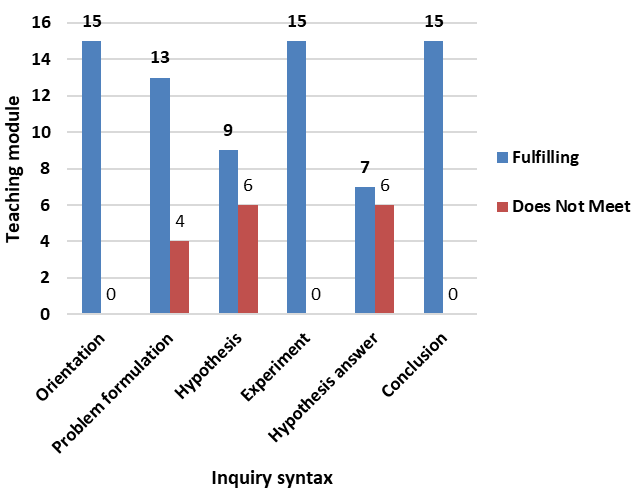
Fig. 3 shows that teaching modules in the meaningful aspect had the highest frequency of integration by students, while in the mindful aspect, 10 teaching modules were not integrated.
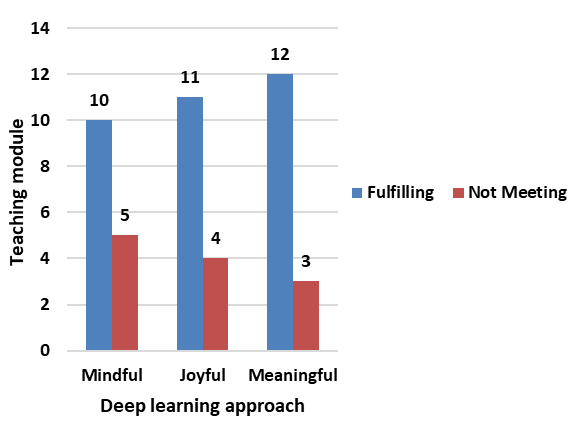
Table 7 shows the overall quality of student teaching modules based on a combination of inquiry syntax and deep learning approach integration. Five teaching modules in the high category show complete application in both aspects, while seven teaching modules in the moderate category and three teaching modules in the improvement category show aspects that are not found in inquiry syntax and deep learning approaches.
| Teaching Module | Category | Number of Modules |
|---|---|---|
| M6, M12, M23, M34, M31 | High | 5 |
| M2, M10, M20, M24, M25, M27, M29 | Medium | 7 |
| M16, M21, M36 | Needs Improvement | 3 |
3.2.Discussion
3.2.1.Representation of Inquiry Stages in Teaching Modules
The findings indicate that the representation of inquiry stages varied across the 15 teaching modules. Problem formulation appeared in 11 modules (73.3%), whereas hypothesis formulation appeared in only 7 modules (46.7%). This difference suggests that including questions or problems in a learning module does not necessarily mean that the module provides a complete inquiry process. Learners also need opportunities to develop tentative explanations that can be examined through investigation.
One possible explanation is that formulating an investigable question and developing a hypothesis require different instructional decisions. A question identifies what needs to be investigated, while a hypothesis proposes a possible explanation or prediction that can be examined using evidence. Therefore, teaching modules should make the relationship between the question, hypothesis, investigation, and conclusion explicit. This interpretation is consistent with the importance of instructional design in preparing learning activities for prospective teacher [39][40]. However, because this study analyzed written modules, the reasons for the differences cannot be established directly from the data.
The findings highlight the need to strengthen prospective elementary teachers’ skills in designing connected inquiry activities. In teacher education, module development should involve not only identifying inquiry stages but also checking whether each stage supports the next. In particular, prospective teachers need practice in formulating investigable questions, developing evidence-based hypotheses, and designing investigations that allow those hypotheses to be examined.
3.2.2.Integration of Mindful Learning
Mindful learning was absent from 10 of the 15 modules (66.7%), indicating that this dimension was not explicitly represented in most of the documents analyzed. In the context of inquiry-based learning, mindful learning can be reflected in activities that encourage learners to examine their thinking, compare predictions with observations, and consider how the evidence supports their conclusions. Such activities can help make reflection part of the inquiry process rather than an activity added only at the end of a lesson [41][42].
The absence of explicit mindful learning activities in the modules does not establish that reflection was absent from classroom practice. Instead, it indicates that opportunities for mindful learning were not clearly documented in most of the materials. This distinction is important because the present study examined written teaching modules rather than classroom implementation or learners’ experiences.
For elementary teacher education, prospective teachers should be guided to include specific reflection prompts in their modules. For example, after an investigation, learners could be asked whether their observations supported their initial predictions, what evidence informed their conclusions, and what they would investigate further. These prompts would make the intended reflective process more explicit and easier to assess when reviewing the quality of a teaching module.
3.2.3.Implications for Elementary Teacher Education
The findings suggest that the development of inquiry-based teaching modules integrating deep learning requires attention to both the completeness of inquiry stages and the explicit representation of meaningful, mindful, and joyful learning. Teacher education programs could address these needs through structured module-writing exercises, peer review using clear assessment criteria, and revision based on feedback [43]. Particular attention should be given to the connection between inquiry questions, hypotheses, investigations, and evidence-based conclusions, as well as the inclusion of explicit reflection activities.
The findings suggest that the development of inquiry-based teaching modules integrating deep learning requires attention to both the completeness of inquiry stages and the explicit representation of meaningful, mindful, and joyful learning. Teacher education programs could address these needs through structured module-writing exercises, peer review using clear assessment criteria, and revision based on feedback. Particular attention should be given to the connection between inquiry questions, hypotheses, investigations, and evidence-based conclusions, as well as the inclusion of explicit reflection activities [44][45].
These implications are limited to the design of teaching modules. Further research involving classroom observations and interviews with prospective teachers would be needed to determine how the documented activities are implemented and what challenges teachers experience during implementation.
4.Conclusion
This study found that five of the 15 analyzed teaching modules (33.3%) were categorized as high quality, seven (46.7%) as medium quality, and three (20%) as needing improvement. Problem formulation, hypothesis formulation, and mindful learning were the main areas requiring improvement. The findings are limited to the quality of the analyzed documents and do not reflect actual classroom practices. Future research should involve more diverse samples and classroom observations to examine how inquiry activities and deep learning are implemented in practice.
Supplementary Materials: This article has no supplementary materials available.
Author Contribution: All authors contributed equally to this paper. All authors have read and approved the final version.
Funding: Please add: This research did not receive any external funding.
Acknowledgment: The authors would like to thank all parties who supported the completion of this research.
Conflicts of Interest: The authors declare that there are no conflicts of interest related to this research.