
Vol. 3, No. 2, 2025, pp. 74-88
ISSN 3030-9174
https://e-journal.ptti.info/index.php/ijase
Digital Administrative Service Quality and Student Satisfaction in Higher Education: A Bibliometric Analysis
b MS in Organizational Leadership, Arizona State University, USA
c Department of Applied and Computational Mathematics, University of Washington, USA
d Department of Educational Psychology, Texas A&M University, USA
1 resky11pasca.2026@student.uny.ac.id; 2 dwimahardiyati28654@gmail.com; 3 laman18@uw.ed;
4 indahhamid@tamu.edu
* Corresponding Author
Article history Received July 24, 2026
Revised August 17, 2026
Accepted September 27, 2026
Service Quality;
Student Satisfaction;
Higher Education;
Bibliometric Analysis;
Science Mapping;
Artificial Intelligence

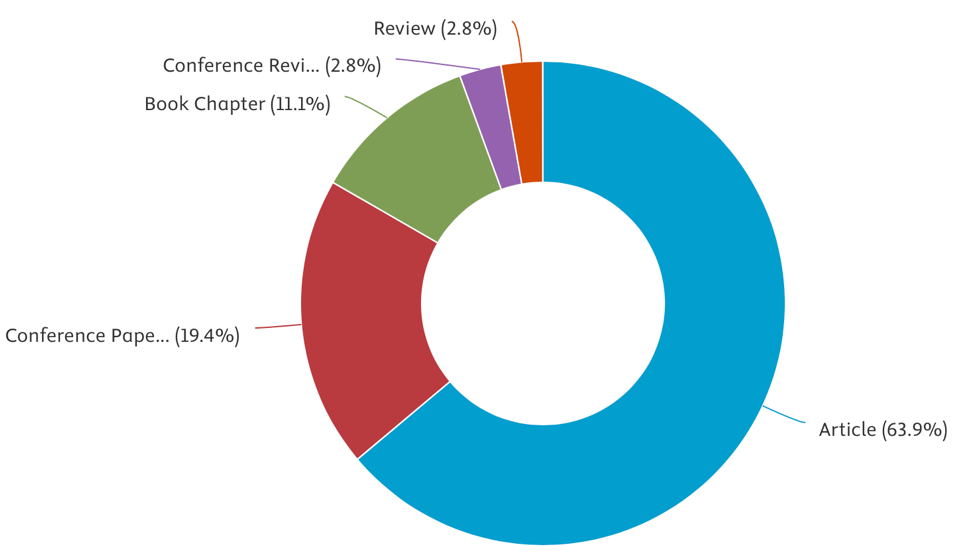
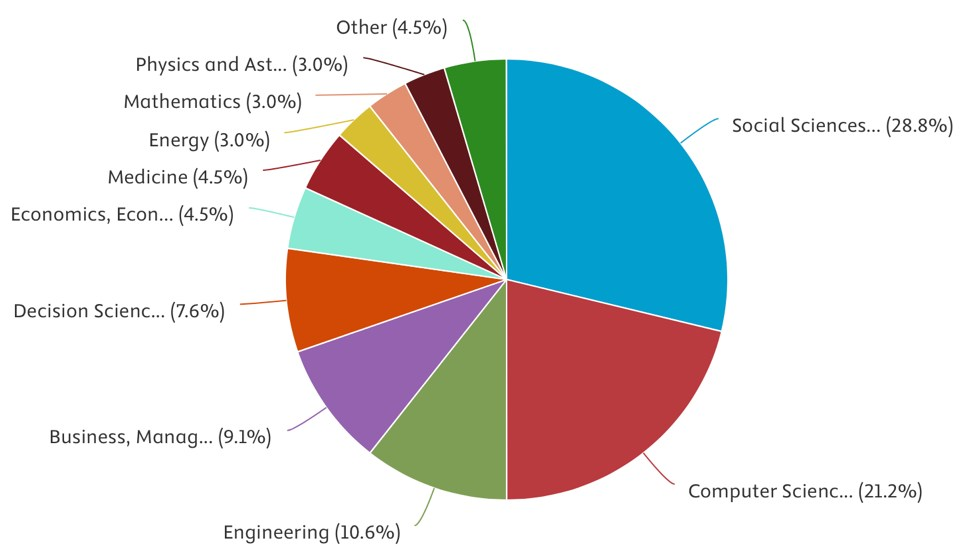
The rapid digitalization of higher education has transformed administrative service delivery and increased the importance of digital service quality in shaping student experiences and satisfaction. However, research on digital administrative service quality remains dispersed across higher education, service management, educational technology, and information systems, making it difficult to identify its development and thematic structure. This study aims to examine the development, characteristics, and thematic evolution of research on digital administrative service quality and student satisfaction in higher education. Bibliometric and science-mapping analyses were conducted using 36 Scopus-indexed documents published between 2015 and 2025, identified through a structured search conducted on June 27, 2025. Bibliographic data were analysed using descriptive bibliometric techniques and VOS viewer to examine publication trends, document types, subject areas, author and country contributions, keyword co-occurrence, and temporal patterns. The results show that journal articles represented the largest proportion of publications (63.9%), followed by conference papers (19.4%) and book chapters (11.1%). Social Sciences constituted the largest subject area (28.8%), followed by Computer Science (21.2%) and Engineering (10.6%). Keyword co-occurrence analysis identified higher education, students, satisfaction, service quality, and e-learning as prominent themes, while artificial intelligence and chatbot-related terms appeared as more recent themes in the dataset. The temporal pattern therefore suggests emerging attention toward AI-enabled and increasingly interactive digital services, although this pattern should be interpreted cautiously given the limited number of documents analysed. The study provides a preliminary bibliometric overview of the research intersection between digital administrative service quality and student satisfaction and identifies potential directions for future empirical research on usability, accessibility, responsiveness, trust, artificial intelligence, and student experience in higher education.
1.Introduction
The rapid digital transformation of higher education has fundamentally changed how universities deliver educational and administrative services to students [1], [2]. Beyond teaching and learning, students increasingly interact with universities through digital platforms for registration, academic records, payment, information access, complaints, correspondence, and other administrative processes. Consequently, the quality of administrative services has become an important component of the overall student experience. Earlier studies established that students are central stakeholders and recipients of higher education services, making their perceptions of service quality an important indicator of institutional performance [3], [4], [5], [6]. However, the quality of higher education services remains difficult to define and measure because service quality is multidimensional and varies according to institutional context, service type, and student expectations [7], [8], [9], [10], [11]. This problem becomes more complex in digital environments because traditional service-quality dimensions must increasingly be considered together with accessibility, system availability, efficiency, responsiveness, privacy, usability, and technological support [12]. Therefore, universities face the problem of ensuring that digitalization does not merely automate administrative processes but also produces reliable, responsive, accessible, and student-cantered services.
Empirical research has demonstrated that deficiencies in administrative and digital services can negatively influence students' experiences and satisfaction. Research on university administrative services has identified discrepancies between students' expectations and their perceptions of services across academic affairs, student affairs, libraries, and other administrative units [13], [14]. Higher education service quality through academic, administrative, and facilities-related dimensions, indicating that administrative services constitute an important component of students' overall perceptions of institutional quality. Administrative service quality affects student satisfaction and subsequently contributes to student loyalty [15], [16]. Research conducted in different higher education contexts has also confirmed significant relationships between service quality and student satisfaction. In digital settings, students' satisfaction is additionally affected by system quality, information quality, ease of access, responsiveness, and administrative support [17], [18]. Recent evidence also indicates that students may still experience technical difficulties, limited system usability, slow access, insufficient support, and communication problems despite the increasing adoption of digital administrative systems. Thus, the central research problem is not simply whether higher education institutions have adopted digital administrative services, but how the quality of these services has been conceptualized, evaluated, and connected to student satisfaction across the existing body of research.
Several approaches have been proposed to address this problem. Traditional service-quality models, particularly SERVQUAL, provide a foundation for evaluating reliability, responsiveness, assurance, empathy, and tangibles [12].
Nevertheless, the literature remains fragmented. Existing studies have predominantly examined service quality through individual institutional cases, specific countries, particular service dimensions, or specific measurement instruments [19], [20]. Other studies have concentrated on digital transformation at the institutional level without specifically isolating digital administrative service quality and its relationship with student satisfaction [21]. Consequently, although the literature is substantial, it is difficult to determine how the research field has evolved over time, which countries and authors have contributed most strongly [22], [23], which conceptual themes dominate the field, how digital administrative services are connected with student satisfaction, and which emerging topics are likely to shape future research. This gap is particularly important because bibliometric studies provide an opportunity to move beyond individual empirical findings and examine the intellectual structure, thematic development, collaboration patterns, and emerging research directions of an expanding research domain.
Despite these contributions, an important analytical gap remains. Existing bibliometric studies have generally examined higher education service quality or digital transformation in higher education as relatively broad research domains [24]. Service-quality-oriented studies primarily map service-quality models, dimensions, publication patterns, and intellectual structures [25], while digital-transformation studies primarily examine technological adoption, digital technologies, organizational transformation, user experience, and institutional change [26]. These perspectives do not specifically map the intersection of digital administrative service quality, student satisfaction, and emerging digital technologies [27], [28]. In particular, limited attention has been given to how administrative service quality research is connected with student satisfaction and how this research landscape has evolved from conventional digital services toward artificial intelligence, chatbots, personalization, and other intelligent service technologies. Therefore, a bibliometric examination that specifically focuses on this intersection can complement existing reviews by revealing the intellectual structure and thematic evolution of the field rather than treating service quality and digital transformation as separate domains.
The novelty of the present study lies in its integrated bibliometric and science-mapping examination of digital administrative service quality and student satisfaction in higher education during the 2005–2025 period. Rather than reproducing a general mapping of higher education service quality or digital transformation, this study focuses on the intersection between administrative service quality, student satisfaction, higher education, and digital technologies. The study further examines how the research landscape has evolved over time, from earlier emphasis on e-learning and conventional digital services toward artificial intelligence, chatbots, and increasingly personalized forms of digital interaction. By combining publication characteristics, disciplinary distribution, geographical contributions, author productivity, keyword co-occurrence, and temporal keyword analysis, the study seeks to identify both established knowledge structures and emerging research directions. This integrated perspective provides a basis for understanding how administrative service quality is being reconceptualized in increasingly digital and intelligent higher education environments. Accordingly, this study addresses the following research questions:
RQ1: How has research on digital administrative service quality and student satisfaction in higher education developed in terms of publication trends and document characteristics during 2005–2025?
RQ2: Which authors, countries, sources, and subject areas have contributed most prominently to this research domain?
RQ3: What are the major research themes and relationships among keywords in the literature on digital administrative service quality and student satisfaction?
RQ4: How have research themes evolved over time, particularly in relation to digital technologies, artificial intelligence, and chatbot-enabled services?
2.Method
2.1.Research Design
This study employed a bibliometric analysis combined with science mapping to examine the development, structure, and thematic evolution of research on digital administrative service quality and student satisfaction in higher education. Bibliometric analysis was selected because it enables the systematic examination of publication trends, document characteristics, author and country contributions, disciplinary distribution, and research themes within a defined body of scientific literature. Science mapping was subsequently used to visualize relationships among keywords and identify the intellectual and thematic structure of the research domain.
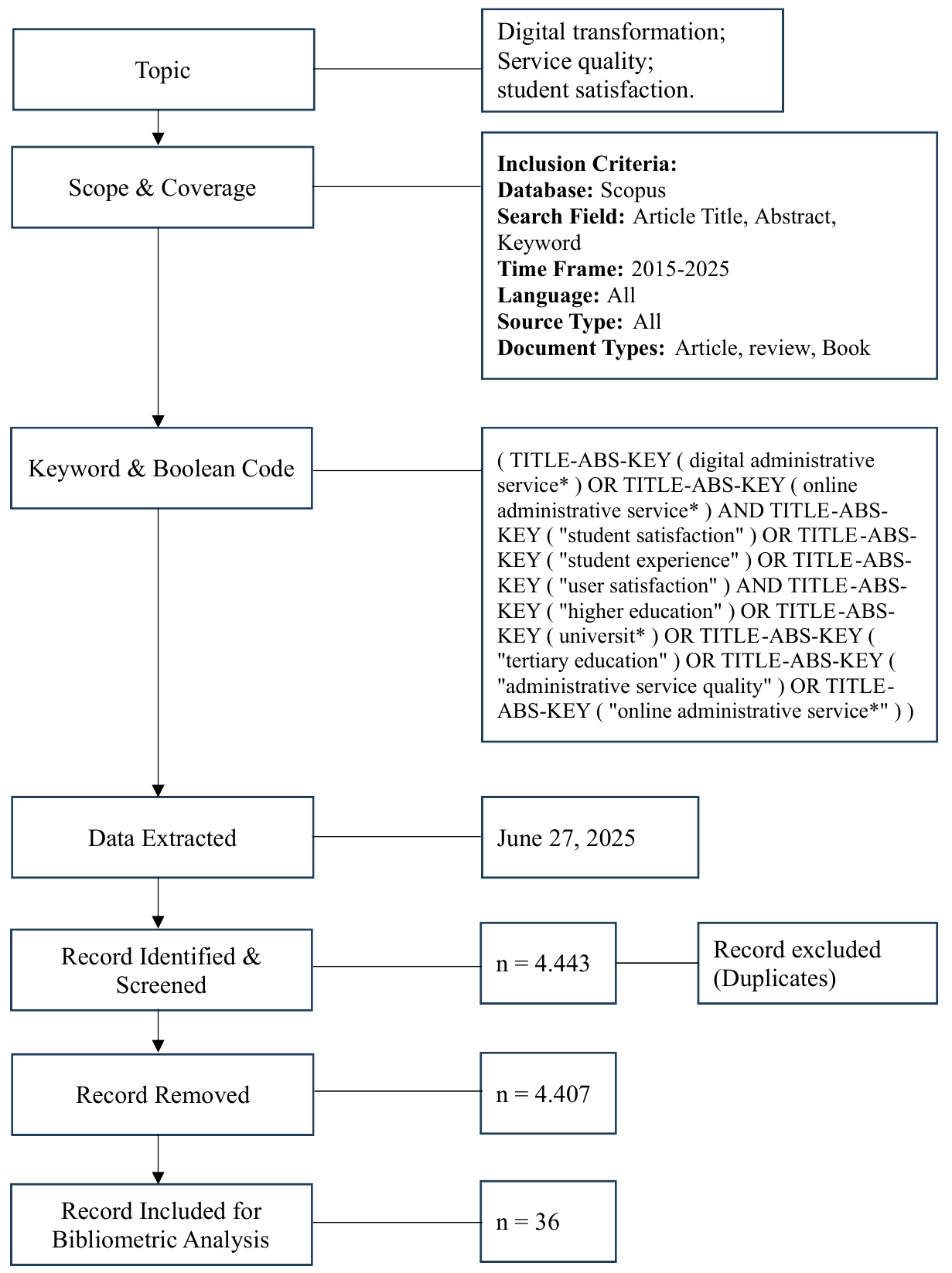
The analysis covered publications indexed in the Scopus database from 2015 to 2025. Scopus was selected because it provides broad multidisciplinary coverage and standardized bibliographic metadata relevant to research in higher education, service quality, information systems, and digital transformation. The search was conducted on June 27, 2025. The analysis followed a structured process consisting of database identification, search-string formulation, record retrieval, screening and eligibility assessment, data cleaning, bibliometric analysis, and science mapping (Fig. 1).
2.2.Database and Search Strategy
Scopus was used as the sole bibliographic database. The search was conducted using the TITLE-ABS-KEY field, which searches article titles, abstracts, and author keywords. The search strategy was designed to capture four conceptual components: digital/online administrative services, service quality, student satisfaction or experience, and higher education.
To reduce ambiguity caused by Boolean operators, the search concepts were organized into explicitly parenthesized groups. The search strategy used the following structure:
TITLE-ABS-KEY (("digital administrative service" OR "online administrative service" OR "administrative service quality") AND ("student satisfaction" OR "student experience" OR "user satisfaction") AND ("higher education" OR universit* OR "tertiary education"))**.
The search was restricted to publications available in Scopus between 2005 and 2025. No language restriction was imposed. The eligible document types were articles, reviews, and books/book chapters, consistent with the scope of the study.
The search terms were selected to represent the central concepts of the research domain. The terms digital administrative service and online administrative service capture digitally mediated administrative interactions between higher education institutions and students, while administrative service quality captures studies that explicitly conceptualize the quality of such services. The terms student satisfaction, student experience, and user satisfaction represent the principal student-related outcomes examined in the literature. Finally, higher education, university, and tertiary education delimit the search to the higher education context.
2.3.Inclusion and Exclusion Criteria
The retrieved records were assessed according to predefined inclusion and exclusion criteria. Records were included when they: (1) were indexed in Scopus; (2) were published between 2005 and 2025; (3) addressed higher education or university contexts; (4) contained a substantive focus on digital, online, or administrative service quality and student satisfaction, student experience, or related user satisfaction; and (5) belonged to the eligible document types.
Records were excluded when they were duplicates, did not address the higher education context, did not substantially concern administrative or digitally mediated service quality, did not examine student/user satisfaction or experience, or were outside the predefined publication period and document-type criteria. The screening process was conducted sequentially to distinguish database-level retrieval from thematic eligibility.
2.4.Screening and Selection Process
The initial Scopus search retrieved 4,443 records. After duplicate removal, 4,407 unique records remained for screening. The substantial reduction between the initial retrieval and the final dataset reflects the application of the study's thematic and eligibility criteria rather than duplicate removal alone.
The screening process consisted of three stages: (1) identification and deduplication, (2) title and abstract screening, and (3) full-text eligibility assessment. During title and abstract screening, records that did not concern higher education, digital/online administrative services, service quality, or student satisfaction/experience were excluded. Potentially relevant records were subsequently assessed through full-text examination. Records were excluded at the full-text stage when the article did not provide sufficient substantive relevance to the research focus or did not meet the predefined inclusion criteria. Following the screening and eligibility assessment, 36 documents were retained for the final bibliometric and science-mapping analysis. The selection process should be reported using a PRISMA-style flow diagram to make the transition from the initial 4,443 records to the final 36 documents transparent.
2.5.Data Extraction and Preparation
Bibliographic metadata were extracted from the Scopus records, including publication year, document type, source title, authors, author affiliations, country/territory, subject area, title, abstract, and keywords. The retrieved records were subsequently screened for duplication and relevance before being imported into the bibliometric analysis workflow.
For keyword analysis, author keywords and, where applicable, indexed keywords were examined to identify recurring concepts and relationships within the literature. Keyword terms were standardized when necessary to reduce artificial separation caused by differences in singular/plural forms or closely related expressions. The final dataset was then used for descriptive bibliometric analysis and network visualization.
3.Results and Discussion
3.1.Percentage Distribution of Publications by Year
Table 1 demonstrate that research on digital administrative service quality and student satisfaction in higher education has experienced a substantial increase over the last decade. Between 2012 and 2020, publication output remained relatively limited, with no more than two documents published annually and no publications recorded in 2014, 2015, or 2022. Beginning in 2021, scholarly interest increased considerably, reaching four publications (11.11%), followed by six publications in both 2023 and 2024 (16.67% each). The highest level of scientific production occurred in 2025 with 11 publications, accounting for 30.56% of the total dataset. Overall, more than 63% of all identified publications were produced during the period 2023–2025, indicating that digital administrative services and their influence on student satisfaction have become an emerging and rapidly expanding research area within higher education.
| Year | Documents | Percentage (%) |
|---|---|---|
| 2012 | 1 | 2.78 |
| 2013 | 1 | 2.78 |
| 2014 | 0 | 0.00 |
| 2015 | 0 | 0.00 |
| 2016 | 1 | 2.78 |
| 2017 | 1 | 2.78 |
| 2018 | 2 | 5.56 |
| 2019 | 2 | 5.56 |
| 2020 | 1 | 2.78 |
| 2021 | 4 | 11.11 |
| 2022 | 0 | 0.00 |
| 2023 | 6 | 16.67 |
| 2024 | 6 | 16.67 |
| 2025 | 11 | 30.56 |
| Total | 36 | 100.00 |
The concentration of publications in the most recent years indicates that the topic has received increasing scholarly attention within the selected dataset. However, this pattern should be interpreted cautiously because the analysis contains only 36 documents. The increase in publications after 2021 may be associated with the broader acceleration of digital transformation in higher education, including the expansion of online administrative systems, digital student services, and integrated institutional platforms. The present bibliometric data, however, do not directly establish that the COVID-19 pandemic caused the increase. Rather, the pandemic and the associated acceleration of digitalization provide a plausible contextual explanation that is consistent with previous research on digital transformation in higher education.
The concentration of publications in 2023–2025 also suggests that digital administrative service quality and student satisfaction represent a relatively recent research intersection within the identified literature. The increasing attention to artificial intelligence, chatbots, personalization, and digital service ecosystems in recent publications further indicates that the research agenda is expanding beyond basic digitization toward more intelligent and interactive forms of service delivery. Nevertheless, these emerging themes should be interpreted as directions identified within the present dataset rather than as evidence that the entire global research field has already shifted toward these technologies.
3.2.Source Distribution of Publications
Table 2 shows that publications on digital administrative service quality and student satisfaction in higher education are distributed across several interdisciplinary publication outlets rather than being concentrated within a single journal. Four leading sources were identified, namely Advances in Intelligent Systems and Computing, Computers and Education, AIP Conference Proceedings, and BMJ Open, with each source contributing one publication. The temporal distribution indicates that relevant studies have appeared intermittently between 2017 and 2025, suggesting that this research topic is still emerging and has not yet developed a dominant publication venue. The diversity of publication sources further demonstrates that research on digital administrative services intersects multiple disciplines, including educational technology, computer science, digital innovation, and health and public service management.
| No. | Source Title | Publication Year | Documents |
|---|---|---|---|
| 1 | Advances in Intelligent Systems and Computing | 2017 | 1 |
| 2 | Computers and Education | 2019 | 1 |
| 3 | AIP Conference Proceedings | 2023 | 1 |
| 4 | BMJ Open | 2025 | 1 |
| Total | 4 Sources | 2017–2025 | 4 |
The distribution shown above suggests that the selected literature is not concentrated in a single specialized publication outlet. However, given the small number of documents in the dataset and the fact that the sources shown each contain only one publication, no strong conclusion should be drawn regarding the existence or absence of a dominant journal in this research area. The dispersion may partly reflect the interdisciplinary nature of the topic, which intersects higher education, service quality, information systems, educational technology, and digital transformation.
The presence of sources from different disciplinary areas is consistent with the conceptual scope of digital administrative service research. Administrative services are simultaneously concerned with service delivery and user satisfaction, while their digital implementation depends on information systems and technological infrastructure. Therefore, the distribution of sources provides descriptive evidence of disciplinary breadth, but it does not by itself demonstrate the maturity or development stage of the field.
3.3.Productive Authors
Table 3 presents authors who contributed multiple publications within the selected dataset. Abdullah, Z., Aldholay, A., and Isaac, O. each contributed three documents, while Le, H.S., Matos, P., Nguyen, T.D., Nguyen, V.T.T., and Oliveira, P.F. each contributed two documents. Several other authors contributed one publication.
| Rank | Author | Documents |
|---|---|---|
| 1 | Abdullah, Z. | 3 |
| 1 | Aldholay, A. | 3 |
| 1 | Isaac, O. | 3 |
| 4 | Le, H.S. | 2 |
| 4 | Matos, P. | 2 |
| 4 | Nguyen, T.D. | 2 |
| 4 | Nguyen, V.T.T. | 2 |
| 4 | Oliveira, P.F. | 2 |
| 9 | Abdulhussain, A. | 1 |
| 9 | Abdullah, N.S. | 1 |
The distribution indicates that publications are spread among several contributors rather than concentrated in a single author. However, because the final dataset contains only 36 documents, the publication counts should be interpreted as descriptive indicators of contribution within this dataset rather than as evidence of global scholarly leadership in the field.
The presence of several authors with two or three publications also indicates that some researchers have contributed repeatedly to the topic, while many others appear only once in the dataset. Further analysis using co-authorship networks and institutional collaboration would be required to determine whether these authors form stable research communities or international collaboration networks.
3.4.Country Contribution
Malaysia contributed the largest number of publications in the dataset, with five documents, followed by Indonesia with four. Australia and Spain each contributed three documents, while Bangladesh, India, Portugal, the United States, and Viet Nam each contributed two. Canada contributed one publication.
These results indicate that publications in the selected dataset are distributed across several countries (Table 4), with a visible representation from Southeast Asian countries. Malaysia and Indonesia account for nine of the 36 documents combined. However, the publication counts should not be interpreted as evidence that these countries globally dominate research on digital administrative service quality. The dataset is relatively small, and the results reflect the characteristics of the documents retrieved using the present search strategy.
| Rank | Country/Territory | Documents |
|---|---|---|
| 1 | Malaysia | 5 |
| 2 | Indonesia | 4 |
| 3 | Australia | 3 |
| 3 | Spain | 3 |
| 5 | Bangladesh | 2 |
| 5 | India | 2 |
| 5 | Portugal | 2 |
| 5 | United States | 2 |
| 5 | Viet Nam | 2 |
| 10 | Canada | 1 |
The relatively visible contribution of Malaysia and Indonesia may be related to scholarly interest in digital transformation and higher education service delivery within Southeast Asian contexts. Nevertheless, the present bibliometric analysis does not directly measure the level of digital transformation undertaken by universities in these countries. Therefore, explanations concerning national policies, institutional investment, or rates of technology adoption should be treated as contextual interpretations rather than conclusions derived directly from publication counts.
The presence of publications from Australia, Spain, Portugal, the United States, Canada, India, Bangladesh, and Viet Nam indicates that the research topic has been investigated across different geographical contexts. Nevertheless, publication productivity alone does not establish the geographical maturity or global representativeness of the research field. Comparative analysis of institutional contexts, collaboration networks, and research topics would be necessary to provide stronger evidence regarding international research patterns.
3.5.Distribution of Publications by Document Type
The dominance of journal articles (63.9%) indicates that research on digital administrative service quality and student satisfaction in higher education has increasingly been consolidated within peer-reviewed scholarly outlets (Fig. 2). This finding is consistent with recent bibliometric research on higher education service quality. Identified 552 Scopus-indexed publications on service quality in higher education between 1993 and 2023, with journal-based research forming the core of the literature and publication activity reaching its highest level in 2021. Mapped 1,887 documents on service quality and higher education and reported an evolving research landscape increasingly connected with student experience and digital transformation. These comparisons suggest that the high proportion of articles in the present study reflects the growing academic institutionalization of service-quality research, particularly as higher education increasingly treats digital administrative services as an important component of the overall student experience.
The relatively substantial proportion of conference papers (19.4%) also indicates that the field continues to function as an active area for the dissemination of emerging technological and administrative innovations(Fig. 2). This is particularly relevant because digital administrative services evolve rapidly through information systems, automation, cloud computing, and user-oriented service design. Recent research on cloud-based higher education administration, for instance, reported improvements in administrative efficiency and user satisfaction following the implementation of digital systems. At the same time, the smaller proportion of review publications (2.8%) suggests that systematic synthesis and theoretical consolidation of digital administrative service quality remain less developed than empirical and applied research (Fig. 2). Thus, the document-type structure points to a field that is empirically active and technologically dynamic, while still offering opportunities for future review studies that integrate service quality, digital transformation, and student satisfaction into broader conceptual frameworks.
3.6.Distribution of Publications by Subject Area
The subject-area distribution demonstrates that research on digital administrative service quality and student satisfaction is fundamentally interdisciplinary. Social Sciences (28.8%) represented the largest share, followed by Computer Science (21.2%) and Engineering (10.6%), indicating that the topic combines perspectives on organizational management, service delivery, information technology, and digital infrastructure (Fig. 3). This pattern is consistent with recent bibliometric research showing that higher education service-quality research has expanded beyond traditional service evaluation toward digital transformation and student experience. Service quality in higher education as an interdisciplinary research domain examined through bibliometric and science-mapping approaches. In addition, recent literature emphasizes that digital transformation in higher education administration involves not only technological adoption but also changes in organizational processes, governance, leadership, and institutional capabilities.
The strong representation of Computer Science and Engineering further demonstrates that the quality of administrative services is increasingly dependent on the technological systems through which students access university services. Recent empirical research found that digital transformation can improve administrative and academic service quality by reducing processing time and strengthening digital interaction between universities and students. Likewise, research on digital academic administration has shown that students value accessibility and efficiency but may still encounter challenges involving system usability, access speed, technical support, and digital literacy. These findings reinforce the present subject-area distribution: Social Sciences provides the perspective of service quality, satisfaction, and organizational management, whereas Computer Science and Engineering provide the technological foundation for delivering those services. The convergence of these disciplines therefore suggests that future research should increasingly adopt integrated frameworks that examine technology quality, administrative service performance, user experience, and student satisfaction simultaneously.
3.7.Bibliometric Coupling Analysis
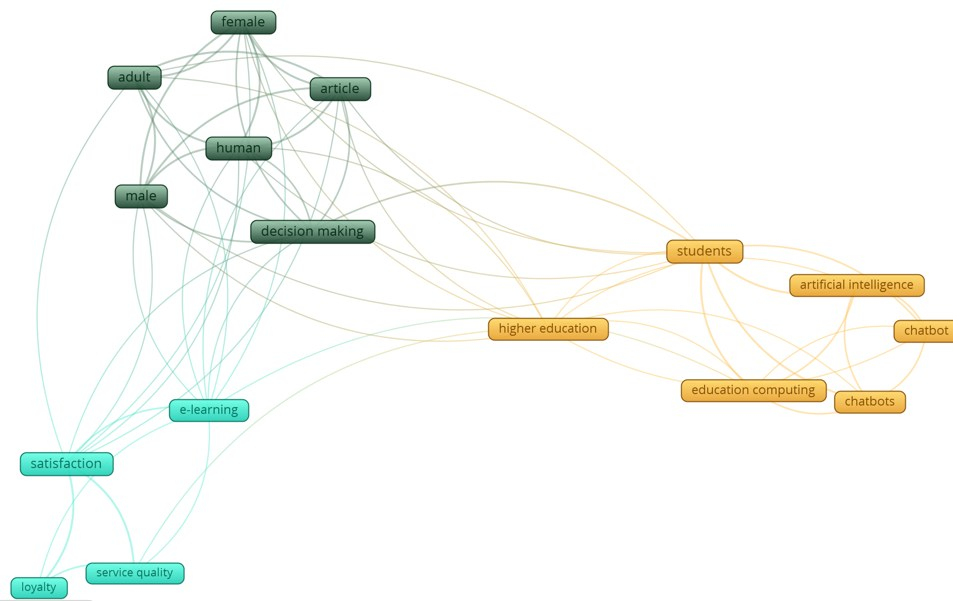
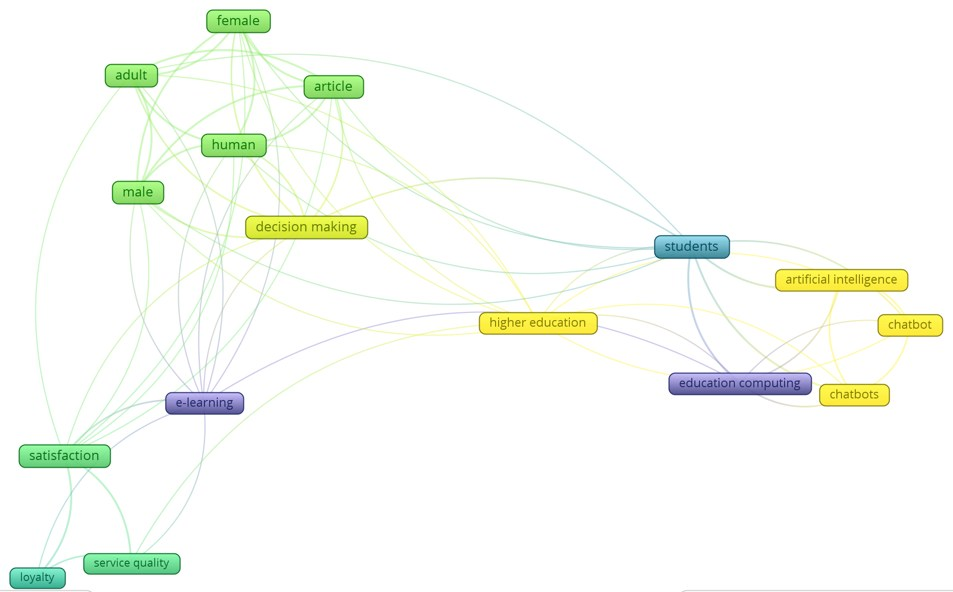
The keyword co-occurrence network reveals several interconnected research themes within the literature on digital administrative service quality and student satisfaction in higher education (Fig. 4). “Higher education” and “students” occupy central positions, indicating their strong relevance across the research landscape. The network also connects satisfaction, service quality, e-learning, and loyalty, suggesting that studies have examined how the quality of digital and educational services influences students’ experiences and behavioural outcomes. Meanwhile, artificial intelligence, chatbot(s), and education computing form a distinct but closely connected technology-oriented group linked to students and higher education. The presence of decision making, human, adult, female, and male reflects additional contextual and demographic dimensions of the literature. Overall, the network demonstrates that research has evolved through the intersection of service quality, student satisfaction, digital learning, and emerging artificial intelligence technologies (Fig. 4).
The keyword co-occurrence network indicates that research on digital administrative service quality and student satisfaction in higher education is structured around several interconnected themes, particularly higher education, students, satisfaction, service quality, e-learning, and emerging artificial intelligence technologies. The strong relationship between satisfaction, service quality, e-learning, and loyalty is consistent with previous empirical research demonstrating that the quality of digital educational services contributes significantly to student satisfaction and loyalty. For example, a study in Vietnam found that e-learning system quality, instructor and course-material quality, and administrative and support services formed important dimensions of e-learning service quality, while overall service quality positively influenced student satisfaction and loyalty. Similarly, research involving Indonesian and Thai higher education institutions showed that different service-quality dimensions significantly influenced student satisfaction, although the most influential dimensions differed across countries. These findings support the central position of satisfaction and service quality in the present network and demonstrate that digital administrative and learning services are increasingly examined as important components of the overall student experience.
The network also reveals a growing connection between the traditional service-quality themes and artificial intelligence, chatbots, and education computing, indicating an expansion of the research domain toward AI-enabled educational services. This development is supported by recent studies examining students' experiences with AI-based services. Moderate to high student satisfaction with AI chatbots, particularly in terms of responsiveness, accuracy, adaptability, and continuous access to information, although concerns regarding privacy, security, and technological access remained [31], [32]. Likewise, research on AI chatbots among 5,894 higher education students found generally positive attitudes toward chatbot use but also identified differences according to gender and field of study. Thus, the co-occurrence structure suggests that the research field is moving beyond conventional assessments of service quality toward an integrated perspective in which digital service quality, student satisfaction, e-learning, and AI-mediated interaction are increasingly interconnected.
3.8.Keywords Analysis
The overlay visualization demonstrates the temporal development of research themes from 2020 to 2024 (Fig. 5). Earlier research, represented by the darker blue and green nodes, was more strongly associated with e-learning, education computing, and student satisfaction, indicating an initial emphasis on digital learning environments and service experiences. Over time, the research focus shifted toward newer technology-oriented themes, particularly higher education, students, artificial intelligence, chatbots, and chatbots in education, which appear in the more recent yellow-green spectrum. The emergence of artificial intelligence and chatbot-related keywords toward 2023–2024 suggests a transition from conventional digital education and e-leaning toward AI-enabled administrative and educational services. This temporal pattern indicates that AI-based technologies are becoming an increasingly important direction for research concerning digital service delivery and student experiences in higher education.
The temporal overlay visualization demonstrates a clear evolution in research interests between 2020 and 2024 (Fig. 5). Earlier themes, represented by darker colours, are concentrated around e-learning, satisfaction, and education computing, reflecting the rapid digitalization of higher education and the need to maintain educational and administrative services through online platforms. This development is consistent with research showing that the COVID-19 pandemic accelerated the adoption of e-learning and made digital service quality increasingly important to student experiences. A recent systematic review similarly identifies the pandemic as a major catalyst for digital transformation in higher education and emphasizes service quality and student satisfaction as important dimensions of digital learning. Empirical evidence from e-learning research further demonstrates that system quality, information quality, and service quality can significantly influence student satisfaction and loyalty. Therefore, the earlier keywords in the overlay can be interpreted as representing a foundational phase in which researchers primarily investigated the effectiveness, quality, and acceptance of digital educational services.
More recent keywords, particularly artificial intelligence, chatbot, chatbots, students, and higher education, indicate a transition toward AI-enabled educational and administrative services. The emergence of these terms in the later period corresponds with the rapid expansion of generative AI and conversational technologies in universities. Recent research has shown that students are increasingly interacting with AI chatbots and that factors such as perceived usefulness, efficiency, compatibility, and user experience influence satisfaction and continued use. More specifically, research on AI educational technologies found that students were relatively comfortable with AI applications supporting administrative and formative activities, although some AI applications generated concerns about student satisfaction. A 2026 study on AI chatbot service quality in Saudi higher education further found that chatbot service quality, perceived intelligence, trust, and satisfaction significantly influenced students' intention to continue using AI chatbots. Consequently, the temporal pattern in Fig. 5 suggests a shift from e-learning and basic digital service delivery toward intelligent, personalized, and AI-supported higher education services, providing an important direction for future research on digital administrative service quality and student satisfaction.
4.Conclusion
This study examined the development and thematic structure of research on digital administrative service quality and student satisfaction in higher education through bibliometric and science-mapping analysis of Scopus-indexed publications from 2005 to 2025. Based on the 36 documents included in the final dataset, publication activity was concentrated in the most recent years, particularly 2023–2025. The selected literature was distributed across several disciplinary areas, with Social Sciences, Computer Science, and Engineering representing the largest subject areas. The country distribution also showed contributions from multiple geographical contexts, particularly Malaysia, Indonesia, Australia, and Spain.
The keyword co-occurrence analysis identified higher education, students, satisfaction, service quality, and e-learning as important themes within the selected literature. The temporal analysis further indicated increasing attention to artificial intelligence and chatbot-related technologies in more recent publications. These patterns suggest that research on digital administrative services is increasingly connected with technological developments and student experience. However, the findings should be interpreted as characteristics of the selected bibliometric dataset rather than as definitive evidence of global research trends.
The study provides a preliminary bibliometric overview of the emerging research intersection between digital administrative service quality and student satisfaction in higher education. The findings indicate several areas for further empirical investigation, particularly the relationships among digital service quality, usability, accessibility, responsiveness, trust, artificial intelligence, chatbots, and student satisfaction. Future research could complement bibliometric evidence through empirical, longitudinal, and comparative studies conducted across different institutional and national contexts.
Several limitations should be considered when interpreting the findings. First, the study relied exclusively on the Scopus database; therefore, relevant publications indexed in Web of Science, Dimensions, Google Scholar, or other databases may not have been captured. Second, only 36 documents met the final inclusion criteria, which limits the extent to which the findings can be generalized to the broader international literature. Third, the results are potentially sensitive to the search strategy and keyword formulation, meaning that alternative search terms or Boolean configurations could produce a different dataset. Fourth, differences in indexing practices and subject classification across disciplines may influence the observed distribution of document types, countries, and subject areas. Finally, the structure of VOSviewer networks is sensitive to analytical decisions such as keyword cleaning, occurrence thresholds, counting methods, and normalization settings. Consequently, the keyword maps should be interpreted as representations of the selected dataset under the specified analytical parameters rather than as fixed representations of the entire knowledge structure of the field.
Author Contribution: All authors contributed equally to the main contributor to this paper. All authors read and approved the final paper.