Vol. 3, No. 2, 2025, pp. 53-73
ISSN 3030-9174
https://e-journal.ptti.info/index.php/ijase
Mapping Research Trends of Technology Enhanced Project-Based Learning for Sustainable Chemistry Education
b Department of Electrical Engineering, Universitas Ahmad Dahlan, Indonesia
c Department of Chemistry Education, Universitas Negeri Yogyakarta, Indonesia
d Department of Chemistry, University of Education Lahore, Pakistan
e Master Study Program of Educational Technology, Universitas Negeri Yogyakarta, Indonesia
f School of Metallurgy, Northeastern University, China
g Department of Animal Physiology, University of Antananarivo, Madagascar
1 hajidahsalsabila.2023@student.uny.ac.id; 2 alfian_maarif@ieee.org; 3 jikhsan@uny.ac.id; 4 zafrullah.2022@student.uny.ac.id;
5 laptophec@gmail.com; 6 casphama0010fip.2025@student.uny.ac.id; 7 putriagustinelysa@gmail.com; 8 joronavalona.rasamimanana@univ-antananarivo.mg
* Corresponding Author
Article history Received July 24, 2026
Revised August 26, 2026
Accepted September 07, 2026
Educational Technology;
Education for Sustainable Development;
Chemistry Education;
Green Chemistry;
Bibliometric Analysis

The integration of project-based learning, sustainability education, and educational technology has gained increasing attention in chemistry education as educators seek innovative approaches to address global sustainability challenges and develop students' twenty first century competencies. However, the development of research in this area has not been systematically mapped within the Scopus indexed literature. Therefore, this study aimed to analyze publication trends, leading contributors, thematic development, and research gaps in technology enhanced project-based learning for sustainable chemistry education. A bibliometric approach was employed using English language literature retrieved from the Scopus database on May 11, 2026. The search process identified 485 English language publications, including articles, conference papers, and review papers published between 2010 and 2026. Bibliometric analyses were conducted using Biblioshiny in RStudio and VOSviewer to examine publication trends, collaboration networks, keyword co-occurrence patterns, and thematic development. The results indicate a substantial increase in research output, particularly after 2020, with 162 publications recorded in 2025, representing the highest annual output in the dataset. Indonesia emerged as the most productive contributor, accounting for 29.07% of the total publications, while Finland, the United States, and China demonstrated greater citation influence. Keyword analysis identified project-based learning, students, sustainability, engineering education, and green chemistry as dominant research themes. Thematic evolution revealed a shift from technology adoption and instructional innovation toward sustainability oriented learning and competency development. Emerging topics such as critical thinking, design thinking, and twenty first century skills have gained increasing attention in recent years. The findings suggest that although the Scopus indexed literature has experienced rapid growth, the integration of artificial intelligence, learning analytics, and adaptive educational technologies remains limited. This study provides a systematic mapping of the Scopus indexed, English language literature and offers directions for future research on technology enhanced sustainable chemistry education.
1.Introduction
The increasing urgency of global sustainability challenges, including climate change [1], environmental pollution [2], resource depletion [3], and energy insecurity [4], has intensified calls for educational systems to prepare learners with the knowledge and competencies required to contribute to sustainable development [5]. In response to these challenges, Education for Sustainable Development (ESD) has emerged as an important educational framework that promotes critical thinking, problem solving, collaboration, and responsible decision making [6]. Rather than focusing solely on disciplinary knowledge, ESD encourages learners to understand the complex interactions among environmental, social, and economic systems and to actively participate in creating sustainable solutions [7].
Chemistry education occupies a strategic position within this agenda because many contemporary sustainability issues are closely related to chemical processes and technologies [8]. Topics such as renewable energy [9], waste management [10], water treatment [11], environmental pollution [12], and green chemistry [13] demonstrate the relevance of chemistry in addressing sustainability challenges. Consequently, chemistry education is increasingly expected to move beyond the transmission of scientific concepts toward the development of sustainability competencies that enable learners to apply chemical knowledge in meaningful real world contexts [14]. This shift has encouraged educators to explore innovative pedagogical approaches capable of connecting chemistry learning with authentic sustainability issues [15], [16].
Among these approaches, Project Based Learning (PjBL) has gained considerable attention because it engages students in investigating complex problems and developing tangible solutions through collaborative and inquiry-oriented activities [17]. By emphasizing authentic learning experiences, PjBL provides opportunities for students to integrate scientific knowledge [18], critical thinking [19], creativity [20], and decision making [21] while addressing real world challenges. The alignment between PjBL and the principles of ESD has led many researchers to advocate its use in sustainability-oriented science and chemistry education [22]. Through project-based activities, learners are encouraged not only to understand sustainability concepts but also to develop the competencies needed to act upon them [23].
At the same time, rapid advances in educational technology have transformed teaching and learning practices across educational levels [24]. Digital technologies such as online learning platforms [25], virtual laboratories [26], simulations [27], mobile applications [28], learning management systems [29], and artificial intelligence tools [8] have created new opportunities for supporting inquiry, collaboration, and personalized learning. Within chemistry education, these technologies can facilitate the visualization of abstract concepts [30], provide access to authentic data [20], and enhance students' engagement in project-based activities [31]. Consequently, the convergence of PjBL, sustainability education, and educational technology has become an increasingly important area of educational research.
Over the past decade, research examining technology enhanced PjBL for sustainable chemistry education has expanded considerably [8], [32]. Studies have investigated diverse topics, including digital learning environments, virtual laboratory experiences, green chemistry projects, sustainability-oriented curricula, and the development of higher order thinking skills. More recently, emerging technologies such as artificial intelligence have begun to attract attention as potential tools for supporting sustainability related learning and problem solving [14], [33], [34]. However, despite the growing body of literature, research in this area remains fragmented across multiple themes, disciplines, countries, and educational contexts. As a result, the overall intellectual structure, thematic evolution, and emerging research directions of the field remain insufficiently understood.
Bibliometric analysis provides a systematic approach for examining the development of a research field by identifying publication trends, influential contributors, collaboration patterns, conceptual structures, and research gaps [5], [35]. Although previous bibliometric studies have explored topics related to sustainability education [5], educational technology [8], and chemistry education separately [13], a comprehensive mapping of technology enhanced PjBL for sustainable chemistry education remains limited. Understanding how this field has evolved is important for identifying dominant themes, emerging directions, and opportunities for future research.
Therefore, this study aims to map the research landscape of technology enhanced PjBL for sustainable chemistry education through a bibliometric analysis of publications indexed in the Scopus database. Specifically, the study investigates publication trends, leading contributors and collaboration networks, thematic development, and research gaps within the field. By providing a comprehensive overview of the intellectual and conceptual structure of the literature, this study seeks to support researchers, educators, and policymakers in advancing innovative and sustainability-oriented chemistry education practices. Accordingly, this study is guided by four research questions that address publication trends, major contributors and their collaboration networks, thematic evolution, and emerging research gaps in technology enhanced project-based learning for sustainable chemistry education.
RQ1. How have publication trends in technology enhanced PjBL for sustainable chemistry education evolved over time?
RQ2. How have major contributors, including countries, institutions, and authors, shaped this field, and how are their collaboration patterns structured?
RQ3. How have dominant and emerging themes developed within the literature on technology enhanced project-based learning for sustainable chemistry education?
RQ4. What research gaps and underexplored areas emerge from the thematic and structural mapping of the literature?
2.Conceptual Background
2.1.Project-Based Learning
Project Based Learning (PjBL) is a student centered instructional model that emphasizes learning through meaningful and authentic projects [17], [18]. In this model, learners actively construct knowledge by engaging in real world [36], inquiry [37], and collaboration [38] rather than passively receiving information. PjBL connects academic concepts with practical contexts, making learning more relevant and meaningful [39]. It is widely recognized as an effective strategy for developing twenty first century skills, including critical thinking, creativity, communication, and collaboration, which are essential for addressing complex global challenges [19].
PjBL is grounded in constructivist learning theory, which posits that knowledge is actively built through experience [40]. The work of Jean Piaget emphasizes cognitive development through processes of assimilation and accommodation, while Lev Vygotsky highlights the importance of social interaction and the zone of proximal development in learning [53]. In addition, the philosophy of John Dewey supports the idea of learning through direct experience, and David Kolb further explains learning as a cycle involving experience, reflection, conceptualization, and experimentation [70]. These perspectives underline that meaningful learning occurs through active engagement and reflective processes [38].
In practice, PjBL typically involves several key stages, including formulating a driving question, planning the project, organizing a timeline, facilitating the learning process, assessing outcomes, and reflecting on the learning experience [36]. In chemistry education, this model allows students to connect abstract concepts with real world applications, particularly in addressing environmental and sustainability issues [39]. Students can engage in projects such as waste management, green chemistry practices, or sustainable material development [40]. PjBL also aligns closely with the principles of sustainability education by encouraging learners to develop environmental awareness, ethical reasoning, and decision making skills [22]. The integration of digital technologies, such as simulations, virtual laboratories, and artificial intelligence tools, can further enhance the effectiveness of PjBL by supporting inquiry and enabling deeper understanding of complex chemical phenomena [21].
2.2.Educational Technology
Educational technology refers to the use of digital tools, platforms, and systems to support and enhance teaching and learning processes [41]. It encompasses a wide range of technologies, including learning management systems, virtual laboratories, simulations, and interactive multimedia, which facilitate access to information and promote active learning [42], [43]. In recent years, the rapid advancement of artificial intelligence has further expanded the scope of educational technology by enabling more adaptive, personalized, and data driven learning environments [8]. These technologies play a crucial role in transforming traditional instruction into more flexible and learner centered approaches [44].
The development of educational technology is closely related to theories of learning that emphasize interaction, cognition, and personalization [45]. Digital tools support constructivist learning by allowing students to explore, experiment, and construct knowledge through interactive experiences. In addition, artificial intelligence technologies such as intelligent tutoring systems and automated feedback mechanisms enable personalized learning pathways based on students' needs and performance. These innovations enhance engagement, provide immediate feedback, and support self-regulated learning, which are essential components of effective education in the digital era [46].
In the context of chemistry education and sustainability-oriented learning, educational technology offers significant potential to enrich PjBL experiences. Tools such as simulations and virtual laboratories allow students to visualize abstract chemical processes and conduct experiments that may not be feasible in traditional settings [26]. Artificial intelligence can assist in data analysis, prediction, and problem solving within project activities, thereby supporting deeper inquiry and critical thinking. Furthermore, the integration of educational technology facilitates collaboration and access to global information, enabling students to explore complex sustainability issues from multiple perspectives and develop informed solutions [47], [48].
2.3.Sustainable Chemistry Education
Sustainable chemistry education refers to the integration of sustainability principles into chemistry teaching and learning to promote awareness of environmental, social, and economic issues [49]. It is closely aligned with the concept of ESD, which aims to equip learners with the knowledge, skills, values, and attitudes needed to contribute to a more sustainable future [50]. In chemistry education, this involves connecting chemical concepts to real world challenges such as climate change, pollution, energy use, and resource management, thereby making learning more relevant and meaningful [51].
The foundation of sustainable chemistry education is rooted in interdisciplinary and context based learning approaches that emphasize the relationship between science and society [52]. By incorporating issues into the curriculum, students are encouraged to understand the impact of chemical processes on the environment and human life [53]. This framework also supports the development of scientific literacy, ethical reasoning, and decision making skills, which are essential for addressing complex global problems. As a result, chemistry education is positioned not only as a means of understanding scientific concepts but also as a platform for fostering responsible and informed citizens [16], [54].
In practice, sustainable chemistry education can be effectively implemented through model such as project based learning, where students engage in solving real world sustainability problems [55]. For example, students may investigate environmentally friendly materials, analyze waste management systems, or explore green chemistry practices [56]. These learning experiences encourage active participation [54], critical thinking [49], and the application of knowledge in meaningful contexts [57]. When combined with educational technology, sustainable chemistry education can be further enhanced through simulations, data analysis, and access to diverse information sources, enabling students to develop deeper understanding and innovative solutions to sustainability challenges.
3.Method
3.1.Data Source and Search Strategy
This study employed a bibliometric approach to map research trends in technology enhanced PjBL for sustainable chemistry education. The bibliographic data were retrieved from the Scopus database, which is widely recognized as one of the largest and most comprehensive databases of peer reviewed scientific literature. Data collection was conducted on May 11, 2026. The search query was designed to capture studies related to PjBL, sustainability education, educational technology, and chemistry education. The following search string was applied to the Title, Abstract, and Keywords fields:
("project-based learning" OR PjBL OR "project based learning") AND ("education for sustainable development" OR ESD OR sustainability) AND ("artificial intelligence" OR technology OR "digital technology" OR "online learning" OR "educational technology") AND ("chemistry education")
The initial search yielded 575 records. No restrictions were imposed on publication years, and the earliest relevant publication identified in the database was published in 2010. Therefore, the study covers publications from 2010 to May 2026.
3.2.Screening and Eligibility Criteria
The screening process followed the Preferred Reporting Items for Systematic Reviews and Meta Analyses (PRISMA) framework to ensure transparency and reproducibility in data selection. The database search identified 575 records. After screening and eligibility assessment, records that did not satisfy the language and document type requirements were excluded. The final corpus comprised 485 publications, consisting of 388 articles, 57 conference papers, and 40 review papers. These publications formed the basis for the bibliometric analyses conducted using Biblioshiny and VOSviewer. The detailed screening procedure is illustrated in Fig. 1, whereas the inclusion and exclusion criteria are presented in Table 1.
| Inclusion criteria | Exclusion criteria |
|---|---|
| Publications related to technology enhanced project based learning, sustainability education, and chemistry education | Publications that did not meet the specified research scope |
| Publications written in English | Publications written in languages other than English |
| Document types classified as articles, conference papers, or review papers | Records not relevant to the scope of the study based on database filtering |
| Publications indexed in Scopus | Records excluded during the screening and eligibility assessment |
The analysis was restricted to English language publications to ensure consistency in the interpretation and analysis of bibliographic information, keywords, and thematic content. This language restriction may, however, have resulted in the underrepresentation of relevant studies published in other languages. This limitation is particularly relevant given that Indonesia emerged as the most productive country in the dataset, where relevant research may also be published in Bahasa Indonesia. Accordingly, the findings should be interpreted as representing the Scopus indexed, English language literature retrieved using the specified search strategy rather than the entire body of research in this field.

3.3.Data Analysis
The selected publications were exported from Scopus in CSV format and analyzed using VOSviewer and Biblioshiny, a web interface of the Bibliometrix package in RStudio. Biblioshiny was employed to perform descriptive bibliometric analyses, including annual publication trends, most productive authors, countries, institutions, source journals, and citation metrics. In addition, thematic analyses were conducted to identify the conceptual structure and evolution of the research field.
VOSviewer was utilized to visualize bibliometric networks and relationships among research elements. Specifically, co authorship analysis was conducted to examine collaboration patterns among authors, institutions, and countries, while keyword co-occurrence analysis was performed to identify dominant, emerging, and interconnected research themes. For the keyword co-occurrence analysis, a minimum occurrence threshold of five was applied, meaning that only keywords appearing at least five times in the dataset were included in the network visualization and cluster analysis. This threshold was applied to reduce the influence of infrequently occurring terms and to facilitate the interpretation of recurrent conceptual patterns within the literature. The combined use of Biblioshiny and VOSviewer enabled a comprehensive examination of the intellectual, social, and conceptual structures of the Scopus indexed literature on technology enhanced project-based learning for sustainable chemistry education.
4.Results and Discussion
The bibliometric analysis provides insights into the evolution and current state of research on technology enhanced PjBL for sustainable chemistry education. Using publication, citation, collaboration, and keyword data, this section examines the growth of the field, identifies influential contributors, explores thematic developments, and highlights emerging research opportunities. The findings are presented according to the four research questions guiding this study.
4.1.Publication Trends in Technology Enhanced Project Based Learning for Sustainable Chemistry Education
To address RQ1, annual scientific production and citation trends were analyzed to examine the evolution of research on technology enhanced PjBL for sustainable chemistry education between 2010 and May 2026. As shown in Fig. 2, the field experienced substantial growth over the study period, although the development was not uniform. The annual scientific production indicates that the development of technology enhanced PjBL for sustainable chemistry education can be broadly categorized into four phases: emergence (2010–2016), early growth (2017–2020), expansion (2021–2023), and rapid acceleration (2024–2026). These phases reflect the gradual maturation of the field from an emerging research topic to a rapidly expanding area of scholarship.
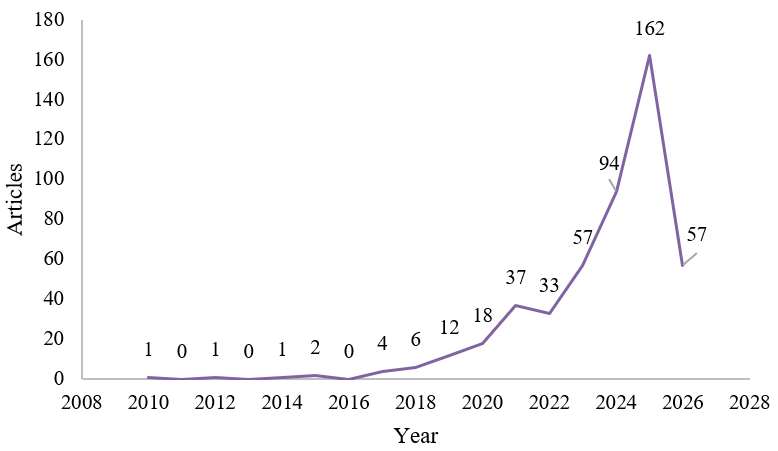
The emergence phase (2010–2016) was characterized by very limited scholarly activity, with only a few publications produced during the seven year period. Research during this stage remained fragmented and had not yet developed into a distinct field of inquiry. The early growth phase (2017–2020) witnessed a gradual increase in publication output, rising from four publications in 2017 to eighteen publications in 2020. This growth coincided with increasing international attention toward Education for Sustainable Development and the broader integration of digital technologies into science education.
The expansion phase (2021–2023) was marked by a substantial increase in research output, although the annual trajectory was not entirely linear. Publication output reached 37 publications in 2021, declined slightly to 33 publications in 2022, and subsequently increased to 57 publications in 2023. Despite this temporary fluctuation, the overall increase across the period indicates strengthening scholarly interest in technology enhanced PjBL for sustainable chemistry education. The widespread adoption of digital learning environments and growing recognition of sustainability competencies may have contributed to this broader expansion of research interest. The most recent phase, rapid acceleration (2024–2026), saw publication output increase dramatically to 94 publications in 2024 and reach its highest observed annual output of 162 publications in 2025. This surge reflects growing interest in integrating PjBL, sustainability education, and advanced educational technologies. Although only 57 publications were identified in 2026, this figure represents a partial publication year because data collection was conducted on May 11, 2026.
Citation patterns further demonstrate the influence of the field (see Table 2). Although recent publications contributed the largest volume of research, older studies generally received higher citation averages because they had longer periods of scholarly exposure. Notably, publications from 2019 exhibited the highest average citation impact, with a mean of 48.83 citations per article and 6.10 citations per year. This finding suggests that studies published during this period played a foundational role in shaping subsequent research directions [58]. Similarly, publications from 2022 showed relatively high annual citation rates, indicating that research conducted during the early expansion of artificial intelligence and advanced educational technologies attracted considerable academic attention.
| Year | Mean Total Citations per Article | Number of Articles | Mean Total Citations per Year |
|---|---|---|---|
| 2010 | 28 | 1 | 1.65 |
| 2012 | 36 | 1 | 2.4 |
| 2014 | 29 | 1 | 2.23 |
| 2015 | 35.5 | 2 | 2.96 |
| 2017 | 28.5 | 4 | 2.85 |
| 2018 | 22.67 | 6 | 2.52 |
| 2019 | 48.83 | 12 | 6.1 |
| 2020 | 21.11 | 18 | 3.02 |
| 2021 | 16.78 | 37 | 2.8 |
| 2022 | 27.33 | 33 | 5.47 |
| 2023 | 13.05 | 57 | 3.26 |
| 2024 | 12.17 | 94 | 4.06 |
| 2025 | 2.22 | 162 | 1.11 |
| 2026 | 0.12 | 57 | 0.12 |
The apparent decline in publication output in 2026 should be interpreted cautiously because the data were collected on May 11, 2026, and therefore represent only a partial publication year. Overall, the results reveal a transition from an emerging research area characterized by sporadic contributions to a rapidly expanding field that increasingly integrates project-based learning, sustainability education, and educational technologies within chemistry education. This trend highlights the growing recognition of technology enhanced pedagogies as important mechanisms for fostering sustainability competencies and addressing contemporary challenges in chemistry learning [34], [59].
4.2.Leading Contributors and Collaboration Networks
The productivity and collaboration analyses reveal that the development of technology enhanced PjBL for sustainable chemistry education has been shaped by a relatively concentrated network of authors, institutions, and countries. This pattern suggests that the field is driven by several active research communities that play a central role in generating knowledge and establishing research directions [60].
Among individual contributors, as presented in Table 3, Rahmawati Y emerged as the most productive author with ten publications, followed by Yamtinah S with seven publications. Several other authors, including Mardiah A, Riandi R, and Wiyarsi A, each contributed six publications. The prominence of these authors indicates the existence of sustained research efforts dedicated to integrating project-based learning, sustainability, and educational technologies within chemistry education. More importantly, the author collaboration network demonstrates that knowledge production in this field is largely organized through collaborative research groups rather than isolated individual contributions. Such collaboration is particularly important in sustainability oriented educational research, which often requires expertise from multiple domains, including pedagogy, chemistry, curriculum development, and educational technology [61], [62].
A notable finding is the dominant role of Indonesia in shaping the field (see Table 4). Indonesia contributed 141 publications, accounting for nearly one third of the total dataset. This substantial contribution is further reflected in the institutional analysis, where most of the leading affiliations are Indonesian universities, including Universitas Pendidikan Indonesia, Universitas Negeri Semarang, Universitas Sebelas Maret, Universitas Negeri Malang, and Universitas Negeri Yogyakarta. The strong representation of these institutions may be attributed to the increasing emphasis on innovative pedagogies, sustainability education, and curriculum transformation within Indonesian science and chemistry education research. The findings suggest that Indonesia has become a major center for scholarship in technology enhanced PjBL for sustainable chemistry education.
However, publication productivity does not necessarily correspond to scholarly influence. Although Indonesia leads the field in publication output, countries such as Finland, the United States, and China demonstrate considerably higher citation impact. Finland achieved an average of 44.1 citations per article, while the United States and China recorded averages of 18.4 and 18.1 citations per article, respectively. This discrepancy highlights the distinction between research quantity and research influence. It also suggests that factors such as international visibility, research dissemination, publication venues, and cross national collaboration may play important roles in determining scholarly impact [32].
| Category | Contributors |
|---|---|
| Most relevant authors | Rahmawati Y, Yamtinah S, Mardiah A, Riandi R, Wiyarsi A, Ibrahim NH, Irwanto I, Pernaa J, Shidiq AS, Aksela M, Kaniawati I, Munzil M, Nandiyanto Abd, Rahayu S, Rokhmat J, Sudarmin S, Sutiani A, Verawati NNSP, Wang C, Winarto W |
| Most relevant affiliations | Universitas Pendidikan Indonesia, Universitas Negeri Semarang, Universitas Sebelas Maret, Universitas Negeri Malang, Universitas Negeri Yogyakarta, Universitas Negeri Jakarta, Universitas Negeri Padang, Universitas Negeri Medan, Universiti Teknologi Malaysia, Lancaster University, Universitas Negeri Surabaya, Central China Normal University, Universitas Syiah Kuala, Aalborg University, Universiti Kebangsaan Malaysia |
| Most relevant sources | Journal of Chemical Education, AIP Conference Proceedings, Sustainability (Switzerland), Jurnal Pendidikan IPA Indonesia, Education Sciences, Eurasia Journal of Mathematics, Science and Technology Education, Frontiers in Education, Journal of Physics: Conference Series, Education and Information Technologies, International Journal of Engineering Education, Chemistry Teacher International, Ecletica Quimica, Education for Chemical Engineers, International Journal of Evaluation and Research in Education, Journal of Baltic Science Education |
| Rank | Country | N. of Citations | Country | N. of Articles |
|---|---|---|---|---|
| 1 | China | 795 | Indonesia | 141 |
| 2 | Indonesia | 702 | China | 44 |
| 3 | USA | 516 | USA | 28 |
| 4 | Finland | 397 | Spain | 19 |
| 5 | Spain | 297 | Turkey | 19 |
| 6 | Kuwait | 215 | Malaysia | 18 |
| 7 | Turkey | 202 | Israel | 11 |
| 8 | Hong Kong | 181 | Finland | 9 |
| 9 | Malaysia | 146 | Germany | 9 |
| 10 | South Africa | 105 | Thailand | 9 |
The collaboration indicators provide additional insights into the social structure of the field. Indonesia, as shown in Fig. 3, produced the highest number of multiple country publications, reflecting its active engagement in international research partnerships. Nevertheless, the proportion of internationally collaborative publications remains relatively modest compared with total output. In contrast, Malaysia exhibits a substantially higher percentage of multiple country publications, indicating a stronger orientation toward international collaboration. Previous studies have shown that international partnerships often facilitate access to diverse expertise, broader research networks, and wider dissemination channels, which may contribute to higher research visibility and citation impact [63], [64]. This observation may partially explain why some countries with lower publication output achieve greater citation performance.
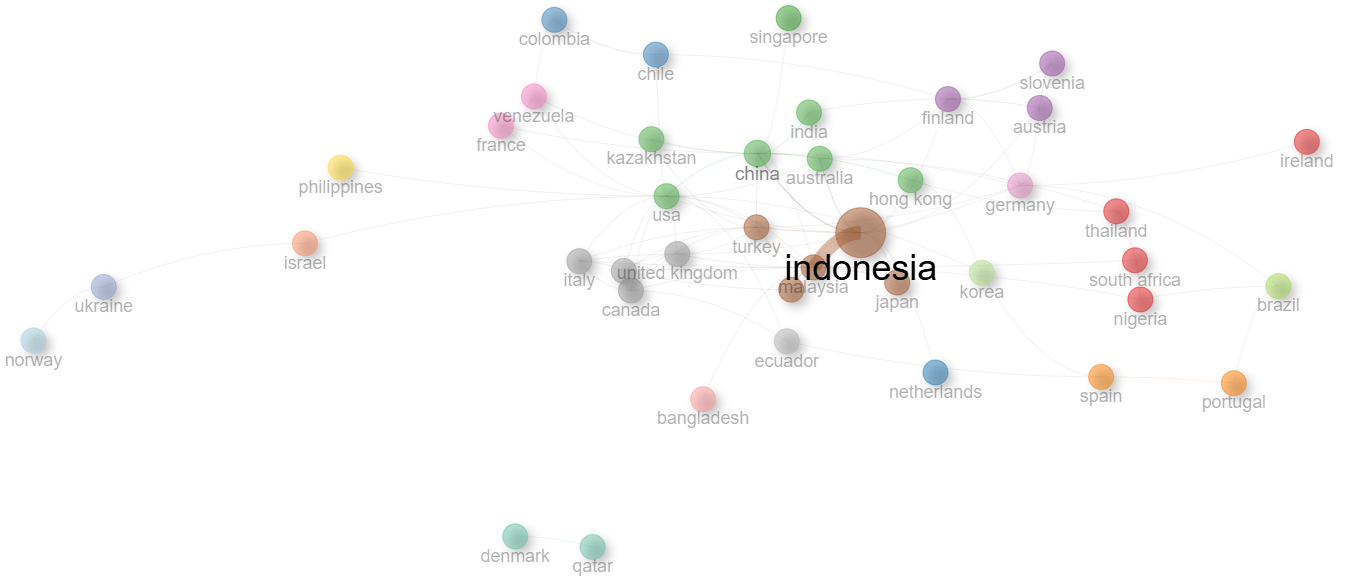
The country collaboration network further demonstrates that research on technology enhanced PjBL for sustainable chemistry education has increasingly become a global endeavor. Strong collaborative links connect researchers across Asia, Europe, North America, and Australia, reflecting the shared international interest in sustainability education and technology enhanced pedagogies (see Fig. 4). At the same time, the network structure reveals opportunities for stronger integration among existing research clusters. Expanding collaborations across geographical regions and disciplinary boundaries may support the development of more innovative and contextually relevant approaches to sustainable chemistry education [5].

The analysis of globally cited documents provides further insights into the intellectual influence of publications within the field. The most highly cited article was authored by Xu W. (2022) in the International Journal of STEM Education, which received 367 citations and an average of 73.4 citations per year. Other influential publications include Hartikainen et al. (2019) in Education Sciences with 240 citations, Almasri et al. (2024) in Research in Science Education with 215 citations, and Jia et al. (2024) in Systems with 134 citations. These highly cited studies primarily focus on technology enhanced learning, STEM education, artificial intelligence applications, and innovative pedagogical approaches, indicating that technological innovation has become a major driver of scholarly influence in this research domain.
Interestingly, the most influential publications are not necessarily produced by the most productive authors or countries identified in the dataset. While Indonesia dominates publication output, many of the most cited articles originate from authors affiliated with institutions in China, Finland, the United States, and other countries with strong international research visibility. This finding reinforces the distinction between research productivity and research impact. It also suggests that international dissemination, publication in high visibility journals, and engagement with globally relevant topics may contribute more strongly to citation performance than publication volume alone [65].
In addition, the normalized citation analysis highlights several recently published studies with exceptional scholarly influence (see Table 5). For example, Yeganeh et al. (2025) achieved the highest normalized citation score (29.7), followed by Almasri et al. (2024) and Xu W. (2022). The prominence of these recent publications suggests that emerging topics such as artificial intelligence, digital transformation, and technology supported sustainability education are attracting substantial academic attention and are likely to shape future research directions in technology enhanced PjBL for sustainable chemistry education [8].
| Paper | DOI | Total Citations | Normalized TC |
|---|---|---|---|
| Xu W, 2022, Int J STEM Educ | 10.1186/s40594-022-00377-5 | 367 | 13.43 |
| Hartikainen S, 2019, Educ Sci | 10.3390/educsci9040276 | 240 | 4.91 |
| Almasri F, 2024, Res Sci Educ | 10.1007/s11165-024-10176-3 | 215 | 17.67 |
| Jia XH, 2024, Systems | 10.3390/systems12030074 | 134 | 11.01 |
| Markula A, 2022, Discip Interdscip Sci Educ Res | 10.1186/s43031-021-00042-x | 127 | 4.65 |
| Chaka C, 2023, Res Pract Technol Enhanc Learn | 10.58459/rptel.2023.18002 | 101 | 7.74 |
| Nagarajan S, 2019, J Chem Educ | 10.1021/acs.jchemed.9b00358 | 77 | 1.58 |
| Kong SC, 2024, Comput Educ | 10.1016/j.caeai.2024.100328 | 72 | 5.92 |
| Li R, 2023, Teach High Educ | 10.1080/13562517.2021.1943655 | 72 | 5.52 |
| Song Y, 2018, Educ Technol Res Dev | 10.1007/s11423-018-9600-3 | 68 | 7.56 |
| Colomo-Magaña E, 2020, Educ Sci | 10.3390/educsci10100275 | 66 | 3.13 |
| Karahan E, 2015, J Sci Educ Technol | 10.1007/s10956-014-9525-5 | 66 | 1.86 |
| Yeganeh LN, 2025, Future Internet | 10.3390/fi17020063 | 66 | 29.7 |
| Hardy JG, 2021, J Chem Educ | 10.1021/acs.jchemed.0c01363 | 64 | 3.81 |
| Lasker GA, 2017, J Chem Educ | 10.1021/acs.jchemed.6b00968 | 60 | 2.11 |
Overall, the findings suggest that the field is characterized by strong regional leadership, particularly from Indonesia and other Asian countries, alongside growing international participation. While productivity is concentrated among a limited number of contributors and institutions, future growth may depend on strengthening global collaboration networks and increasing the international visibility of research outputs. Such efforts are likely to accelerate knowledge exchange and foster more impactful innovations at the intersection of PjBL, sustainability education, and educational technology.
4.3.Conceptual Structure and Thematic Evolution of the Research Field
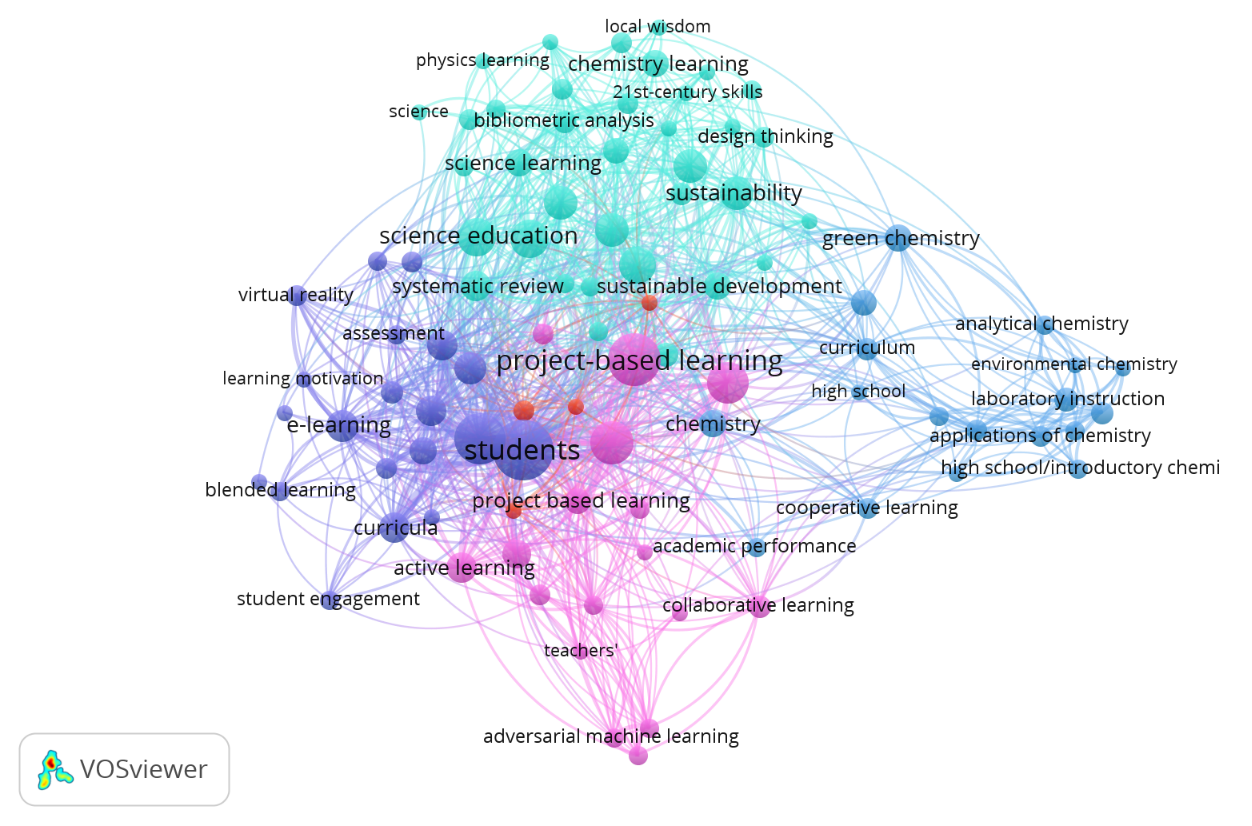
To address RQ3, keyword co-occurrence analysis, overlay visualization, and trend topic analysis were conducted to examine the conceptual structure and thematic evolution of research on technology enhanced PjBL for sustainable chemistry education. The keyword co-occurrence network reveals a highly interconnected research landscape centered on project based learning, students, sustainability, science education, and chemistry learning (Fig. 5). Among these keywords, project based learning occupies the most central position within the network, indicating its role as the primary pedagogical framework connecting sustainability education, chemistry education, and educational technology. The prominence of students further suggests that much of the literature focuses on learner outcomes, including engagement, academic achievement, and competency development.
Several thematic clusters can be identified from the network visualization. One cluster is associated with sustainability related concepts, including sustainability, sustainable development, and green chemistry, reflecting the increasing incorporation of Education for Sustainable Development principles into chemistry instruction. Another cluster focuses on pedagogical and curricular issues through keywords such as science education, chemistry learning, assessment, and curriculum. A third cluster highlights technology enhanced learning environments and includes terms such as e learning, virtual reality, and blended learning. Additional clusters emphasize collaborative and active learning approaches, represented by keywords such as collaborative learning, cooperative learning, and active learning. The strong interconnections among these themes indicate that research has evolved beyond examining PjBL as an isolated instructional strategy. Instead, recent studies increasingly position PjBL as a platform for integrating sustainability concepts, technological innovations, and student centered pedagogies within chemistry education.
In addition, the overlay visualization provides insights into how research themes have developed over time (see Fig. 6). Earlier studies, represented by darker blue nodes, focused primarily on topics such as e learning, blended learning, virtual reality, laboratory instruction, and applications of chemistry. These themes reflect the initial efforts to integrate digital technologies into chemistry education and to improve laboratory and instructional experiences through technology mediated approaches.
More recent publications, represented by green and yellow nodes, demonstrate a shift toward sustainability oriented and future focused themes. Keywords such as sustainability, green chemistry, design thinking, 21st century skills, and local wisdom appear more prominently in recent years. This trend suggests that researchers are increasingly interested in leveraging technology enhanced PjBL not only to improve academic achievement but also to cultivate competencies needed to address sustainability challenges. The emergence of design thinking and 21st century skills is particularly noteworthy because these concepts emphasize creativity, innovation, collaboration, and problem solving. Their growing presence indicates that the field is moving toward competency based approaches that prepare learners to engage with complex environmental and societal issues through chemistry education [66], [67].

The trend topic analysis further illustrates the progression of research interests over time (see Fig. 7). Between 2020 and 2022, frequently occurring topics included collaborative learning, cooperative learning, inquiry based learning, applications of chemistry, and laboratory instruction. These themes indicate an emphasis on active learning strategies and the integration of technology into instructional practices.
From 2023 onward, research attention shifted toward project based learning, students, engineering education, teaching, and higher education. This transition reflects growing interest in broader educational outcomes and the implementation of sustainability oriented pedagogies across diverse learning contexts. Notably, critical thinking emerged as a prominent topic during 2025 and 2026, suggesting increasing recognition of higher order thinking skills as essential outcomes of technology enhanced PjBL.

Overall, the thematic evolution reveals a clear progression from technology adoption and instructional innovation toward the development of sustainability related competencies. While earlier studies concentrated on the use of digital technologies to support learning processes, more recent research increasingly focuses on how technology enhanced PjBL can foster critical thinking, creativity, and other competencies required for sustainable development.
4.4.Research Gaps and Future Directions
To address RQ4, thematic mapping and thematic relationship analyses were conducted to identify underexplored areas and potential directions for future research in technology enhanced project based learning for sustainable chemistry education. The thematic map reveals several distinct patterns regarding the maturity and centrality of research topics within the field (see Fig. 8). The motor themes quadrant is dominated by students, project based learning, and engineering education, indicating that these topics are both highly developed and strongly connected to the overall research structure. Their prominent position suggests that existing studies have primarily focused on student centered learning outcomes and the implementation of project based pedagogies across STEM related disciplines. Similarly, themes related to sustainability, learning, and problem based learning occupy central positions, highlighting their foundational role in shaping the intellectual structure of the field.
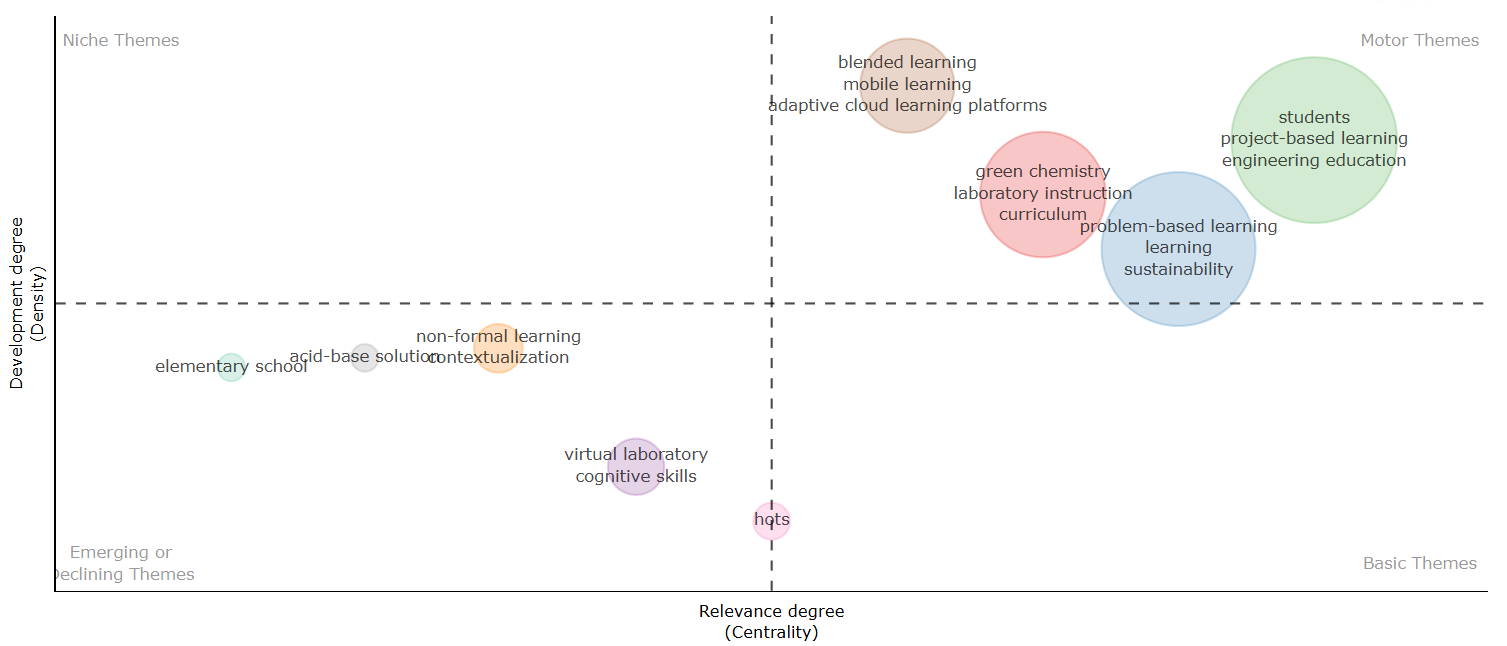
Another notable cluster includes green chemistry, laboratory instruction, and curriculum, which appear as well developed and highly relevant themes. The presence of these topics reflects the growing integration of sustainability principles into chemistry curricula and laboratory activities. However, their position also suggests that current research remains largely concentrated on curricular implementation and instructional design rather than on emerging technological innovations. This finding indicates that substantial opportunities remain for investigating how advanced digital technologies can further enhance sustainability oriented chemistry learning experiences [6], [68].
The emerging themes quadrant provides particularly valuable insights into potential research gaps. Topics such as higher order thinking skills (HOTS), cognitive skills, and virtual laboratory appear as relatively underdeveloped themes despite their relevance to contemporary educational challenges. Given the increasing emphasis on competency based education and digital transformation, these themes represent promising avenues for future investigation. In particular, the limited prominence of virtual laboratories suggests that technology enhanced PjBL has not yet fully explored immersive and simulation based environments as tools for supporting sustainable chemistry education.
Additional evidence of underexplored areas can be observed through the relatively limited visibility of several contemporary technological concepts. Despite the inclusion of technology related terms in the search strategy, keywords associated with artificial intelligence, generative artificial intelligence, learning analytics, adaptive learning systems, and intelligent tutoring systems do not emerge as dominant themes within the conceptual structure (see Fig. 9). However, this finding should not be interpreted as evidence that AI related research is absent or necessarily scarce. Rather, the keyword structure indicates that AI has not yet become a dominant thematic component of the field. This distinction is important because several highly cited publications in the corpus are explicitly AI oriented, including studies addressing AI literacy and related applications [69]. Thus, AI appears relatively peripheral in terms of keyword co-occurrence while simultaneously demonstrating notable citation influence.

This discrepancy between thematic prominence and citation impact provides an important insight into the current development of technology enhanced PjBL research. The relatively weak representation of AI in the keyword structure may partly reflect differences in keyword selection and indexing practices. AI related studies may be described using broader or alternative terms such as educational technology, digital learning, STEM education, or AI literacy, which can reduce the apparent prominence of AI as a distinct keyword cluster. Therefore, the observed low thematic prominence of AI may indicate that the field is still in a transitional stage, in which AI related research is gaining scholarly attention before becoming structurally established as a major research theme.
The thematic relationships illustrated by the Sankey analysis further support this observation. While leading authors and countries are strongly associated with themes such as project based learning, science education, critical thinking, green chemistry, and chemistry learning, relatively fewer connections are observed between these established themes and advanced technology related concepts. This pattern indicates that current scholarship continues to emphasize pedagogical innovation and sustainability integration, while the systematic integration of emerging intelligent technologies remains less structurally connected to the core themes of the field. At the same time, the presence of highly cited AI oriented studies suggests that technological innovation may be developing through influential individual studies before forming a coherent and highly interconnected thematic cluster.
Based on these findings, several future research directions can be proposed. First, research should investigate how artificial intelligence can be systematically integrated into PjBL environments to support sustainability oriented problem solving, rather than examining AI primarily as a standalone technological innovation. Second, future studies should investigate how virtual laboratories, immersive technologies, and learning analytics can enhance students' higher order thinking skills and sustainability competencies. Third, more research is needed to examine interdisciplinary approaches that combine chemistry education, sustainability education, engineering education, and advanced educational technologies. Finally, expanding international collaboration beyond existing regional networks may contribute to the development of more diverse and globally relevant solutions for sustainable chemistry education.
Although technology enhanced PjBL has experienced rapid growth, the literature remains dominated by pedagogical and sustainability oriented themes. The findings do not suggest that artificial intelligence is entirely absent from the literature; rather, AI remains relatively peripheral within the thematic structure despite evidence of increasing scholarly influence. This combination of low thematic prominence and notable citation impact suggests that AI may represent an emerging research direction whose scholarly influence is developing faster than its representation in the broader conceptual structure of the field. Overall, the results suggest that the field has established a strong foundation in PjBL and sustainability education but has considerable potential to further connect these established foundations with emerging intelligent, adaptive, and data driven technologies. Consequently, the next phase of research may increasingly move from general technology supported instruction toward more intelligent and adaptive learning ecosystems capable of supporting sustainability competencies in chemistry education.
5.Conclusion
This study mapped the research landscape of technology enhanced PjBL for sustainable chemistry education based on 485 Scopus indexed publications published between 2010 and May 2026. The findings reveal a substantial increase in scholarly attention, particularly after 2020, with Indonesia emerging as the most productive contributor, while Finland, the United States, and China demonstrated greater citation influence. Thematic analyses indicate a gradual shift from technology adoption and instructional innovation toward sustainability oriented learning and competency development. PjBL, students, sustainability, engineering education, and green chemistry were among the dominant themes, while critical thinking, design thinking, and twenty first century skills emerged more recently.
Despite the rapid growth of the field, advanced technologies, particularly artificial intelligence, learning analytics, and adaptive learning, have not yet become central themes in the conceptual structure of the literature. However, the relatively limited keyword prominence of AI should not be interpreted as evidence of low research importance, as several AI oriented studies demonstrated substantial citation influence. Future research should therefore move toward empirically testing specific applications, such as AI supported formative feedback in green chemistry projects, generative AI for sustainability oriented problem solving, and learning analytics for monitoring students' sustainability competencies during PjBL. Such studies could help establish evidence based approaches for integrating emerging technologies with sustainability oriented chemistry education.
Several limitations should be considered when interpreting these findings. The study relied exclusively on the Scopus database and was restricted to English language publications, which may have excluded relevant literature from other databases and languages. The relatively restrictive search query may also have limited the retrieval of studies using alternative terminology, while the absence of comprehensive manual title and abstract screening may have allowed some records with partial relevance to remain in the corpus. In addition, the 2026 data represent only publications indexed up to May 11, 2026. Finally, recency in overlay visualizations should be interpreted as an indication of emerging or recent topics rather than their importance or research quality. Despite these limitations, the study provides a useful overview of the development and intellectual structure of technology enhanced PjBL for sustainable chemistry education and identifies concrete opportunities for future research.
Author Contribution: All authors contributed equally to the main contributor to this paper. All authors read and approved the final paper.
Funding: This research received no external funding.
Conflicts of Interest: The authors declare no conflict of interest.