
Vol. 4, No. 2, 2026, pp. 1-17
ISSN 3030-9174
https://e-journal.ptti.info/index.php/ijase
Does Educational Level Moderate the Relationship Between Mathematical Resilience and Mathematical Problem-Solving Ability? A Meta-Regression Analysis
b Department of Educational Mathematics, Universitas Negeri Yogyakarta, Yogyakarta, 55281, Indonesia
c Department of Electrical Engineering, Universitas Negeri Yogyakarta, Yogyakarta, 55281, Indonesia
d Department of Pedagogy and Psychology, Abai Kazakh National Pedagogical University, Almaty, 050010, Kazakhtan
e Faculty of Physics and Technological Education, Jizzakh State Pedagogical University, Jizzakh, 130100, Uzbekistan
f Department of Educational and Human Development, National Sun Yat-Sen University, Kaohsiung, 80424, Taiwan
1 asmakhoirunnisa.2025@student.uny.ac.id; 2 heri_retnawati@uny.ac.id; 3 samsul_hd@uny.ac.id; 4 riskysetiawan@uny.ac.id;
5 hanifahmaratush.2025@student.uny.ac.id; 6 xuwenxin0124@163.com; 7 kamolaomonova2202@gmail.com; 8 ibnurafi789@gmail.com
* Corresponding Author
Article history Received May 13, 2026
Revised June 15, 2026
Accepted July 06, 2026
Mathematical Problem-Solving;
Education Level;
COVID-19 Impact
The relationship between mathematical resilience and mathematical problem-solving ability is well established; however, the extent to which this relationship varies across educational levels and learning contexts remains unclear. Extending previous meta-analytic evidence, this study examined educational level and the COVID-19 learning period as potential moderators. The quantitative synthesis included 31 primary studies published between 2017 and 2022, yielding 40 effect sizes: 11 from high-school studies, 17 from university studies, and 12 from junior-high-school studies. A random-effects model produced an overall pooled Fisher's (z) of 0.76, 95% CI [0.64, 0.88], (t(38) = 13.10), (p < .001), equivalent to approximately (r = .64). Substantial heterogeneity was observed, (τ = 0.32), 95, and (I2 = 81.83), with a 95% prediction interval from (z = 0.10) to (z = 1.42), equivalent to approximately (r = .10) to (r = .89). The pooled effects were positive and significant for high school, (z = 0.831), university, (z = 0.793), and junior high school, (z = 0.659). However, educational level did not significantly moderate the relationship, (Qm(2) = 1.57), (p = .457). The COVID-19 period was also not a significant moderator within the high-school, (Fm(1,9) = 0.046), (p = .836), university, (Fm(1,15) = 3.984), (p = .064), or junior-high-school subgroup, (Fm(1,10) = 0.480), (p = .504). These findings indicate that mathematical resilience is consistently associated with stronger problem-solving performance across educational levels, although substantial variation remains within each subgroup. Resilience-supportive mathematics instruction should therefore be implemented across educational stages and accompanied by adequate instructional and contextual support.

1.Introduction
Mathematical problem-solving ability is a central competence in mathematics education because it requires students to interpret unfamiliar situations, identify relevant information, construct mathematical representations, select and implement appropriate strategies, and evaluate the validity of their solutions. In contemporary curricula and international assessments, problem solving represents not only procedural competence but also mathematical reasoning, creativity, higher-order thinking, and the adaptive application of knowledge to real-world situations [1][2]. This emphasis is also evident in Indonesia, where students are expected to apply mathematical concepts flexibly to contextual, non-routine, and data-based problems rather than merely reproduce formulas [3][4]. Consistent with Polya's framework, successful problem solving involves understanding the problem, devising and executing a plan, and reflecting on the solution [5]. However, performance in these stages is influenced by metacognition, representational fluency, prior knowledge, mathematical literacy, task characteristics, and the learning environment [6]–[10]. Meta-analytic evidence further indicates that technology-based instruction, innovative learning models, and teaching aids can improve mathematical problem-solving performance [3][4][11]. Nevertheless, students continue to experience difficulties in interpreting mathematical language, selecting strategies, constructing models, and evaluating solutions, particularly when tasks differ from familiar examples [6]–[9][11][12]. Their responses to these difficulties are shaped not only by cognitive competence but also by behavioral and affective factors, including engagement, confidence, anxiety, strategy use, and willingness to persist [3][6][13][14][15]. Evidence that mathematics anxiety is negatively associated with achievement, together with findings that anxiety-focused interventions can improve emotional and performance outcomes, further demonstrates that students' success in problem solving depends partly on their capacity to manage the emotional demands of mathematics [14][16][17][18].
Within this affective–motivational domain, mathematical resilience provides a relevant theoretical explanation for why some students remain engaged with difficult problems while others disengage after an unsuccessful attempt. Mathematical resilience refers to students' capacity to respond adaptively to mathematical difficulty by valuing mathematics, accepting struggle as part of learning, and believing that mathematical ability can develop through effort and appropriate support [19][20]. The Mathematical Resilience Scale conceptualizes this construct through the interrelated dimensions of value, struggle, and growth, while subsequent psychometric research demonstrates its continuing relevance across different cultural and educational contexts [21]. Its relationship with problem solving is theoretically plausible because non-routine tasks require students to tolerate uncertainty, regulate frustration, revise ineffective strategies, monitor their progress, and persist when an immediate solution is unavailable. Students with limited resilience may interpret difficulty as evidence of fixed inability, whereas resilient students are more likely to treat setbacks as information for adjusting their strategies. This explanation is consistent with evidence connecting resilience-related characteristics with sociomathematical norms, mathematical literacy, executive functions, learning persistence, and academic achievement [21]–[25]. Research involving high-performing educational systems and early-childhood learners also suggests that resilience may contribute to mathematical learning across developmental stages, although its expression may depend on students' cognitive resources, learning autonomy, and instructional context [23][24][26].
Empirical studies have generally reported a positive association between mathematical resilience and mathematical problem-solving ability. Mathematical resilience has been linked with problem-solving performance and metacognitive skills [27], while other studies have found that students with stronger resilience tend to demonstrate better mathematical problem-solving outcomes [28]. Research examining the Search, Solve, Create, and Share model with mind mapping further indicates that resilience should be considered when designing problem-solving instruction [29], and additional evidence supports a connection between resilience and students' capacity to solve mathematical problems [30]. Tania et al. synthesized this literature and established a positive overall relationship between mathematical resilience and mathematical problem-solving ability [25]. However, an overall pooled estimate cannot explain why the magnitude of the association varies across studies. The previous synthesis did not sufficiently determine whether differences in educational level and learning context account for between-study variability. This limitation is important because effect sizes may differ according to students' developmental stage, mathematical content, measurement instrument, sample characteristics, research design, and instructional conditions. Meta-analytic heterogeneity should therefore be examined rather than treated merely as statistical noise, because meta-regression, subgroup analysis, and prediction intervals can clarify both the sources and the expected range of variation in the underlying relationship [31][32].
The present study extends previous meta-analytic evidence by applying a random-effects model, meta-regression, subgroup analysis, and prediction-interval estimation to examine whether educational level and the COVID-19 learning context account for variation in the relationship between mathematical resilience and mathematical problem-solving ability. Educational level is a theoretically plausible moderator because students' cognitive development, exposure to mathematical abstraction, problem-solving experience, self-regulation, and learning autonomy differ across junior high school, senior high school, and university contexts. Pandemic-related learning conditions may also alter the relationship because persistence alone may not translate into problem-solving performance when students experience limited teacher feedback, disrupted learning routines, reduced peer interaction, or unequal access to instructional resources. Accordingly, this study aims to estimate the overall association between mathematical resilience and mathematical problem-solving ability and to determine whether educational level and pandemic-related learning context explain between-study heterogeneity. The study contributes theoretically by clarifying the developmental and contextual conditions under which resilience may support problem solving, methodologically by extending previous synthesis through moderator analysis and prediction intervals, and practically by identifying educational contexts in which resilience-supportive mathematics instruction may be particularly relevant.
2.Method
2.1.Research Design
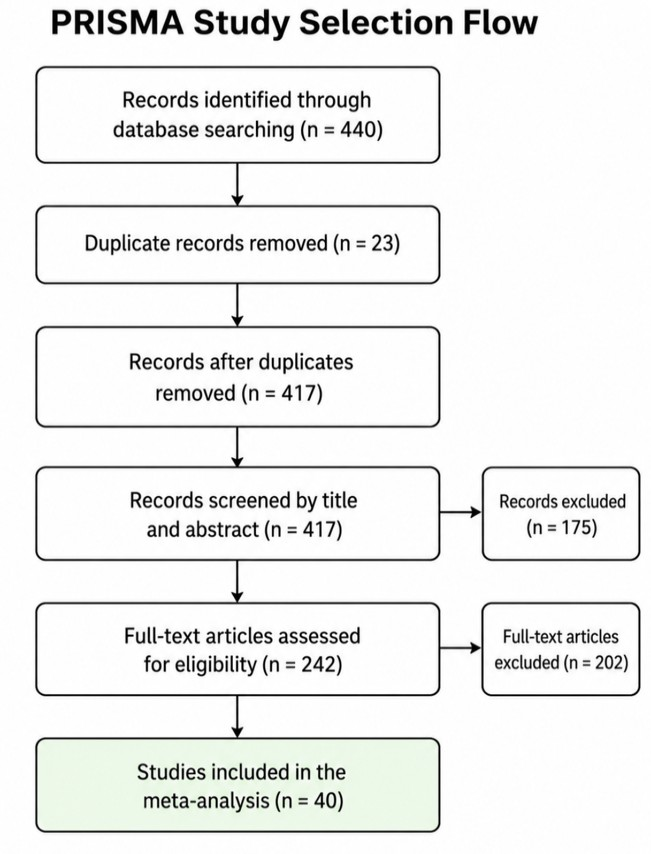
This study used a systematic review and meta-analysis design to examine the relationship between mathematical resilience and mathematical problem-solving ability across educational levels. The meta-analysis was conducted to synthesize quantitative correlational findings from previous empirical studies and to test whether educational level moderates the strength of the relationship. The reporting structure followed the PRISMA 2020 guideline (Fig. 1), which provides a 27-item checklist and flow diagram for reporting systematic reviews and meta-analyses.
2.2.Literature Search Strategy
The primary database search covered Scopus, Web of Science, ERIC, ScienceDirect, Google Scholar, Garuda, Neliti, DOAJ, Dimensions, and Scilit. Reference-list screening was used as an additional search strategy. The search focused on studies examining mathematical resilience or mathematical resiliency in relation to mathematical problem-solving ability, problem-solving skills, or mathematical problem-solving performance.
The following search string was used and adjusted according to the syntax of each database:
problem-solving ability” OR “mathematical problem solving ability” OR
“problem-solving skills” OR “mathematical problem-solving skills”) AND
(“correlation” OR “relationship” OR “Pearson” OR “Spearman” OR “r”)
The search was limited to empirical quantitative studies that reported sufficient statistical information for meta-analysis. Studies published before and after the COVID-19 period were included to allow moderator analysis based on COVID-19 classification.
2.3.PRISMA Flow Procedure
The literature search followed the general stages of meta-analysis described by Page et. al identifying and studying the research topic, searching and selecting relevant studies, calculating effect sizes, testing heterogeneity, interpreting the synthesized results, and drawing conclusions [33]. The search focused on studies using the terms mathematical resilience, resilience mathematical, resiliensi matematis, problem solving, and solution to problem. Searches were conducted through Google Scholar, ScienceDirect, Neliti, Garuda, DOAJ, Dimensions, and Scilit.
The search was conducted from April to June 2022 and was limited to studies published from 2017 to 2022. Screening began with titles, followed by abstracts, and then full texts when needed. Studies were selected when they reported the relationship between mathematical resilience and mathematical problem-solving ability or provided sufficient statistical information, particularly the correlation coefficient and sample size, to compute the effect size. If the correlation coefficient was not directly reported, available statistics such as t or F values were considered for transformation where possible. The database search identified 440 records. After removing 23 duplicate records, 417 records remained for title and abstract screening. At this stage, 175 records were excluded because they did not meet the initial eligibility criteria. The remaining 242 full-text articles were assessed for eligibility. A total of 202 full-text articles were excluded because they did not meet the inclusion criteria, such as irrelevant constructs, non-quantitative design, insufficient statistical information, inaccessible full text, or duplicate datasets. The final quantitative dataset comprised 40 effect sizes derived from 31 primary studies. Twenty-seven studies contributed one effect size each, while [34]–[37] contributed multiple effect sizes. The subgroup meta-regression included 11 effect sizes from high-school studies, 17 from university studies, and 12 from junior-high-school studies.
2.4.Eligibility Criteria
The inclusion criteria were as follows: (1) the study was obtained from one of the selected databases; (2) the study examined mathematical resilience or an equivalent construct; (3) the study examined mathematical problem solving or mathematical problem-solving ability; (4) the study was published in a national or international journal, national proceeding, thesis, or equivalent academic publication with accessible full text; (5) the study was published up to 2022 within the specified search range; (6) the study used a quantitative design, including correlational or experimental designs with extractable correlational information; and (7) the study involved students at elementary, junior high, senior high, or higher education levels. The sampling of studies was purposive because the selection was determined by predefined inclusion and exclusion criteria.
The final dataset consisted of 40 effect sizes from studies that met the inclusion criteria. The studies represented different educational levels and publication formats. The extracted information was then organized into a coding sheet before statistical analysis.
2.5.Data Coding
Coding was conducted to convert information from each primary study into numerical and categorical data relevant to the meta-analysis (Table 1). The coding scheme covered three domains: study identity, study content, and statistical data. To support validity, the selected studies and coding results were reviewed by an expert evaluator and peer reviewers with experience in educational research and multivariate statistical analysis.
| Study identity | Study content | Statistical data |
|---|---|---|
| Title Author(s) Year of publication Publication type Country |
Study topic Educational level Research design Validity and reliability information |
Correlation coefficient (r) Sample size (N) Standard deviation Mean t statistic |
2.6.Statistical Analysis
Statistical analyses were conducted using JASP Version 0.95.4. A correlational meta-analysis was performed by using the correlation coefficient ($r$) as the primary effect size. When $r$ was not directly reported, available test statistics were converted into $r$. For studies reporting a $t$-statistic, the effect size was calculated as:
where $t_i$ is the reported $t$-value and $df_i$ is the corresponding degree of freedom. For studies reporting an $F$-statistic with one numerator degree of freedom, the statistic was first converted into $t$ using:
The obtained correlation coefficients were transformed into Fisher's $z$ values to stabilize the variance:
The sampling variance and standard error were estimated as $v_i = \dfrac{1}{n_i-3}$ with $SE_i=\sqrt{v_i}$, where $n_i$ is the sample size of the $i$-th study. Each effect size was weighted by the inverse of its variance. Under the fixed-effect model, the pooled effect size was calculated as:
Heterogeneity was evaluated using Cochran's $Q$ statistic, $Q=\sum_{i=1}^{k} w_i (z_i-\bar{z}_{FE})^2$ and the $I^2$ statistic, $I^2=\dfrac{Q-(k-1)}{Q}\times100\%$. When heterogeneity was substantial, a random-effects model was applied. The random-effects weight was computed as:
where $\tau^{2}$ represents the between-study variance. The pooled effect size under the random-effects model was calculated as:
The pooled Fisher's $z$ was back-transformed into $r$ using $\bar{r}=\dfrac{\exp(2\bar{z})-1}{\exp(2\bar{z})+1}$. Educational level was examined as a categorical moderator to determine whether the pooled correlation differed across educational categories. Moderator analysis was used to assess whether educational level contributed to the heterogeneity of effect sizes across the included studies.
3.Results and Discussion
3.1.Results
The meta-analysis synthesized 40 effect sizes examining the relationship between mathematical resilience and mathematical problem-solving ability. A random-effects model was used because the studies differed in educational level, sample characteristics, measurement instruments, and learning context. This approach assumes that the true association may vary across studies rather than represent a single identical population effect [31][38].
Fig. 2 presents the distribution of 40 effect sizes across the high-school, university, and junior-high-school subgroups. Most individual estimates were positive, although several confidence intervals crossed the zero line, indicating that some primary studies did not show statistically significant associations. Nevertheless, the pooled effects were positive and statistically significant in all three educational subgroups. The high-school subgroup produced the largest pooled Fisher's (z), (z = 0.83), 95% CI [0.56, 1.10], (t(9) = 6.92), (p < .001), followed by the university subgroup, (z = 0.79), 95% CI [0.60, 0.99], (t(15) = 8.79), (p < .001), and the junior-high-school subgroup, (z = 0.66), 95% CI [0.44, 0.87], (t(10) = 6.85), (p < .001). These estimates correspond to correlations of approximately (r = .68), (r = .66), and (r = .58), respectively, indicating moderate-to-strong positive relationships between mathematical resilience and mathematical problem-solving ability across educational levels. For the full dataset, the pooled effect was (z = 0.76), 95% CI [0.64, 0.88], (t(38) = 13.10), (p < .001), equivalent to approximately (r = .64). However, substantial heterogeneity was present in the high-school subgroup, (I2 = 79.74), the university subgroup, (I2 = 75.55), the junior-high-school subgroup, (I2 = 80.43), and the full dataset, (I2 = 81.83). The relatively wide prediction intervals further indicate that the magnitude of the true association may vary considerably across future studies and learning contexts, even though the overall direction is expected to remain positive. Therefore, the forest plot supports a consistently positive relationship between mathematical resilience and problem-solving ability while also showing that educational level alone does not fully explain the observed variation among studies.
The full-model prediction interval extended from Fisher's (z = 0.10) to (1.42), equivalent to approximately (r = .100) to (r = .890). This interval indicates that the association is expected to remain positive in comparable future settings, although its magnitude may range from weak to very strong. The full dataset also showed substantial heterogeneity, (τ = 0.32), 95% CI [0.25, 0.44], and (I2 = 81.83), 95% CI [72.97%, 89.29%]. Therefore, most of the observed variation was attributable to genuine between-study differences rather than sampling error alone.

Table 2 presents the subgroup-specific tests. Mathematical resilience was significantly associated with mathematical problem-solving ability in the high-school subgroup, (t(9) = 6.92), (p < .001); the university subgroup, (t(15) = 8.79), (p < .001); and the junior-high-school subgroup, (t(10) = 6.85), (p < .001). Nevertheless, significant residual heterogeneity remained within every educational subgroup: high school, (Qe(9) = 51.21), (p < .001); university, (Qe(15) = 72.39), (p < .001); and junior high school, (Qe(10) = 70.31), (p < .001). Educational level therefore did not fully account for the variation in effect sizes.
| Subgroup | Test | p | |
|---|---|---|---|
| Residual heterogeneity | High School | Qe(9) = 51.21 | < .001 |
| University | Qe(15) = 72.39 | < .001 | |
| Junior High School | Qe(10) = 70.31 | < .001 | |
| Pooled effect | High School | t(9) = 6.92 | < .001 |
| University | t(15) = 8.79 | < .001 | |
| Junior High School | t(10) = 6.85 | < .001 | |
| Moderation | High School | Fm(1, 9) = 0.05 | .836 |
| University | Fm(1, 15) = 3.98 | .064 | |
| Junior High School | Fm(1, 10) = 0.48 | .504 | |
| Subgroup differences | Qm(2) = 1.57 | .457 |
As reported in Table 3, all educational subgroups showed positive pooled associations between mathematical resilience and mathematical problem-solving ability. The largest pooled estimate was observed for high-school students, with Fisher's (z = 0.831), 95% CI [0.559, 1.102], corresponding to (r = .681), 95% CI [.507, .801]. The university subgroup produced a pooled estimate of (z = 0.793), 95% CI [0.601, 0.985], equivalent to (r = .660), 95% CI [.538, .755]. For junior-high-school students, the pooled estimate was (z = 0.659), 95% CI [0.445, 0.874], corresponding to (r = .578), 95% CI [.418, .703]. These estimates indicate moderate-to-strong positive relationships across all three educational levels. Although the association was descriptively strongest among high-school students, the overlapping confidence intervals indicate that the subgroup estimates were broadly comparable and should not be interpreted as statistically different without reference to the formal subgroup-difference test.
The 95% prediction intervals were considerably wider than the confidence intervals. After back-transformation, the predicted true effects ranged from approximately (r = .065) to (r = .921) for high school, from (r = .116) to (r = .899) for university, and from (r = .015) to (r = .862) for junior high school. These wide intervals indicate that the magnitude of the relationship may vary substantially across future studies, even though the expected direction remains positive. This variability is also reflected in the between-study variance estimates, which were (τ2 = .100) for high school, (τ2 = .092) for university, and (τ2 = .074) for junior high school.
| 95% CI | 95% PI | |||||
|---|---|---|---|---|---|---|
| Subgroup | Estimate | Lower | Upper | Lower | Upper | |
| Pooled effect | High School | 0.831 | 0.559 | 1.102 | 0.065 | 1.597 |
| University | 0.793 | 0.601 | 0.985 | 0.117 | 1.469 | |
| Junior High School | 0.659 | 0.445 | 0.874 | 0.015 | 1.303 | |
| τ | High School | 0.316 | 0.211 | 0.700 | ||
| University | 0.304 | 0.210 | 0.543 | |||
| Junior High School | 0.272 | 0.181 | 0.550 | |||
| τ² | High School | 0.100 | 0.044 | 0.491 | ||
| University | 0.092 | 0.044 | 0.295 | |||
| Junior High School | 0.074 | 0.033 | 0.302 | |||
Note. The pooled effect size corresponds to the weighted average effect across studies.
Although the estimated relationship was descriptively strongest at the high-school level, the test of subgroup differences was not statistically significant, (Qm(2) = 1.57), (p = .457). Consequently, the numerical ordering of the subgroup estimates should not be interpreted as evidence that mathematical resilience has a significantly stronger relationship with problem-solving ability at one educational level than at another. The findings instead indicate that the association is comparatively stable across high-school, university, and junior-high-school populations.
The prediction intervals remained wide within all three subgroups. For high-school students, the interval ranged from Fisher's (z = 0.065) to (1.597), equivalent to approximately (r = .065) to (r = .921). For university students, it ranged from (z = 0.117) to (1.469), equivalent to approximately (r = .116) to (r = .899). For junior-high-school students, it ranged from (z = 0.015) to (1.303), equivalent to approximately (r = .015) to (r = .862). Although all intervals remained on the positive side, their lower limits approached zero, particularly for junior-high-school studies. This suggests that mathematical resilience may show only a weak relationship with problem-solving ability in some learning contexts, despite the moderate-to-strong average effects.
Between-study variance was also substantial within each subgroup. The estimated variance was highest in the high-school subgroup, (τ2 = 0.100), 95% CI [0.044, 0.491], followed by the university subgroup, (τ2 = 0.092), 95% CI [0.044, 0.295], and junior-high-school subgroup, (τ2 = 0.074), 95% CI [0.033, 0.302]. The corresponding (I2) values shown in Fig. 2 were 79.74% for high school, 75.55% for university, and 80.43% for junior high school. These results indicate that considerable heterogeneity persisted even after the studies were separated by educational level.
3.2.Moderator Analysis
The moderator analysis examined whether the strength of the relationship between mathematical resilience and mathematical problem-solving ability differed across educational levels and COVID-19 periods. Educational-level differences were evaluated through the subgroup-difference test reported in Table 2, whereas the COVID-19 period was examined separately within the high-school, university, and junior-high-school subgroups through meta-regression.
The test of differences among educational subgroups was not statistically significant, (Qm(2) = 1.57), (p = .457). Therefore, educational level did not significantly moderate the relationship between mathematical resilience and mathematical problem-solving ability. Although the pooled estimate was descriptively highest for high-school students, followed by university and junior-high-school students, these differences were not sufficiently large to establish that the association varied systematically across educational levels. The overlapping confidence intervals presented in Table 3 further support the conclusion that the subgroup effects were statistically comparable.
Table 4 presents the subgroup-specific tests of the COVID-19 period. The moderator was not statistically significant in the high-school subgroup, (Fm(1,9) = 0.046), (p = .836), or in the junior-high-school subgroup, (Fm(1,10) = 0.480), (p = .504). The university subgroup produced a larger moderator statistic, (Fm(1,15) = 3.984), (p = .064), but the result remained above the conventional significance threshold of .05. Thus, the available evidence does not demonstrate that the relationship between mathematical resilience and problem-solving ability differed significantly between studies classified as before and after COVID-19 within any educational subgroup.
| Subgroup | F | df1 | df2 | p | |
|---|---|---|---|---|---|
| COVID? | High School | 0.046 | 1 | 9.000 | .836 |
| University | 3.984 | 1 | 15.000 | .064 | |
| Junior High School | 0.480 | 1 | 10.000 | .504 |
Note. Fixed effects tested using Knapp and Hartung adjustment.
Table 5 provides the corresponding meta-regression coefficients. Because the reported contrast is labeled “Before COVID-19,” the intercept represents the estimated association for the reference category, namely studies classified as after COVID-19. The conditional effect was positive and statistically significant for high-school students, (z = 0.819), 95% CI [0.520, 1.117], (p < .001), equivalent to approximately (r = .674). Positive conditional effects were also found for university students, (z = 0.661), 95% CI [0.420, 0.902], (p < .001), corresponding to approximately (r = .579), and junior-high-school students, (z = 0.581), 95% CI [0.263, 0.899], (p = .002), corresponding to approximately (r = .523).
| 95% CI | ||||||||
|---|---|---|---|---|---|---|---|---|
| Subgroup | Estimate | Standard Error | Lower | Upper | t | df | p | |
| Intercept | High School | 0.819 | 0.132 | 0.520 | 1.117 | 6.197 | 9.000 | < .001 |
| University | 0.661 | 0.113 | 0.420 | 0.902 | 5.844 | 15.000 | < .001 | |
| Junior High School | 0.581 | 0.143 | 0.263 | 0.899 | 4.071 | 10.000 | .002 | |
| COVID? (Before COVID-19) | High School | 0.067 | 0.316 | -0.647 | 0.781 | 0.213 | 9.000 | .836 |
| University | 0.374 | 0.188 | -0.025 | 0.774 | 1.996 | 15.000 | .064 | |
| Junior High School | 0.134 | 0.193 | -0.296 | 0.564 | 0.692 | 10.000 | .504 | |
Note. Fixed effects tested using Knapp and Hartung adjustment.
The coefficients for the before-COVID-19 category represent differences from the reference category rather than independent pooled effects. The estimated difference was (b = 0.067), 95% CI [-0.647, 0.781], (p = .836), for high school; (b = 0.374), 95% CI [-0.025, 0.774], (p = .064), for university; and (b = 0.134), 95% CI [-0.296, 0.564], (p = .504), for junior high school. All three coefficients were positive, suggesting descriptively stronger associations before COVID-19. However, each confidence interval included zero, and none of the coefficients reached statistical significance. The university result may indicate a potential contextual pattern, but it should be described as suggestive rather than conclusive.
Fig. 3 presents the profile-likelihood plots for the between-study variance within each educational subgroup. The likelihood peaks are consistent with the (τ2) estimates reported in Table 3: (τ2 = .100) for high school, (τ2 = .092) for university, and (τ2 = .074) for junior high school. The plots support the presence of nonzero between-study variance across all three subgroups. This finding is consistent with the significant residual heterogeneity reported in Table 2 and indicates that neither educational level nor the COVID-19 period fully explained the variation among effect sizes.
The broad confidence intervals around the variance estimates also indicate uncertainty regarding the exact amount of heterogeneity. Nevertheless, the consistently elevated (I2) values—79.74% for high school, 75.55% for university, and 80.43% for junior high school—show that a substantial proportion of the observed variability was attributable to genuine differences among studies rather than sampling error. These differences may arise from variations in measurement instruments, mathematical domains, participant characteristics, research designs, or instructional contexts.

The Baujat plots in Fig. 4 identify effect sizes that contributed comparatively strongly to heterogeneity or model influence. In the high-school subgroup, the effect sizes reported by [39][40] appeared relatively separated from the main cluster. In the university subgroup, [41][42] showed comparatively strong influence. In the junior-high-school subgroup, [43][44][45] appeared to contribute more strongly than most other effects.

These effect sizes should not be removed solely because they are influential. Their positions may represent genuine methodological or contextual differences rather than data errors. However, leave-one-out or case-deletion sensitivity analysis should be conducted to determine whether excluding each influential effect materially changes the pooled estimates, heterogeneity statistics, or moderator conclusions [46][47].
Fig. 5 displays the residual funnel plots for the three educational subgroups. Some imbalance is visible, particularly in the university and junior-high-school plots, and several effect sizes are positioned away from the central region. This pattern may indicate small-study effects, but visual asymmetry alone is insufficient to establish publication bias. Funnel-plot asymmetry may also result from substantial heterogeneity, unequal subgroup composition, differences in measurement precision, or influential studies [33][48].

3.3.Discussion
The meta-analysis demonstrated a positive and statistically significant relationship between mathematical resilience and mathematical problem-solving ability. Across the full dataset, the pooled effect was Fisher's (z = 0.76), 95% CI [0.64, 0.88], (t(38) = 13.10), (p < .001), corresponding to approximately (r = .64). This result indicates a moderate-to-strong association and supports the view that mathematical resilience is an important affective–motivational resource associated with students' ability to engage successfully in mathematical problem solving. Students who are resilient in mathematics are more likely to persist when facing difficult tasks, recover from mistakes, and continue searching for solution strategies. This is consistent with recent mathematical resilience literature showing that resilience is connected with students' capacity to manage difficulty, sustain engagement, and maintain confidence in mathematics learning [49][50][51]. A systematic review by Xenofontos and Mouroutsou found that mathematical resilience has been conceptualized both as high performance despite disadvantage and as part of students' mathematical identity and persistence in learning [49]. Similarly, Akkan and Horzum reviewed mathematical resilience studies and confirmed that the field has expanded across different educational contexts and methodological designs [50].
The positive pooled effect is also consistent with empirical studies directly connecting mathematical resilience and mathematical problem-solving. Attami et al. examined mathematical resilience and mathematical problem-solving ability among junior high school students and positioned resilience as an affective factor that supports students when they face mathematical adversity [44]. Fitriani et al. also emphasized that positive mathematical resilience can support students' problem-solving performance, especially when students are exposed to non-routine problems and active learning environments [52]. In their study, the authors stated that non-routine problems require conceptual mastery, higher-order thinking, and application of mathematical principles, while mathematical resilience helps students develop confidence and reduce fear when solving mathematics problems [52].
The result is theoretically logical because problem solving is not only a cognitive process, but also an affective and behavioral process. Students must understand the problem, represent information, select a strategy, execute procedures, monitor progress, and evaluate answers. This process often involves uncertainty and repeated failure. Current mathematics education literature continues to describe problem solving as a central competence in mathematics learning and as a major research agenda in mathematics education [53][54]. Verschaffel et al. noted that word problems are among the most difficult mathematical tasks for learners, partly because they require students to coordinate linguistic, conceptual, and procedural information [53]. Santos-Trigo also emphasized that mathematical problem solving remains a major foundation for mathematics education and curriculum development [54].
The significant residual heterogeneity indicates that the relationship between mathematical resilience and problem-solving ability varied across the included studies. This result is not surprising because educational meta-analyses often combine studies with different samples, instruments, grade levels, and learning contexts. The presence of heterogeneity means that the pooled effect should be understood as an average effect, not as a uniform effect that applies equally to all educational levels. Recent methodological literature recommends reporting not only the pooled effect but also heterogeneity statistics and prediction intervals, because the prediction interval helps readers understand how much the true effect may vary in future studies [55][56][57]. In this study, the prediction interval was wide, suggesting that although the average relationship is positive, the magnitude of the relationship may be weaker or stronger depending on context.
The moderator analysis showed that educational level was marginally significant. This result suggests that educational level may shape the relationship between mathematical resilience and mathematical problem-solving ability, although the overall moderator test did not reach the .05 threshold. The significant negative coefficient for junior high school indicates that the relationship was weaker at this level compared with the reference educational category. This may occur because junior high school students are in a transition stage between concrete and more abstract mathematical reasoning. They begin to face more complex algebraic, geometric, and word-problem tasks, but their self-regulation and metacognitive strategies may still be developing. Studies on mathematical problem solving and affective variables have shown that students' beliefs, anxiety, motivation, and task difficulty can affect mathematical performance differently across educational stages [16][58][59].
The non-significant university coefficient suggests that university-level studies did not differ significantly from the reference group. This may indicate that university students have more stable academic experiences and more developed learning strategies, allowing resilience to operate more consistently. However, this result must be interpreted carefully because several university-level studies in the dataset contributed multiple effect sizes. When one study contributes more than one effect size, the assumption of independence may be weakened. Recent meta-analysis methodology recommends multilevel meta-analysis or robust variance estimation when effect sizes are nested within the same study [60][61]. Therefore, future analysis should test whether the moderation pattern remains stable when dependent effect sizes are handled using a multilevel model.
The COVID-19 period was a significant moderator. The positive coefficient for Before COVID-19 suggests that the relationship between mathematical resilience and problem-solving ability was stronger in studies conducted before the pandemic. This finding is meaningful because the COVID-19 period changed the conditions of mathematics learning. During pandemic-related school closures and remote learning, students often experienced reduced teacher feedback, limited peer interaction, unstable learning routines, and unequal access to digital resources. Large-scale studies and systematic reviews have reported that COVID-19 school closures produced learning loss and widened academic inequalities, particularly in subjects such as mathematics that require continuous practice and structured feedback [62]–[66]. Therefore, even when students had mathematical resilience, the disrupted learning environment may have limited the extent to which resilience translated into measurable problem-solving performance.
This result also suggests that mathematical resilience should not be treated only as an individual trait. Resilience develops within learning environments. Students are more likely to persist in mathematical problem solving when teachers normalize errors, provide scaffolding, encourage multiple solution strategies, and create emotionally safe classrooms. The post-COVID learning context therefore requires not only remediation of mathematical content, but also reconstruction of students' confidence, persistence, and willingness to engage with difficult tasks. This aligns with recent studies on mathematical resilience scale adaptation and validation, which show that resilience is linked to students' emotional and cognitive barriers in mathematics learning [21][51][67].
The funnel plot and Baujat plot also provide important methodological insights. The funnel plot suggests possible asymmetry, but this should not be interpreted as automatic publication bias. Publication bias diagnostics can be affected by heterogeneity, subgroup imbalance, and measurement differences [48][68]. The Baujat plot suggests that some studies may contribute disproportionately to heterogeneity or model influence. However, influential studies should be checked through sensitivity analysis rather than excluded without justification. If a study is influential because it represents a rare subgroup, such as elementary school, its influence may reflect a structural limitation in the dataset rather than an error. This is especially important in moderator analysis because underrepresented categories can strongly affect regression coefficients.
Considering all results, the findings indicate that mathematical resilience is an important factor associated with mathematical problem-solving ability. The significant pooled effect supports the inclusion of resilience-building strategies in mathematics instruction. However, the significant heterogeneity, marginal educational-level moderation, and significant COVID-19 moderation indicate that the strength of the relationship depends on context. For practice, teachers should integrate non-routine problems, formative feedback, reflective questioning, peer discussion, and explicit support for productive struggle. For research, future meta-analyses should expand the number of elementary school studies, separate pre-COVID, during-COVID, and post-COVID periods more precisely, and apply multilevel models when several effect sizes come from the same primary study.
4.Conclusion
This meta-analysis found a significant positive relationship between mathematical resilience and mathematical problem-solving ability. The pooled effect for the full dataset was Fisher's (z=0.76), 95% CI [0.64, 0.88], indicating a moderate-to-strong association. Significant heterogeneity was present, meaning that the effect varied across studies. Educational level showed a marginal moderation effect, while COVID-19 period significantly moderated the relationship. The relationship was stronger before COVID-19, suggesting that stable learning environments may strengthen the way mathematical resilience supports problem-solving ability. These findings imply that mathematical resilience should be developed as part of mathematics instruction, particularly in post-COVID learning recovery and in educational levels where students experience transitions in mathematical abstraction.
Supplementary Materials: No supplementary materials are available for this article.
Author Contribution: All authors contributed equally to this paper. All authors have read and approved the final version.
Funding: Please add: This research did not receive any external funding.
Acknowledgment: The authors would like to acknowledge the use of JASP software (version 0.95.4) [69].
Conflicts of Interest: The authors declare no conflicts of interest.