
Vol. 4, No. 2, 2026, pp. 29-42
ISSN 3030-9174
https://e-journal.ptti.info/index.php/ijase
From Molecules to Models: A Bibliometric Analysis of Visualization in AI-Driven Chemistry with Emerging Educational Implications
b Department of Electrical Engineering, Universitas Ahmad Dahlan, Indonesia
c Agro-industrial Technology Study Program, Institut Teknologi Sumatera, Indonesia
d Department of Chemistry Education, Universitas Negeri Yogyakarta, Indonesia
1 hajidahsalsabila.2023@student.uny.ac.id; 2 alfian_maarif@ieee.org; 3 casphama.118330007@student.itera.ac.id; 4 jikhsan@uny.ac.id
* Corresponding Author
Article history Received May 11, 2026
Revised June 14, 2026
Accepted July 22, 2026
Chemical Visualization;
Molecular Modeling;
Bibliometric Analysis
The rapid advancement of artificial intelligence has significantly transformed chemical research, particularly in molecular modeling, reaction prediction, and visualization. However, the role of visualization within AI-driven chemistry remains fragmented and underexplored. This study addresses this gap through a bibliometric analysis of research at the intersection of artificial intelligence, chemistry, and visualization. Data were collected from the Scopus database in April 2026 using a structured search query and screened following PRISMA guidelines. The final dataset consisted of 1,069 journal articles, which were analyzed using Biblioshiny and VOSviewer to examine publication trends, conceptual structures, and thematic evolution. To complement the bibliometric findings, eight additional articles related to IBM RXN for Chemistry were qualitatively reviewed to explore the role of emerging AI platforms in chemical visualization. The results reveal a substantial increase in research output after 2019, reflecting the rapid expansion of AI applications in chemistry. The field is dominated by themes related to machine learning, molecular modeling, computational chemistry, and analytical techniques. Temporal analysis indicates a progression from early computational approaches to advanced AI-based methods, including deep learning and predictive modeling. Rather than emerging as an independent research theme, visualization is primarily embedded within machine learning, molecular modeling, retrosynthesis, and computational chemistry workflows, where it supports the interpretation of complex chemical data and predictive outputs. The analysis of IBM RXN-related studies further highlights the emergence of integrated platforms that combine molecular design, reaction prediction, and retrosynthesis within interactive visualization environments. Overall, AI-driven chemistry is undergoing a transition toward platform-based and predictive visualization systems. These findings contribute to understanding how visualization supports knowledge generation in contemporary chemistry, although citation-based indicators for the most recent publications should be interpreted cautiously due to the inclusion of records indexed up to April 2026.

1.Introduction
Chemistry has long relied on visual representations to bridge the gap between abstract molecular phenomena and human understanding [1], [2]. From early ball and stick models to advanced computational simulations, the discipline has continuously evolved in how it represents structures, reactions, and mechanisms [3]. These representations are not merely illustrative, but play a central role in shaping conceptual understanding, guiding experimental design, and supporting scientific reasoning [4]. In both scientific research and education, the ability to effectively visualize chemical processes determines how knowledge is constructed [5], [6], communicated [7], and applied [8].
In recent years, the rapid advancement of artificial intelligence has significantly transformed the landscape of chemical research [9]. Machine learning and deep learning approaches have enabled the prediction of chemical reactions, the design of novel compounds, and the optimization of synthesis pathways [10]. Earlier rule based systems, which depended on expert knowledge, have gradually been replaced by data driven models capable of learning complex chemical patterns from large datasets [11]. This shift has not only improved predictive performance, but also introduced new forms of representation in which chemical knowledge is encoded and visualized through computational models [12].
Alongside these developments, the nature of chemical visualization has also evolved [13], [14]. Traditional static representations such as structural formulas and reaction schemes are increasingly complemented by dynamic and model based visualizations [15]. Molecular modeling, graph based representations, and simulation tools allow researchers to explore chemical systems in more interactive and multidimensional ways [16]. As a result, visualization in chemistry is no longer limited to depiction, but has become an integral component of analysis, prediction, and decision making [17].
The emergence of AI powered platforms further illustrates this transformation [18], [19]. Tools such as IBM RXN for Chemistry enable users to predict chemical reactions and generate retrosynthetic pathways through neural network models [20]. By allowing users to input molecular structures and receive predicted outcomes, these platforms provide interactive visualizations of chemical processes that were previously inaccessible without advanced expertise [21], [22]. Beyond their application in research, such tools also hold significant potential in educational contexts, where they can support students in understanding complex reaction mechanisms and exploring multiple representations of chemical phenomena [23].
Despite these advancements, the integration of AI driven visualization in chemistry remains unevenly explored across scientific and educational contexts [6], [24]. Existing studies have largely focused on the technical capabilities of artificial intelligence in reaction prediction and molecular modeling, while less attention has been given to how these technologies reshape visual representation and understanding [9], [25]. In addition, the role of AI based tools in supporting learning, particularly in relation to how students interpret and engage with visualized chemical models, has not been systematically examined. The limited visibility of specific platforms such as IBM RXN for Chemistry in bibliometric keyword networks further indicates a gap between technological innovation and its representation in scholarly discourse.
While several bibliometric reviews have investigated the development of artificial intelligence in chemistry, they have predominantly emphasized publication trends, AI algorithms, or application domains rather than visualization as the primary unit of analysis [9], [26], [27], [28]. In contrast, this study adopts visualization as the central analytical lens by integrating bibliometric mapping of publication trends, conceptual structures, and thematic evolution with a qualitative synthesis of IBM RXN for Chemistry literature. This combined approach provides a more comprehensive understanding of how visual representations have evolved from conventional molecular depictions to interactive, predictive, and platform-based systems that increasingly influence both chemical research and educational practice.
Therefore, this study aims to provide a bibliometric analysis of AI driven chemistry with a particular emphasis on visualization across scientific and educational domains. By mapping publication trends, keyword networks, and thematic evolution, this research seeks to uncover how visualization is conceptualized and utilized in AI based chemistry. In doing so, the study contributes to a deeper understanding of how the relationship between molecules and models is being redefined in the era of artificial intelligence, while also highlighting emerging opportunities for integrating advanced visualization tools into chemistry education. Based on the background outlined above, this study is guided by the following research questions:
RQ1. What are the publication trends and growth patterns of research on AI driven chemistry with a focus on visualization across scientific and educational contexts?
RQ2. What are the dominant themes, keywords, and conceptual structures that characterize the intersection of artificial intelligence, chemical visualization, and learning?
RQ3. How have visual representations in AI driven chemistry evolved over time, particularly in relation to molecular modeling, reaction prediction, and retrosynthesis?
RQ4. What roles do emerging AI platforms, including IBM RXN for Chemistry, play in shaping scientific practices and educational applications of chemical visualization?
2.Method
2.1.Research Design
This study employed a bibliometric approach to systematically map and analyze the development of AI driven chemistry with a particular focus on visualization across scientific and educational contexts. Bibliometric analysis was selected because it enables the systematic identification of publication trends, conceptual structures, collaboration patterns, and thematic evolution within a research domain [29]. In addition to quantitative bibliometric mapping, a supplementary qualitative analysis was conducted to provide further insight into the role of emerging AI platforms represented by IBM RXN for Chemistry.
2.2.Data Source and Search Strategy
The bibliometric data were retrieved from the Scopus database in April 2026. Scopus was selected because it provides broad coverage of peer reviewed scientific literature across chemistry, artificial intelligence, and education, making it suitable for large scale bibliometric studies [30]. The search was performed using the Advanced Search feature to ensure a structured and reproducible retrieval process. The search query was developed around four major concepts: artificial intelligence, chemistry, visualization, and educational context. The search string was formulated as follows:
(TITLE-ABS-KEY("artificial intelligence" OR "machine learning" OR "deep learning" OR "neural network*")) AND (TITLE-ABS-KEY(chemistry OR "chemical synthesis" OR retrosynthes* OR "reaction prediction")) AND (TITLE-ABS-KEY(visual* OR "molecular representation" OR "reaction visualization" OR "graphical model*" OR "molecular modeling")) AND (TITLE-ABS-KEY(education OR "chemistry education" OR "science education" OR learning OR teaching))
Although Scopus provides extensive journal coverage, the use of a single database may have excluded relevant publications indexed exclusively in other databases such as Web of Science or PubMed. Therefore, the findings should be interpreted within the coverage of the Scopus database.
2.3.Screening and Selection Process
The screening process followed a PRISMA based procedure to ensure transparency and reproducibility (see Fig. 1). A total of 2,122 records were initially identified from the database. Prior to screening, no duplicate records or automatically excluded documents were identified. All retrieved records were then screened based on title and abstract relevance. A total of 546 records were excluded based on subject area filtering, which removed publications from fields not directly related to the scope of this study. These excluded subject areas included mathematics, nursing, arts and humanities, dentistry, economics, psychology, veterinary science, business, and social sciences. The exclusion of several subject areas was intended to reduce records primarily focused on algorithm development or non-chemical applications. Nevertheless, this decision may have excluded some relevant interdisciplinary studies in computational chemistry and therefore represents a limitation of the present study.
Subsequently, 1,069 reports were assessed for eligibility through full text evaluation. During this stage, several exclusion criteria were applied, including non article document types, non English publications, non journal sources, and documents not in the final publication stage. Specifically, 467 records were excluded due to document type, 24 due to language, 5 due to source type, and 11 due to publication stage. Following this process, a total of 1,069 documents were included in the final dataset for bibliometric analysis.

2.4.Supplementary Dataset on IBM RXN for Chemistry
To address the research question concerning the role of emerging AI platforms, a supplementary qualitative dataset focusing on IBM RXN for Chemistry was constructed. On the same date as the primary bibliometric search, an additional Scopus search was conducted using the keyword "IBM RXN". The search returned eight journal articles, all of which were included in the qualitative analysis because they directly discussed the application or development of IBM RXN for Chemistry.
These eight publications were analyzed separately from the main bibliometric dataset because they were intended to provide contextual evidence regarding the practical implementation of AI driven chemistry platforms rather than to influence bibliometric indicators such as publication trends or keyword networks. The supplementary analysis was therefore used exclusively to support the interpretation of RQ4 concerning the role of IBM RXN for Chemistry in scientific research and its potential implications for chemistry education.
2.5.Data Analysis
The bibliometric dataset was analyzed using Biblioshiny and VOSviewer. Descriptive bibliometric indicators were first generated to examine annual publication growth, leading journals, and country productivity. Keyword co-occurrence analysis was then conducted using VOSviewer to identify dominant research themes and conceptual structures within AI driven chemistry. Overlay visualization was subsequently employed to examine the temporal evolution of research topics, allowing the identification of emerging themes related to molecular modeling, reaction prediction, retrosynthesis, and visualization. Finally, findings from the supplementary IBM RXN dataset were qualitatively synthesized to interpret how emerging AI platforms contribute to chemical visualization and complement the bibliometric results.
2.6.Data Visualization Tools
Bibliometric mapping and network visualization were performed using VOSviewer, while descriptive bibliometric indicators, thematic evolution, and thematic mapping were generated using Biblioshiny, the web interface of the Bibliometrix package in R.
3.Results and Discussion
3.1.Publication Trends and Growth Patterns
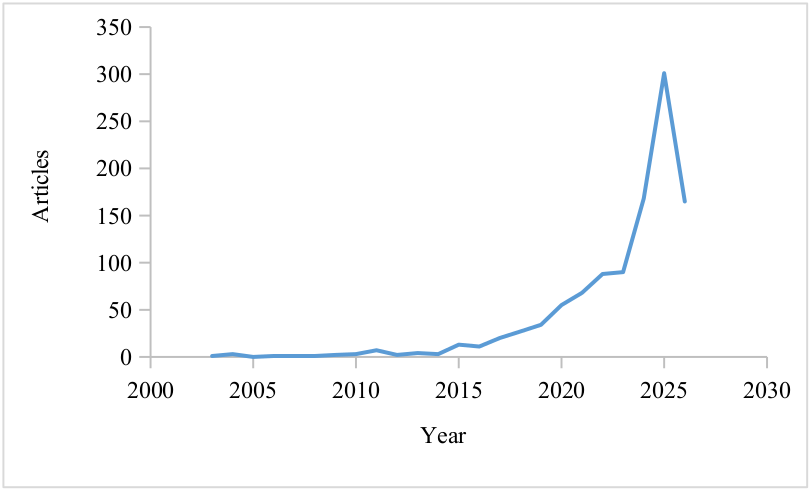
To address the first research question, this section presents the publication trends and growth patterns of research on AI driven chemistry with a particular focus on visualization across scientific and educational contexts. The analysis of annual scientific production reveals a significant growth in research on AI driven chemistry with a focus on visualization across scientific and educational contexts. The earliest publications appeared in 2003, with only one article, followed by a relatively slow and inconsistent development until around 2014 (see Fig. 2). During this initial phase, the number of publications remained low, typically below ten articles per year, indicating that the integration of artificial intelligence and visualization in chemistry was still in its early exploratory stage.
A noticeable increase began in 2015, marking the transition toward more sustained research activity. This growth became more pronounced after 2017, with publications rising from 20 articles in 2017 to 34 in 2019. A sharp acceleration is observed from 2020 onwards, where the number of publications nearly doubled from 55 in 2020 to 88 in 2022, followed by a further increase to 168 in 2024 and a peak of 301 articles in 2025. Although the number for 2026 appears lower at 165 articles, this can be attributed to the partial coverage of the year at the time of data collection.
This trend reflects the rapid expansion of AI applications in chemistry, particularly in areas related to molecular modeling, reaction prediction, and visualization. The surge after 2020 may also be linked to broader advancements in deep learning technologies and the increasing availability of computational tools, which have facilitated more complex and data driven approaches to chemical research. Furthermore, the growing interest in integrating digital technologies into education may have contributed to the expansion of research in educational contexts. This growth also reflects the increasing availability of AI driven platforms, such as IBM RXN for Chemistry, which have made advanced chemical visualization more accessible to both researchers and learners [31], [32].
The distribution of publications across journals indicates that the research field is highly interdisciplinary, spanning chemistry, bioinformatics, and computational sciences. Leading sources such as Food Chemistry and Nucleic Acids Research each contributed 43 articles, followed by Briefings in Bioinformatics with 37 articles and Journal of Computer-Aided Molecular Design with 33 articles (see Table 1).
The prominence of journals related to bioinformatics and molecular modeling suggests that much of the research is driven by applications in biological and molecular systems, where visualization and AI play critical roles in understanding complex structures and interactions. Similarly, journals such as Computers in Biology and Medicine and Molecular Informatics highlight the importance of computational approaches in advancing chemical visualization.
Interestingly, the presence of journals like Journal of Molecular Graphics and Modelling reflects the central role of visual representation in this field, aligning with the focus of this study. However, the relatively limited presence of education focused journals suggests that while visualization and AI are well developed in scientific research, their integration into chemistry education remains less explored, indicating a potential research gap [33], [34].
| Rank | Source | N of Articles | Country | N of Articles |
|---|---|---|---|---|
| 1 | Food Chemistry | 43 | China | 397 |
| 2 | Nucleic Acids Research | 43 | Usa | 153 |
| 3 | Briefings in Bioinformatics | 37 | India | 55 |
| 4 | Journal of Computer-Aided Molecular Design | 33 | Germany | 49 |
| 5 | Computers in Biology and Medicine | 25 | United Kingdom | 33 |
| 6 | Molecular Informatics | 23 | Korea | 28 |
| 7 | Journal of Molecular Graphics and Modelling | 20 | Switzerland | 26 |
| 8 | Food Research International | 19 | Brazil | 23 |
| 9 | International Journal of Biological Macromolecules | 19 | Canada | 22 |
| 10 | Journal of Hazardous Materials | 17 | France | 22 |
| 11 | Spectrochimica Acta-Part A: Molecular and Biomolecular Spectroscopy | 17 | Japan | 18 |
| 12 | International Journal of Molecular Sciences | 12 | Poland | 18 |
| 13 | Journal of Molecular Biology | 12 | Italy | 16 |
| 14 | Protein Science | 12 | Iran | 11 |
| 15 | ACS Sensors | 11 | Saudi Arabia | 11 |
The analysis of country contributions shows a strong dominance by China, with 397 publications, followed by the United States with 153 articles. Other notable contributors include India, Germany, and the United Kingdom, although their publication counts are significantly lower. This distribution highlights the leading role of China in advancing AI driven chemistry research, which may be attributed to substantial investments in artificial intelligence and computational sciences. The United States also remains a key contributor, reflecting its long standing influence in both chemistry and AI research. The presence of contributions from a diverse range of countries, including Korea, Switzerland, Brazil, and Canada, indicates that this research field has a global reach. However, the uneven distribution suggests disparities in research capacity and access to advanced computational resources [35].
3.2.Conceptual Structure and Thematic Distribution of AI-Driven Chemistry
To address the second research question, a keyword co-occurrence analysis was conducted to identify the dominant themes and conceptual structure of research on AI driven chemistry, particularly in relation to visualization and educational contexts. As shown in Fig. 3, the network visualization reveals a highly interconnected and multidisciplinary research landscape, in which several major themes are clustered based on the co-occurrence of keywords. The analysis indicates that the field is structured around four primary thematic areas that collectively reflect the integration of artificial intelligence, chemical modeling, and data-driven approaches.
The most dominant theme is centered on artificial intelligence and data-driven chemistry, as indicated by the high frequency of keywords such as chemistry, article, machine learning, and deep learning. These terms occupy central positions in the network, suggesting their strong influence across multiple research areas. The presence of related keywords such as prediction, algorithm, support vector machine, and feature extraction further highlights the emphasis on predictive modeling and computational techniques. Notably, data visualization appears within this cluster, indicating that visualization is often integrated into analytical workflows rather than being treated as a primary research focus. This suggests that visualization functions mainly as a supporting mechanism for interpreting AI generated results [36].
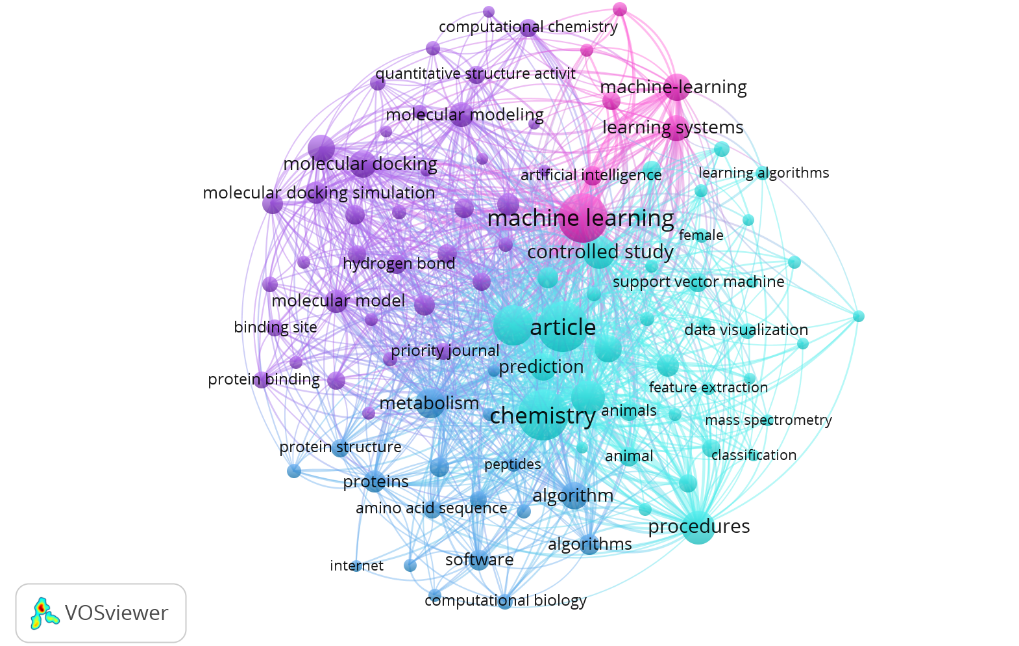
In addition to the core AI cluster, a distinct thematic area is associated with analytical chemistry and detection technologies. This theme includes keywords such as spectroscopy, image processing, hyperspectral imaging, and limit of detection, which are grouped together as shown in Fig. 3. These terms reflect the application of AI in processing experimental data and enhancing measurement accuracy. The integration of image-based analysis and spectroscopic techniques indicates that visualization plays an instrumental role in transforming raw data into interpretable outputs, particularly in fields such as environmental monitoring and food analysis [16].
Another prominent thematic cluster focuses on protein structure and bioinformatics, characterized by keywords such as protein, molecular model, amino acid sequence, and protein structure. As illustrated in Fig. 3, this cluster is closely connected to computational biology and database-driven research. The strong presence of terms related to sequence analysis, molecular representation, and structural modeling suggests that visualization in this domain is essential for understanding complex biological systems. In this context, visual models serve not only as representational tools but also as analytical frameworks for interpreting molecular interactions and biological functions.
Furthermore, a separate but closely related cluster represents molecular modeling and drug discovery, which includes keywords such as molecular docking, molecular dynamics, drug design, and quantitative structure activity relationship. This cluster, highlights the role of simulation and computational chemistry in exploring molecular behavior and chemical interactions. The integration of AI techniques within this domain reflects a shift toward predictive and data-driven modeling approaches, where visualization is central to understanding binding mechanisms, structural properties, and reaction pathways [37].
The relationships between these clusters indicate a high level of conceptual integration across the field. Keywords such as machine learning, prediction, and algorithm act as central nodes that connect different thematic areas, suggesting that artificial intelligence serves as a unifying framework linking diverse applications in chemistry. However, despite the presence of visualization-related terms such as data visualization and molecular graphics, these appear less dominant compared to core computational and modeling concepts. This indicates that visualization, while widely used, is often embedded within broader analytical processes rather than being developed as an independent research focus.
These findings are further supported by the thematic map presented in Fig. 4, which classifies research themes based on their centrality and level of development. The motor themes, represented by chemistry, machine learning, and article, occupy a highly central and well-developed position, indicating their foundational role in the field. In contrast, specialized topics such as molecular docking, molecular dynamics, and metabolism are positioned as niche themes, reflecting their high level of development but more limited scope. Meanwhile, themes related to protein and molecular model appear in the emerging or declining quadrant, suggesting ongoing transitions in research focus. Basic themes, including spectroscopy and image processing, remain important as foundational elements that support broader developments in AI-driven chemistry.
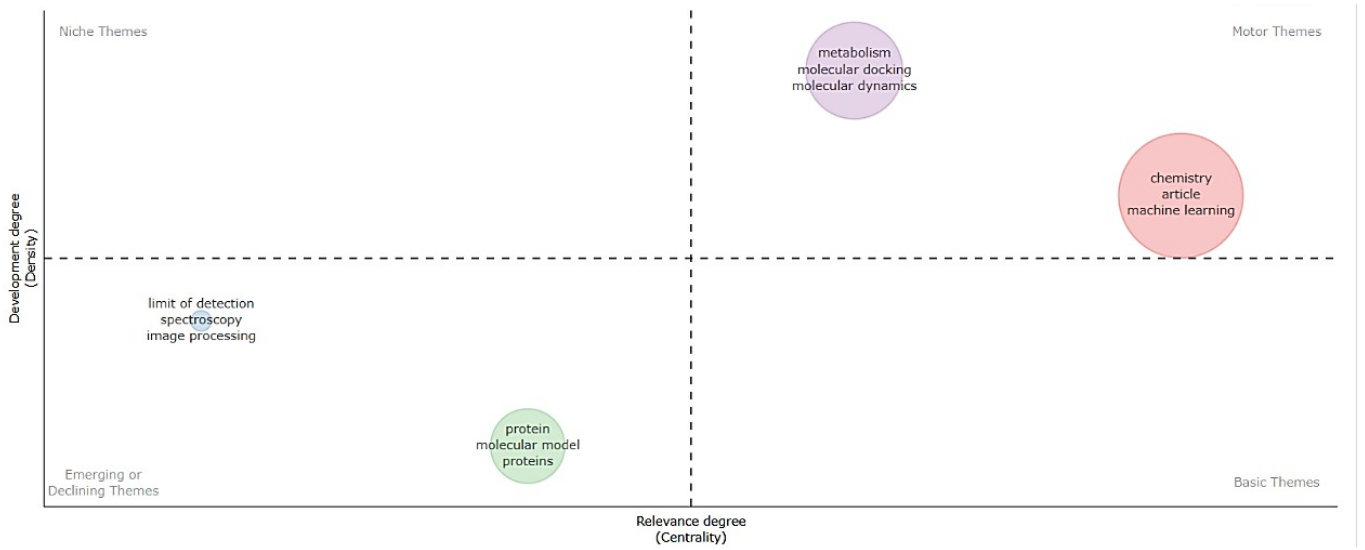
Overall, the results demonstrate that the field of AI driven chemistry is characterized by a strong emphasis on computational modeling and predictive analysis, with visualization playing a supporting yet essential role across multiple domains. The relatively limited prominence of visualization as a standalone theme suggests a potential research gap, particularly in educational contexts where visual representation is critical for conceptual understanding.
3.3.Evolution of Research Themes in AI-Driven Chemistry
To address the third research question, an overlay visualization analysis was conducted to examine the temporal evolution of research themes in AI driven chemistry, particularly in relation to molecular modeling, reaction prediction, and retrosynthesis. As illustrated in Fig. 5, the overlay map uses color gradients to represent the average publication year of keywords, ranging from earlier topics (blue) to more recent developments (yellow). This visualization reveals a clear shift in research focus over time, reflecting the dynamic evolution of the field. These findings are further supported by the trend topics analysis presented in Fig. 6, which provides a longitudinal perspective on the emergence and development of key research themes.
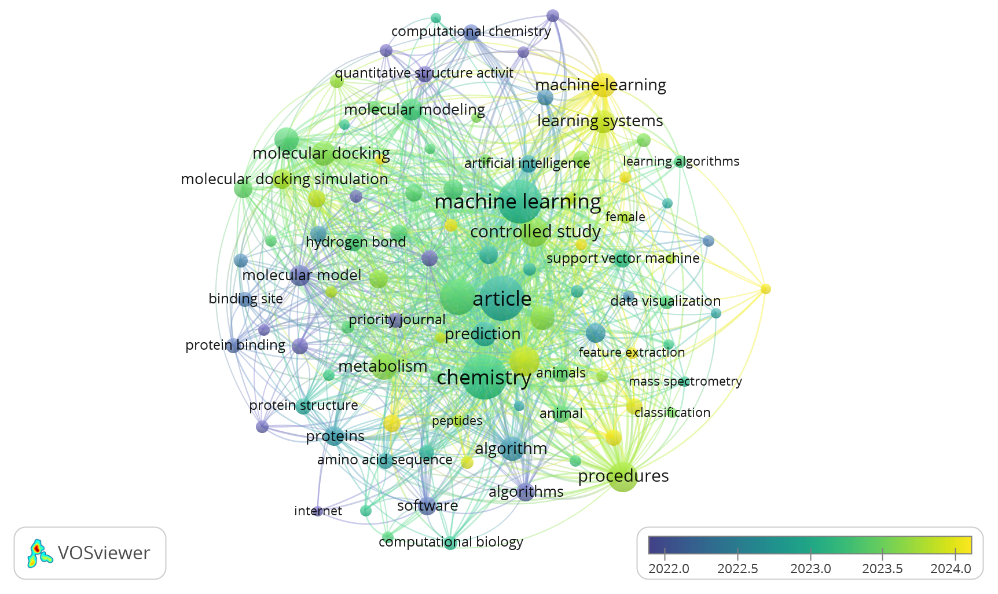
In the early stage of development, research was primarily grounded in classical computational approaches and foundational bioinformatics. As shown in Fig. 5, earlier topics such as protein structure, protein binding, and molecular model appear in darker blue tones, indicating their prominence in earlier years. This is consistent with the trend analysis in Fig. 6, where terms such as computer program (median year 2011), kernel method (2013), and neural networks (computer) (2016) represent the initial phase of computational integration in chemistry. These findings suggest that early research focused on establishing computational frameworks and structural analysis methods, particularly in protein related studies [38].
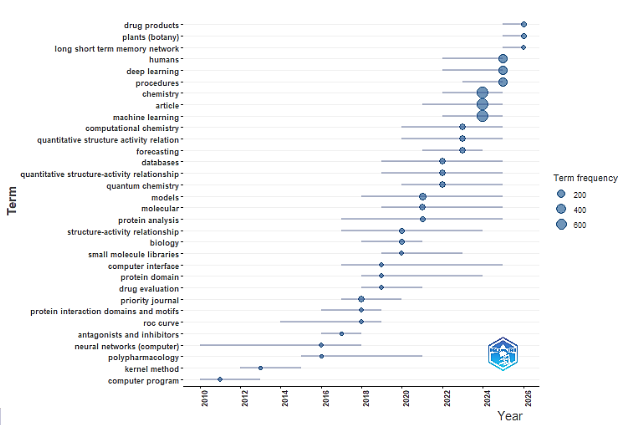
The field then transitioned into a more advanced phase characterized by the expansion of molecular modeling and quantitative analysis. Keywords such as molecular modeling, molecular docking, and quantitative structure activity relationship appear in green tones in Fig. 5, indicating their growing importance during the intermediate period. This transition is further confirmed by the trend topics in Fig. 6, where terms such as models (median year 2021), molecular (2021), and quantitative structure activity relationship (2022) show sustained growth. During this phase, research increasingly emphasized simulation-based approaches and structure activity relationships, particularly in drug discovery and chemical prediction.
In the most recent phase, a clear shift toward artificial intelligence driven approaches is observed. As shown in Fig. 5, keywords such as machine learning, deep learning, data visualization, and feature extraction appear in yellow tones, indicating their emergence as dominant contemporary topics. The trend analysis in Fig. 6 reinforces this pattern, with machine learning (median year 2024), deep learning (2025), and procedures (2025) showing strong recent growth. Additionally, newly emerging topics such as long short term memory network, drug products, and plants (botany) appear at the latest end of the timeline, suggesting the diversification of AI applications into more specialized and interdisciplinary domains.
Importantly, the evolution of visualization within AI driven chemistry appears to follow a parallel trajectory. While early research primarily relied on structural and molecular representations, more recent developments increasingly incorporate data visualization as part of AI driven analytical workflows. However, as indicated in Fig. 5, visualization related terms tend to cluster around machine learning and prediction oriented keywords, suggesting that visualization remains embedded within broader computational processes rather than emerging as an independent research focus [39], [36].
Overall, the combined evidence from the overlay visualization and trend topics analysis demonstrates a clear progression from foundational computational chemistry and bioinformatics toward advanced AI driven modeling and predictive analytics. This shift reflects broader technological advancements in artificial intelligence, as well as the increasing availability of large scale chemical data and computational resources. Despite these developments, the relatively limited prominence of visualization as a standalone theme highlights an important research opportunity, particularly in the context of chemistry education where visual representation plays a critical role in conceptual understanding.
3.4.The Role of Emerging AI Platforms in Shaping Scientific and Educational Chemical Visualization
The findings indicate that emerging AI platforms, particularly IBM RXN for Chemistry, play a significant role in transforming both scientific practices and educational applications of chemical visualization. Across the selected studies, IBM RXN is consistently positioned as a tool that bridges molecular design, reaction prediction, and synthetic feasibility through data-driven and language-based modeling approaches [22], [31]. As described in recent developments, the platform conceptualizes chemical reactions as sequences analogous to natural language, enabling forward prediction, retrosynthesis, and even experimental procedure generation [40]. This paradigm shift reflects a transition from static molecular representations toward dynamic, model-based visualization of chemical processes.
In scientific contexts, IBM RXN contributes to accelerating research workflows, particularly in drug discovery and computational chemistry. Several studies demonstrate how the platform supports retrosynthetic pathway generation for complex molecules, ensuring that computationally designed compounds remain synthetically accessible [17], [41], [42]. For instance, in drug design studies targeting antimicrobial resistance and neurodegenerative diseases, IBM RXN is employed to validate synthesis routes of AI-generated molecules, thereby linking molecular modeling outputs with real-world laboratory feasibility [41], [42]. This integration highlights the platform’s role not only as a predictive engine but also as a visualization tool that maps possible reaction pathways, allowing researchers to interpret and evaluate chemical transformations more effectively.
Moreover, the integration of IBM RXN into broader AI frameworks, such as deep learning-based molecular generation and reinforcement learning systems, further emphasizes its role in shaping modern chemical research [20], [21]. Studies on SARS-CoV-2 ligand design and retrosynthesis optimization illustrate how IBM RXN operates within end-to-end pipelines, connecting molecular representation, prediction, and synthesis planning [17]. In this sense, visualization is no longer limited to structural depiction but extends to multi-step reaction pathways and decision-making processes, enhancing interpretability in AI-driven chemistry.
From an educational perspective, the implications are equally significant. IBM RXN introduces new opportunities for visualizing abstract chemical concepts, particularly in retrosynthesis and reaction mechanisms, which are traditionally challenging for learners. By providing interactive and data-driven representations of chemical reactions, the platform supports the development of systems thinking and computational literacy in chemistry education. This aligns with the broader shift identified in previous RQs, where visualization evolves from static diagrams to interactive and algorithm-driven representations. Consequently, IBM RXN can be seen as an enabling technology that supports the integration of artificial intelligence into chemistry learning environments, fostering deeper conceptual understanding and bridging the gap between theoretical knowledge and real-world applications.
Overall, the analysis suggests that platforms such as IBM RXN for Chemistry are not merely supplementary tools but are actively reshaping how chemistry is practiced, visualized, and taught. Their ability to integrate molecular modeling, reaction prediction, and retrosynthesis into a unified, interpretable framework positions them as key drivers in the ongoing digital transformation of chemistry.
4.Conclusion
This study provides a comprehensive bibliometric overview of AI-driven chemistry with particular attention to the evolving role of visualization in scientific and educational contexts. The findings reveal a substantial increase in research output after 2019, accompanied by the dominance of themes such as machine learning, molecular modeling, computational chemistry, and predictive analytics. The temporal evolution further demonstrates a clear transition from early computational approaches toward integrated AI-based techniques, indicating that chemical visualization has evolved from static molecular representations into interactive, predictive, and model-based systems. These findings collectively address the four research questions by mapping the field's growth, conceptual structure, thematic evolution, and the emerging role of AI platforms.
The analysis also highlights IBM RXN for Chemistry as a representative platform illustrating this transformation by integrating molecular design, reaction prediction, and retrosynthesis into a unified workflow. Beyond supporting scientific discovery, such platforms demonstrate considerable potential for chemistry education by enabling more interactive and data-driven representations of complex chemical processes. Together, these findings suggest that AI-driven visualization is becoming an essential component of both modern chemical research and future learning environments.
Nevertheless, this study has several limitations. The bibliometric analysis relied exclusively on the Scopus database and English-language journal articles, which may have excluded relevant studies indexed elsewhere or published in other languages. In addition, the supplementary analysis of IBM RXN for Chemistry was based on only eight publications and was intended solely to provide qualitative context rather than bibliometric evidence. Furthermore, because the dataset was retrieved in April 2026, citation patterns for the most recent publications may continue to evolve over time.
Future research should address the gaps identified in this bibliometric analysis by expanding database coverage and examining AI-driven chemistry from broader interdisciplinary perspectives. More importantly, the limited representation of chemistry education within the retrieved literature indicates a need for empirical studies investigating how AI-based visualization platforms influence students' conceptual understanding, systems thinking, and problem-solving skills. The scarcity of education-oriented publications and chemistry education journals also suggests opportunities to develop discipline-specific instructional models, assessment instruments, and classroom implementations that integrate AI-driven visualization into chemistry teaching and learning.
Author Contribution: All authors contributed equally to the main contributor to this paper. All authors read and approved the final paper.
Funding: This research received no external funding.
Conflicts of Interest: The authors declare no conflict of interest.